October 28, 2026 | On The Bright Side Electric | Palmetto, FL
Your refrigerator is running, the microwave is heating lunch, and someone starts a load of laundry. Nothing seems unusual until the breaker trips and half the kitchen goes dark.
For many Florida homeowners, that moment is the first sign that a major appliance is sharing a circuit it should not be sharing.
A dedicated circuit gives one appliance its own path to the breaker panel. It does not share power with other outlets or equipment, so it can draw the current it needs without overloading the circuit. For high-demand appliances, that separation is not a luxury. It is a safety and performance requirement.
If you are buying a new appliance, remodeling a kitchen or laundry room, adding a pool, or installing an EV charger in the Palmetto, Bradenton, or Sarasota area, knowing what appliances need a dedicated circuit can help you avoid tripped breakers, overheating, and expensive electrical surprises.
What Is a Dedicated Electrical Circuit?
A dedicated electrical circuit is a circuit that serves only one appliance or piece of equipment. It runs from a single breaker in your electrical panel directly to that appliance, with no other outlets or devices drawing power from it.
A dedicated circuit typically includes:
- One breaker in the electrical panel
- Wiring sized for the appliance's electrical load
- A receptacle or hardwired connection used only by that appliance
- GFCI or AFCI protection where required by code
Many people think a dedicated circuit is simply a circuit with a bigger breaker. It is not. The breaker, wire size, and receptacle all work together to safely deliver the right amount of power for one specific load. When other devices are added to the same circuit, the total draw can exceed what the wiring and breaker were designed to handle.
Why Do Some Appliances Need Their Own Circuit?
The answer usually comes down to power draw and safety. Many major appliances draw a large amount of current when they start or run. If that appliance shares a circuit with other devices, the combined load can exceed the circuit's safe capacity. That can cause:
- Tripped breakers
- Overheated wiring
- Dimming or flickering lights
- Appliances that run poorly or shut off unexpectedly
- A higher risk of electrical fire
Dedicated circuits protect both the appliance and your home. They ensure the appliance has enough power to run safely and efficiently, and they reduce the chance that a problem with one appliance will affect everything else on the circuit.
For example, if your refrigerator shares a circuit with a microwave and a toaster, the circuit may trip when several appliances run at once. A dedicated circuit for the refrigerator prevents that problem and helps the appliance maintain a consistent temperature.
A dedicated circuit also makes it easier for an electrician to troubleshoot problems. When one appliance has its own circuit, the source of a problem is much easier to identify.
Which Household Appliances Need a Dedicated Circuit?
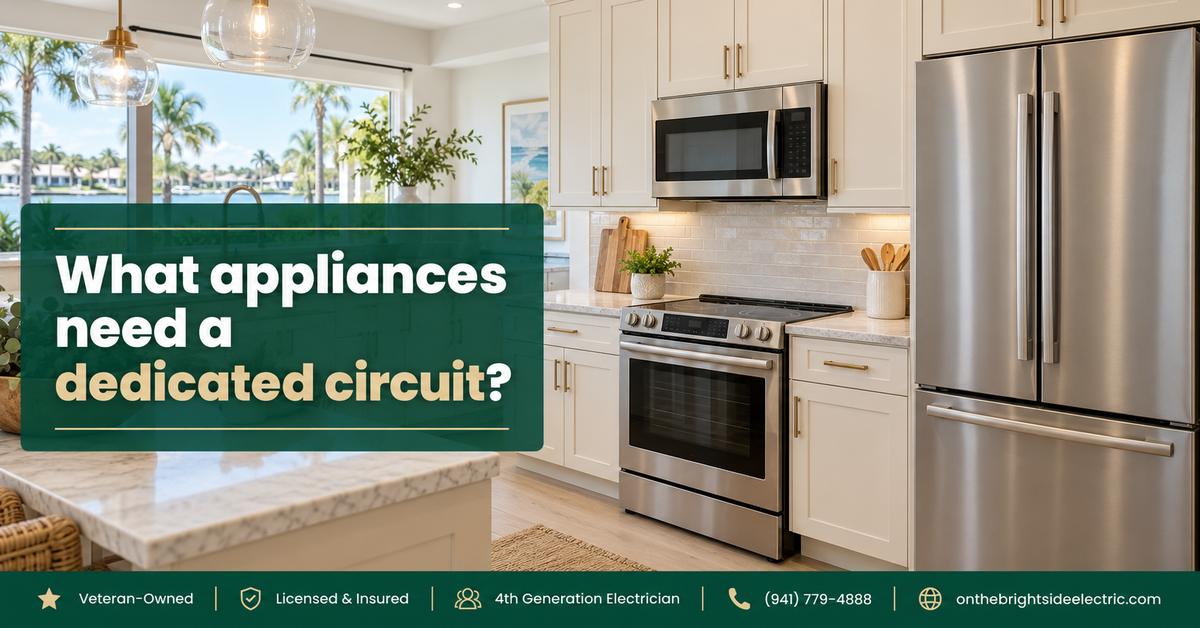
The following appliances are commonly found in Florida homes. Some generally require individual circuits, while others depend on their installation instructions and the home's electrical design.
1. Electric Range and Oven
Dedicated circuit: Generally required.
Electric ranges and ovens use heating elements that require substantial electrical power. A freestanding electric range typically needs its own appropriately rated 240-volt circuit. Separate wall ovens and electric cooktops may have different electrical requirements depending on the equipment and installation instructions.
Because cooking appliances vary in size and configuration, the correct circuit cannot be determined by appearance alone. If you are replacing a gas range with an electric model or remodeling your kitchen, have an electrician evaluate the existing wiring before purchasing or installing the new appliance.
2. Electric Clothes Dryer
Dedicated circuit: Yes, for a typical full-size electric dryer.
Electric clothes dryers use heating elements and a motor to dry clothing. Most conventional residential electric dryers require an individual 240-volt branch circuit, commonly rated at 30 amps, although the appliance specifications determine the actual requirements.
A dryer should not share its circuit with the washing machine or other household appliances. If you are replacing an older dryer, an electrician can also verify whether the existing dryer receptacle and wiring are suitable for the replacement.
3. Washing Machine
Dedicated circuit: A separate laundry receptacle circuit is required, but it may serve more than the washing machine.
A washing machine uses a motor and other electrical components during its operating cycle. Residential laundry areas generally require a 20-amp circuit serving the laundry receptacle outlets. This circuit is separate from ordinary household lighting and general-purpose outlets.
However, that does not necessarily mean the washing machine must be the only appliance connected to it. Whether another laundry appliance can share the circuit depends on the equipment and applicable requirements. A full-size electric dryer typically requires its own separate circuit.
4. Refrigerator
Dedicated circuit: Often recommended, but not always required.
A refrigerator runs throughout the day to preserve food. Its compressor cycles on and off, and the appliance may experience additional electrical demand during startup or defrosting.
A refrigerator can sometimes be supplied by an appropriately designed kitchen branch circuit. A separate circuit is not automatically required for every residential refrigerator. However, a dedicated refrigerator circuit can reduce interference from other kitchen appliances and minimize nuisance breaker trips. This may be especially useful when remodeling a kitchen or installing a larger refrigerator with additional features.
Always check the refrigerator manufacturer's electrical requirements before deciding whether a separate circuit is necessary.
5. Dishwasher
Dedicated circuit: Commonly required by the appliance installation instructions.
Dishwashers use pumps, motors, and sometimes electric heating elements to clean and dry dishes. Many residential dishwashers specify an individual branch circuit. Depending on the appliance, that circuit may be rated at 15 or 20 amps.
A dishwasher also requires applicable electrical shock protection, including GFCI protection where required. If you are replacing a dishwasher during a kitchen renovation, the existing circuit should be evaluated to confirm it meets the replacement appliance's requirements.
6. Garbage Disposal
Dedicated circuit: Depends on the disposal and electrical design.
A garbage disposal contains a motor that operates when food waste is processed. Some disposals are installed on individual circuits. In other installations, a disposal and dishwasher may share a properly designed circuit when the combined load, installation instructions, and electrical code permit it.
A garbage disposal does not automatically require its own breaker in every home. However, if operating the disposal causes a breaker to trip while another kitchen appliance is running, the circuit should be evaluated.
7. Microwave Oven
Dedicated circuit: Commonly recommended or specified, especially for built-in models.
Microwave ovens can draw significant electrical current while heating food. Over-the-range and built-in microwaves frequently specify a dedicated circuit in their installation instructions. Some smaller countertop microwaves can operate on an appropriately rated kitchen receptacle circuit.
Problems can occur when a microwave shares a circuit with other high-demand appliances, such as a toaster oven, coffee maker, or air fryer. If your microwave trips a breaker whenever another appliance operates, do not assume you simply need a larger breaker. The electrical load and existing circuit need professional evaluation.
8. Electric Water Heater
Dedicated circuit: Generally required for a conventional electric storage water heater.
Electric water heaters use heating elements to maintain the temperature of stored water. A typical residential electric tank water heater requires its own appropriately sized circuit.
Tankless electric water heaters may have significantly different electrical requirements. Some need multiple dedicated circuits and may require an evaluation of the home's overall electrical capacity. Before switching from a conventional tank water heater to an electric tankless model, have an electrician determine whether the existing electrical service and panel can support the new equipment.
Dedicated Circuits for Air Conditioning and Heat Pumps
Air conditioning is particularly important in Manatee and Sarasota County homes, where cooling equipment can operate frequently throughout much of the year.
9. Central Air Conditioner or Heat Pump Condenser
Dedicated circuit: Yes, typically an individual circuit.
The outdoor condenser or heat pump unit contains components such as a compressor and fan motor. These components require an appropriately sized electrical supply based on the equipment's specifications.
The outdoor unit normally has its own branch circuit, along with a disconnecting means for servicing the equipment. When replacing an older AC system, the new equipment may have electrical requirements that differ from the original installation. An HVAC replacement is a good opportunity to verify that the existing circuit, breaker, wiring, and disconnect are suitable.
10. Air Handler
Dedicated circuit: Typically yes.
The indoor air handler contains a blower motor and may include supplemental electric heating elements. These components have electrical requirements separate from the outdoor condenser.
An air handler commonly needs its own circuit, and equipment with electric heat strips may require additional circuits depending on the configuration. A licensed electrician can verify the requirements using the equipment's electrical specifications.
Dedicated Circuits for Florida Pools and Well Pumps
11. Swimming Pool Pump and Equipment
Dedicated circuit: Pool pumps commonly have individual circuits, with additional requirements for other equipment.
Swimming pools are common features of homes throughout Bradenton, Sarasota, Palmetto, and nearby coastal communities. Pool equipment may include circulation pumps, heaters, lighting, automation controls, and saltwater chlorination systems.
A pool pump is commonly supplied by its own properly sized circuit. Additional equipment may require separate circuits based on the electrical load and manufacturer's instructions. Pool electrical installations also have important grounding, bonding, GFCI protection, and disconnect requirements. Because electricity and water create serious shock hazards, pool equipment wiring should always be evaluated and installed by qualified professionals.
12. Well Pump
Dedicated circuit: Typically yes.
Some residential properties outside municipal water service areas use private wells. A well pump contains an electric motor that supplies water to the home. These pumps commonly require an individual circuit designed for their voltage, motor size, and electrical demand.
Improper electrical supply can contribute to pump performance problems and protective-device trips. If your well pump frequently trips its breaker or stops operating unexpectedly, have the electrical supply and pump system evaluated.
Does a Home EV Charger Need a Dedicated Circuit?
13. Level 2 Electric Vehicle Charger
Dedicated circuit: Yes, for a typically permanently installed residential Level 2 charging setup.
A Level 2 EV charging station generally operates on a 240-volt electrical supply. Unlike many household appliances that cycle on and off, EV chargers may draw substantial electrical current for extended periods. An EV charging circuit must be designed for this sustained electrical demand.
The appropriate circuit rating depends on the charger, charging settings, wiring, installation instructions, and applicable electrical requirements. If you want to know whether your panel can handle an EV charger and a pool heater at the same time, a load evaluation can help you plan both projects together. You can also read more about what a home EV charger installation costs in Florida.
Importantly, installing an EV charger does not automatically mean your home needs a larger electrical panel. A licensed electrician can evaluate your panel's available capacity and determine whether a dedicated charging circuit can be added safely or whether other improvements are necessary.
Quick Reference: Which Appliances Need Dedicated Circuits?
| Household appliance | Dedicated circuit guidance |
|---|---|
| Electric range or oven | Generally required |
| Electric clothes dryer | Required for typical full-size models |
| Washing machine | Separate laundry receptacle circuit required |
| Refrigerator | Often recommended; not universally required |
| Dishwasher | Commonly specified by manufacturer |
| Garbage disposal | Depends on load and installation |
| Microwave | Often recommended or specified |
| Electric water heater | Generally required |
| Central AC or heat pump condenser | Typically required |
| Indoor air handler | Typically required |
| Pool pump | Commonly required as an individual circuit |
| Well pump | Typically required |
| Level 2 EV charger | Required for typical residential installations |
This table provides general homeowner guidance. Actual requirements depend on equipment specifications, the home's electrical system, and applicable electrical codes.
Warning Signs Your Appliances May Be Overloading a Circuit
You do not need to know how your electrical panel is wired to recognize that something may be wrong. Watch for these warning signs:
- Breakers trip when two appliances operate together. For example, the microwave works normally until someone turns on the toaster oven.
- Lights dim or flicker when a large appliance starts. Brief changes can have different causes, but frequent or pronounced dimming deserves investigation.
- Outlets or plugs become unusually warm. Excessive heat can indicate an unsafe electrical condition.
- You notice buzzing, crackling, or burning odors. These symptoms can indicate a serious electrical problem.
- An appliance repeatedly loses power. Frequent interruptions may indicate circuit problems or equipment faults.
- Extension cords or power strips are being used for large appliances. These are not substitutes for properly installed appliance circuits.
A tripping breaker does not always mean a circuit is overloaded. Ground faults, damaged wiring, defective appliances, and other problems can also cause trips. If you notice burning smells, smoke, sparking, or unusual heat, stop using the affected equipment and seek qualified help immediately. If there is active smoke or fire, leave the area and call 911.
Never install a larger breaker simply to stop repeated trips. A breaker that exceeds the wiring's safe rating can create a dangerous overheating condition.
Can You Add a Dedicated Circuit to an Existing Home?
Yes. In many cases, a dedicated circuit can be added without replacing the entire electrical panel. An electrician will evaluate your home's electrical system to determine what is needed.
That assessment may include checking available breaker spaces, panel condition, electrical capacity, appliance requirements, and the route for new wiring. The electrician can then determine whether the circuit can be added to the existing panel or whether additional electrical work is necessary.
Older homes and extensively remodeled properties sometimes have limited panel space or circuits that no longer match how the home is being used. For homeowners in Manatee and Sarasota County, an electrical evaluation is particularly helpful before major appliance upgrades, kitchen renovations, pool equipment additions, and EV charger installations.
Adding a dedicated circuit is licensed electrician work, not a DIY project. The installation involves selecting appropriate wiring and protection, working with the electrical panel, and meeting applicable permitting and inspection requirements.
Frequently Asked Questions
Does every kitchen appliance need its own circuit?
No. Some kitchen appliances can use properly designed countertop receptacle circuits. Others, including electric ranges and many built-in appliances, require or specify individual circuits. The correct arrangement depends on the equipment and electrical requirements.
Can a refrigerator and microwave share the same circuit?
They may be permitted to share an appropriately designed circuit in some installations, but this is not always advisable. A refrigerator and microwave operating together can create substantial demand. Manufacturer instructions and the circuit's capacity must be considered.
Can a dishwasher and garbage disposal share a circuit?
Sometimes. A dishwasher and garbage disposal may share a circuit if their electrical requirements, combined load, installation instructions, and applicable code allow it. An electrician should verify the arrangement rather than assume it is acceptable.
Does adding a dedicated circuit require a panel upgrade?
Not necessarily. If the existing panel has sufficient capacity and an appropriate way to accommodate the new circuit, a complete panel replacement may not be needed. An electrician can determine this through an electrical evaluation.
Is a dedicated circuit the same as a GFCI outlet?
No. A dedicated circuit supplies a particular appliance or equipment load. GFCI protection helps protect people from certain electrical shock hazards. A dedicated circuit may also require GFCI or AFCI protection, depending on the installation.
Make Sure Your Home's Appliances Have the Power They Need
Your home's electrical system should support the appliances you depend on without recurring breaker trips, unsafe wiring, or unnecessary interruptions. Whether you are replacing a kitchen appliance, upgrading your air conditioning, adding pool equipment, or preparing for an electric vehicle, understanding your circuit requirements can help you plan the project safely.
On The Bright Side Electric serves homeowners throughout Palmetto, Bradenton, Sarasota, and surrounding Manatee and Sarasota County communities. If you are unsure whether an appliance needs its own circuit or your existing electrical panel can support new equipment, we are happy to help you explore your options.
Request a free estimate from On The Bright Side Electric or call (941) 779-4888.
www.onthebrightsideelectric.com
On The Bright Side Electric. Where You Never Get Left In The Dark.
Adding an appliance your panel was not wired for?
Comment QUOTE on our Facebook or Instagram post, or call/text (941) 779-4888 for a free estimate on a dedicated circuit installation.