October 27, 2026 | Home Electrical Safety | Manatee & Sarasota Counties, Florida
Most homeowners know to service their air conditioner, check their roof, and replace their smoke alarm batteries. But when was the last time someone checked the electrical system behind the walls, switches, and outlets you use every day?
Your home's electrical system works quietly in the background. It powers your appliances, keeps the lights on, charges your devices, and runs equipment you depend on. Because most electrical components are out of sight, developing problems can go unnoticed until something stops working or becomes a safety concern.
An annual electrical safety check is a preventive visit from a qualified electrician who examines accessible parts of your home's electrical system for signs of damage, deterioration, and potential hazards.
For homeowners in Palmetto, Bradenton, Sarasota, and surrounding Manatee and Sarasota County communities, regular electrical checks can be particularly useful because of Florida's humidity, thunderstorms, salt air near the coast, and frequent use of air conditioning and outdoor electrical equipment.
So what actually happens during an electrical safety check? Here is what a homeowner can expect, item by item.
What is an annual electrical safety check?
An annual electrical safety check is a general evaluation of your home's electrical safety, typically performed by a licensed electrician.
The goal is straightforward: identify visible hazards, check important safety protections, and help you understand whether anything needs attention.
It is not automatically a complete code-compliance inspection, a whole-house rewiring assessment, or an investigation that requires opening every wall.
A typical check focuses on accessible equipment and common trouble spots. The exact procedures depend on your home's age, layout, electrical equipment, accessibility, and any concerns you report.
Most importantly, it is something any homeowner can schedule. You do not need to be experiencing electrical problems, preparing to sell your house, or participating in a maintenance membership.
1. Inspecting the main electrical panel
Your electrical panel distributes electricity to the different circuits throughout your home. It also contains circuit breakers designed to protect wiring against overloads and short circuits.
Because so much of your electrical system connects through this equipment, the panel is one of the most important areas to examine. If you are curious about panel lifespans and capacity, you can learn more about electrical panel inspections and upgrades for Florida homes.
During a safety check, an electrician may look for:
- Heat damage: Discoloration, melted components, scorching, or other signs of overheating.
- Corrosion and rust: Deterioration around the enclosure, breakers, and accessible connections.
- Moisture intrusion: Water staining, condensation, or evidence that water has entered the equipment.
- Breaker condition: Damaged breakers, improper fit, signs of repeated tripping, or other visible concerns.
- Panel condition: Missing covers, damaged openings, poor labeling, or blocked access.
Depending on the inspection scope and safe working conditions, the electrician may perform additional examinations or tests.
This does not mean every older electrical panel needs replacement. The electrician should evaluate its actual condition and explain any specific safety concerns.
Florida homeowner tip: Homes near coastal areas such as Anna Maria Island, Longboat Key, and waterfront Sarasota neighborhoods may deserve particular attention for corrosion and moisture-related deterioration.
Never remove your electrical panel's protective cover yourself. Internal components can remain energized even when the main breaker is turned off.
2. Testing GFCI outlets and checking AFCI protection
Two important electrical safety devices are GFCIs and AFCIs. They serve different purposes, and both may be part of your home's safety check.
GFCI protection: Helping prevent electrical shock
A Ground Fault Circuit Interrupter, or GFCI, is designed to shut off electricity quickly when it detects certain dangerous current imbalances.
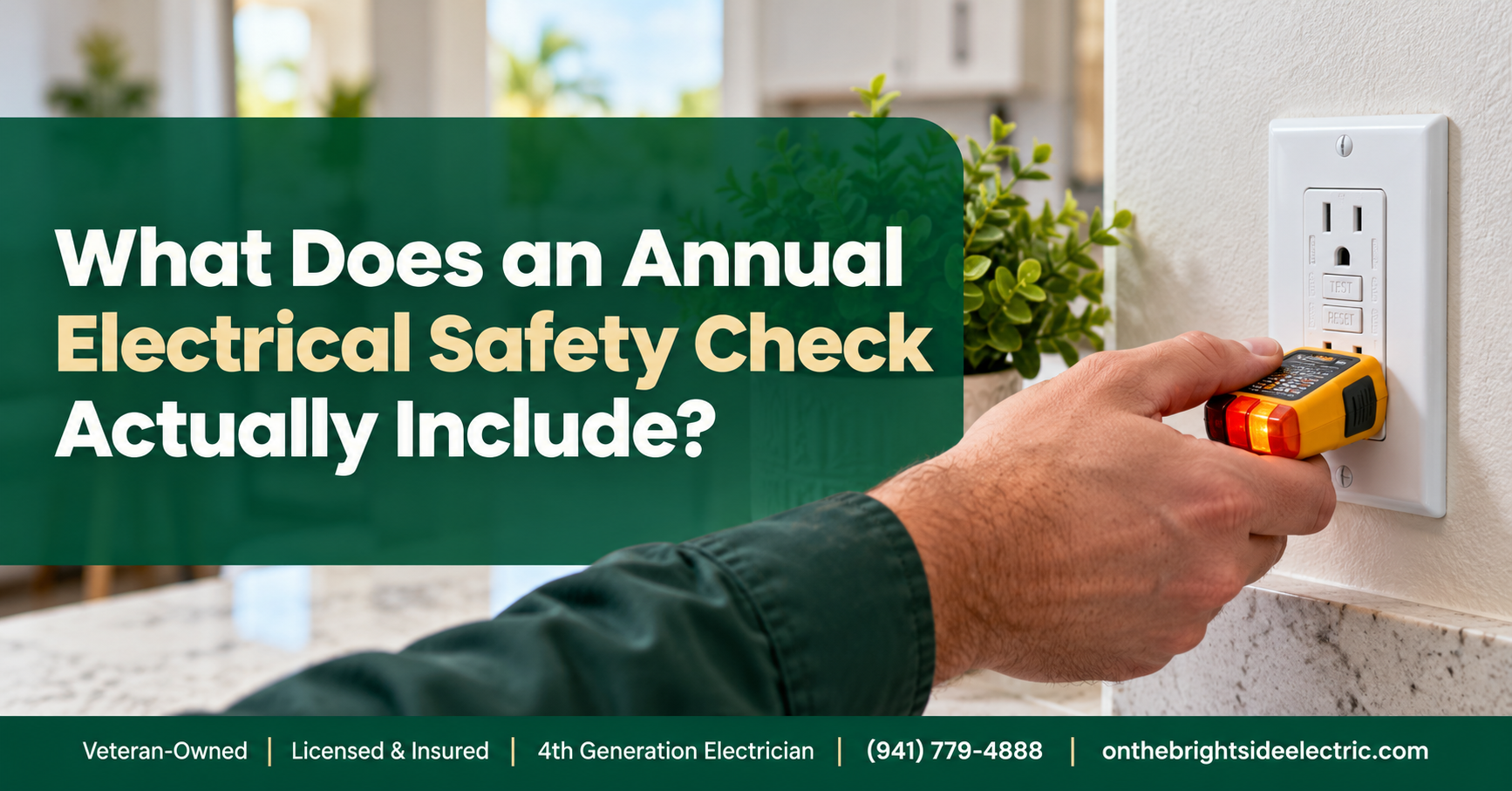
You will often recognize a GFCI receptacle by its TEST and RESET buttons.
During a safety check, the electrician may test accessible GFCI devices and look for appropriate protection in locations such as:
- Bathrooms and kitchen areas
- Garages and laundry areas
- Outdoor receptacles
- Areas near sinks and other wet locations
- Pool and spa areas
GFCI protection can also come from a circuit breaker, so an outlet without visible TEST and RESET buttons is not necessarily unprotected.
The electrician can help determine where GFCI protection exists, where it may be missing, and whether any improvements are needed.
AFCI protection: Helping prevent electrical fires
An Arc Fault Circuit Interrupter, or AFCI, is designed to recognize certain dangerous electrical arcing conditions that can contribute to fires.
AFCI protection is often incorporated into circuit breakers and is required for many residential circuits under modern electrical codes.
During a safety check, the electrician can identify existing AFCI protection, test accessible devices where appropriate, and discuss circuits that may benefit from additional protection.
An important distinction: A missing GFCI or AFCI does not automatically mean your entire home violates current electrical codes. Requirements vary depending on the installation, applicable code, and subsequent electrical work. A licensed electrician can explain what applies to your situation.
3. Checking smoke alarms and carbon monoxide alarms
Electrical safety includes making sure your home's warning devices are functioning properly.
A general safety check may include reviewing accessible smoke alarms and carbon monoxide (CO) alarms, where installed, for operation, age, and visible condition. Home safety guidelines from organizations such as the National Fire Protection Association emphasize regular alarm testing and maintenance.
The electrician may check:
- Whether alarms respond to their test buttons
- Manufacturing dates or replacement information
- Battery condition or low-battery warnings
- Visible damage or missing devices
- Whether hardwired alarms appear properly connected
- Whether alarm placement and coverage need further evaluation
Smoke alarms generally need replacement 10 years after their manufacturing date, even if they still respond when tested. Carbon monoxide alarm replacement intervals vary by manufacturer and model.
The test button checks the alarm's electronic operation. It does not prove that every part of the sensing system will respond correctly to smoke or carbon monoxide.
For Florida homes with attached garages, fuel-burning equipment, or generators, discussing carbon monoxide protection is especially worthwhile.
Remember that a portable generator should never operate inside a home, garage, or other enclosed space, even with doors or windows open.
4. Examining outlets, switches, and light fixtures
Outlets and switches experience everyday wear. Over time, repeated use, loose connections, damaged devices, and other conditions can create safety concerns.
During a safety check, an electrician may examine representative accessible outlets, switches, and lighting fixtures for:
- Cracked, broken, or missing covers
- Loose or damaged receptacles
- Discoloration around outlet or switch openings
- Evidence of overheating
- Fixtures that appear loose or damaged
- Unusual buzzing or other reported problems
- Signs of improper use or exposed electrical components
An outlet that no longer holds a plug securely may need replacement. Brown or black discoloration near a receptacle could indicate overheating and deserves professional attention. For persistent breaker trips or flickering fixtures, dedicated electrical troubleshooting and repair services can pinpoint the underlying issue.
If you have noticed flickering lights, buzzing switches, burning smells, or outlets that feel unusually warm, tell your electrician before the inspection begins.
These details help identify areas that may require closer examination.
Safety reminder: Never ignore a burning smell, sparking, or smoke from electrical equipment. Stop using the affected equipment if you can do so safely. If there is smoke, fire, or immediate danger, leave the area and call 911.
5. Looking at visible wiring in attics, garages, and laundry areas
Not all household electrical wiring is hidden behind finished walls.
Some wiring is visible in attics, garages, utility areas, and around installed equipment.
During an annual safety check, an electrician may examine safely accessible wiring for obvious concerns, including:
- Frayed, cracked, or otherwise damaged insulation
- Exposed conductors or unprotected connections
- Loose or improperly secured wiring
- Open electrical boxes or missing covers
- Signs of overheating or deterioration
- Wiring damaged by rodents, moisture, or physical contact
In Florida, attic conditions can be particularly demanding because of heat and humidity. Garages and laundry areas may also expose electrical components to moisture, stored items, and repeated equipment use.
An electrician can identify visible warning signs and determine whether a more detailed investigation is appropriate.
A general inspection does not normally involve removing drywall or tracing every concealed wire throughout the home.
And if attic conditions are unsafe or inaccessible, those limitations should be explained rather than ignored.
6. Checking grounding and bonding
Grounding and bonding are essential parts of electrical safety, even though most homeowners never see them.
They are related, but they serve different purposes.
Grounding connects designated parts of the electrical system to earth and helps establish a stable electrical reference.
Bonding connects conductive components together to reduce dangerous voltage differences and help create an effective path for fault current.
During a safety check, an electrician may review accessible grounding and bonding components and look for visible problems such as loose, damaged, disconnected, or corroded connections.
Appropriate testing may be recommended if the electrician identifies a concern.
Why does this matter?
Proper grounding and bonding help electrical protective devices operate as intended and reduce certain shock hazards.
These systems are especially important around electrical panels, service equipment, and locations where electricity and water may come into contact.
Not every grounding or bonding problem can be identified visually. If additional testing is necessary, the electrician should explain why.
7. Checking your whole-home surge protector
Florida homeowners are familiar with thunderstorms and lightning. Electrical surges can also result from other disturbances affecting the electrical system.
If your home has a whole-home surge protective device installed, its condition should be part of your safety conversation. For homeowners considering added defense, learn how whole-home surge protection shields modern electronics and appliances from voltage spikes.
Many surge protectors have status indicator lights that show whether the device reports normal operation. Educational materials from the Electrical Safety Foundation International provide helpful context on how surge protective devices and home safety equipment operate.
During a safety check, the electrician may:
- Locate the installed surge protective device
- Check its visible condition
- Confirm the status indicator according to the manufacturer's instructions
- Look for signs of damage or deterioration
- Recommend further evaluation if a warning indicator is present
A normal indicator light is helpful, but it does not guarantee protection from every surge or prove that the entire electrical system is free of problems.
Also, a whole-home surge protector cannot prevent all lightning-related damage.
If you do not have a whole-home surge protector, that does not automatically mean you need one installed immediately. Your electrician can explain what the equipment does and whether adding protection makes sense for your home.
8. Inspecting outdoor outlets, pool areas, and wet locations
Outdoor electrical equipment faces conditions that indoor equipment usually does not.
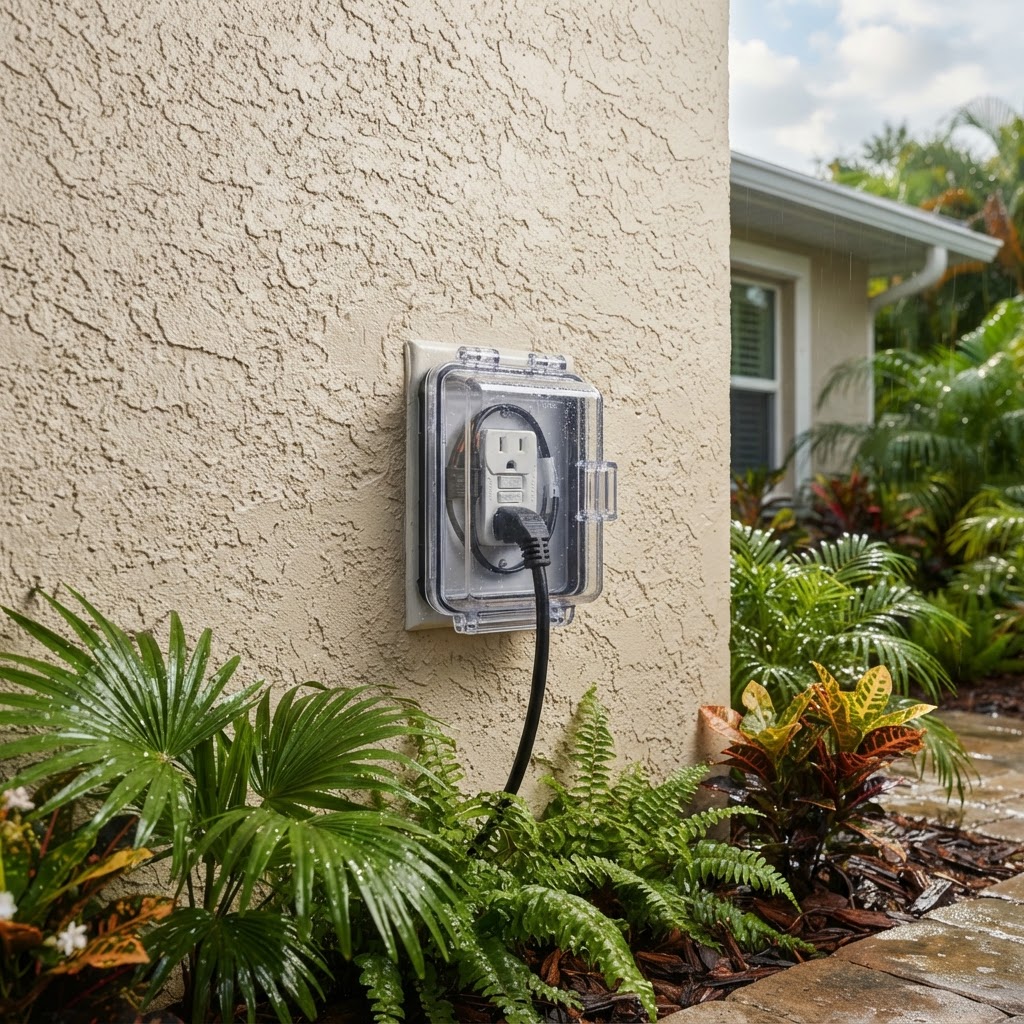
Rain, irrigation, humidity, sunlight, and coastal salt exposure can gradually affect receptacles, fixtures, covers, and connections.
During an electrical safety check, an electrician may examine accessible outdoor electrical items for:
- Damaged or missing weather-resistant covers
- Cracked outdoor outlets or boxes
- Corrosion and visible moisture intrusion
- Loose fixtures or damaged wiring
- Missing or malfunctioning GFCI protection
- Deteriorated connections around exterior equipment
For homes with swimming pools, hot tubs, or spas, electrical safety becomes particularly important.
An electrician may visually review accessible pool-area electrical equipment and discuss GFCI protection, grounding, bonding, and any concerns requiring specialized testing.
A general home safety check is not a substitute for a comprehensive pool electrical inspection. Specialized bonding measurements and other tests may be necessary when a problem is suspected.
Important: If anyone feels tingling or an electrical shock in or around a pool, do not enter the water or touch affected equipment. Keep others away, contact emergency services when appropriate, and have the electrical system evaluated by a qualified professional.
What do you receive after an electrical safety check?
A useful electrical safety check should not end with someone simply telling you that your panel looks fine or handing you an unexplained repair estimate.
You should understand what was examined, what was found, and what deserves attention.
Ask for a plain-language summary that separates findings into practical categories.
Immediate safety concerns
These are conditions that may require prompt attention because they present a potential fire, shock, or other serious electrical hazard.
Examples could include evidence of overheating, exposed energized components, or dangerous equipment damage.
The electrician should explain what needs to happen next and whether any affected equipment should remain out of service until corrected.
Recommended repairs or improvements
These are issues worth addressing but that may not require emergency action.
Examples might include deteriorating outlets, damaged exterior covers, or recommended protective-device improvements.
Your electrician should explain the reason for each recommendation without treating every minor issue as a crisis.
Routine maintenance or future considerations
Some findings may simply need monitoring or planning.
For example, an aging component without an identified immediate hazard may warrant future attention rather than replacement that day.
You should also know which areas were not inspected because they were inaccessible or outside the agreed scope.
The point is to leave with better information, clear priorities, and honest recommendations, not pressure to approve unnecessary work.
Is an annual electrical safety check different from a home inspection?
Yes. Although both can identify electrical concerns, they serve different purposes.
A general home inspection is usually associated with buying or selling a property. The inspector evaluates multiple building systems, including roofing, plumbing, heating and cooling, and visible electrical components. Homeowners looking for comprehensive pre-purchase or whole-home reviews can also schedule formal residential electrical safety inspections.
An annual electrical safety check is specifically focused on the home's electrical system.
| Annual electrical safety check | Real estate home inspection |
|---|---|
| Focuses on electrical safety and accessible electrical components | Evaluates multiple major home systems |
| Usually performed by a qualified electrician | Usually performed by a licensed home inspector |
| May include electrical testing within the agreed scope | Typically focuses on a visual, noninvasive evaluation |
| Helps homeowners identify electrical concerns and maintenance priorities | Helps buyers and sellers understand the property's general condition |
| Can be scheduled at any time | Commonly scheduled during a property transaction |
A home inspection may uncover an electrical problem that requires a licensed electrician's follow-up.
Likewise, an electrical safety check does not replace a comprehensive home inspection when purchasing a property.
Both can be valuable for different reasons.
When should you schedule an electrical safety check?
You do not have to wait until something fails to have your electrical system examined.
A yearly safety check can be a practical preventive maintenance habit, especially in older homes or properties exposed to challenging environmental conditions.
It is also worth scheduling an inspection sooner if:
- Your breakers trip repeatedly.
- Lights flicker or dim unexpectedly.
- An outlet or switch feels unusually warm.
- You notice rust or moisture near electrical equipment.
- Your home has undergone significant renovations.
- You have added major electrical appliances or equipment.
- You have recently purchased an older home.
- Your electrical system has not been evaluated in several years.
A checkup can help establish a useful baseline for future maintenance.
However, annual checks are not a universal legal requirement for every homeowner, and they do not replace more extensive inspections when problems are suspected.
Frequently asked questions about annual electrical safety checks
Here are answers to common questions homeowners ask about electrical safety checkups.
Electrical safety starts with knowing what to look for
Your home's electrical system does not need to show obvious signs of trouble to deserve attention.
An annual electrical safety check gives you an opportunity to identify developing concerns, review important protective devices, and understand the condition of accessible electrical equipment.
For homeowners throughout Palmetto, Bradenton, Sarasota, and surrounding Manatee and Sarasota County communities, it is a practical way to stay informed about the electrical system your family relies on every day.
And remember, a good safety check is about finding real concerns, explaining your options, and helping you make informed decisions.
Have questions about your home's electrical safety?
If you have noticed something concerning or would like professional guidance about your home's electrical system, On The Bright Side Electric can help you understand your options.
On The Bright Side Electric helps homeowners throughout Manatee and Sarasota Counties with residential electrical services, troubleshooting, and safety-related repairs and improvements.
Website: https://www.onthebrightsideelectric.com
On The Bright Side Electric | Veteran-Owned | Licensed & Insured | Fourth-Generation Electrician | Where You Never Get Left In The Dark.