No. Absolutely not. This is one of the most dangerous things a homeowner can do during a power outage, and it has caused preventable deaths after storms. An open garage door does not make it safe. Here is why, and what to do instead.
Table of Contents
- The short, firm answer
- Why carbon monoxide is so deadly
- Why an open door does not save you
- The 20-foot rule
- CO detectors: your backup to your backup
- The safe generator setup
- What to do if someone feels sick
- FAQ
The Short, Firm Answer
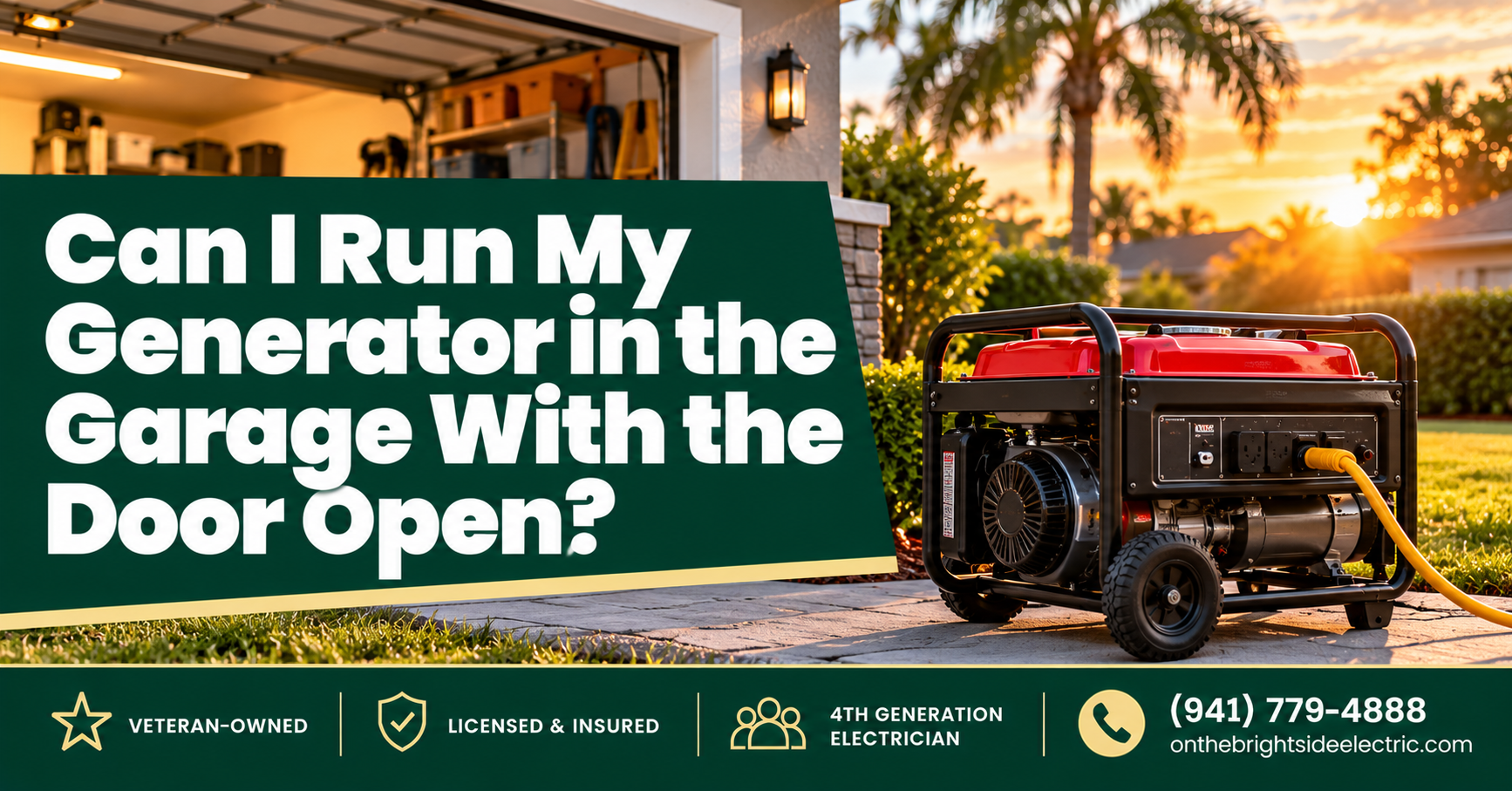
Never run a portable generator in a garage, carport, shed, or any enclosed or partially enclosed space, even with the door open. Not for a few minutes. Not "just to get it started." Never.
Carbon monoxide poisoning from generators is a recurring, preventable post-storm hazard.
Why Carbon Monoxide Is So Deadly
Carbon monoxide (CO) is colorless and odorless. You cannot see it, smell it, or taste it. The U.S. Consumer Product Safety Commission warns that a portable generator can emit as much carbon monoxide as hundreds of cars.
CO poisoning symptoms start like the flu: headache, dizziness, nausea, confusion. Then you lose consciousness. In a garage or home filling with CO, people fall asleep and do not wake up. This is why it kills entire families.
Why an Open Door Does Not Save You
This is the myth that kills. An open garage door does not ventilate CO the way people assume:
- CO is slightly lighter than air but mixes readily; it does not politely exit through the door
- Wind shifts push exhaust back inside
- The garage connects to your home through doors, drywall gaps, and attic spaces
- CO seeps into living areas while you sleep nearby
"Door open" feels like ventilation. It is not ventilation.
The 20-Foot Rule
Portable generators belong outdoors, at least 20 feet from your home, with the exhaust pointed away from the house. Not on the porch. Not under the carport overhang. Not just outside the garage door. Twenty feet, in the open air, exhaust away.
Further is fine. Closer is not.
CO Detectors: Your Backup to Your Backup
Every Florida home should have working CO detectors on each level and outside sleeping areas, with fresh batteries. They are inexpensive and they save lives. Test them before storm season.
But detectors are the last line of defense, not the plan. The plan is correct generator placement.
The Safe Generator Setup
- Place the generator outdoors, 20+ feet from the house, exhaust pointed away.
- Keep it dry. Use a generator tent or canopy designed for the purpose. Never an enclosed space.
- Connect safely. Run properly rated extension cords directly to appliances, or better, use a professionally installed generator interlock installation with an outdoor inlet.
- Refuel safely. Turn the generator off and let it cool before refueling. Store fuel away from the house.
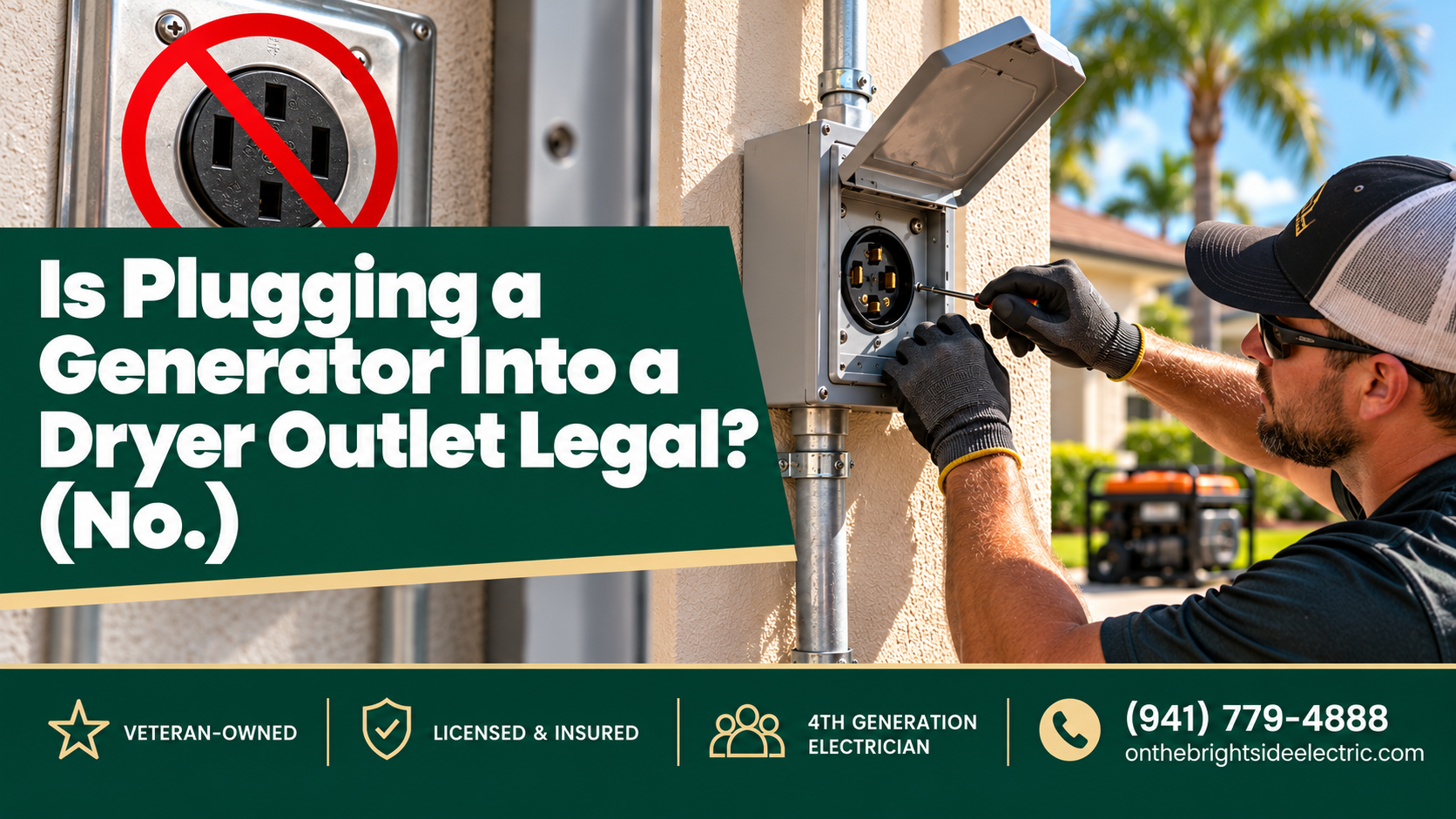
- Never backfeed. Do not connect a generator to home wiring without a listed transfer device. See why backfeeding through a dryer outlet is illegal.
What to Do If Someone Feels Sick
If anyone near a running generator develops headache, dizziness, nausea, or confusion:
- Get everyone into fresh air immediately.
- Call 911.
- Do not re-enter the space until emergency responders clear it.
Do not try to "tough it out." CO poisoning impairs judgment, which is why victims often do not save themselves.
Frequently Asked Questions
Here are the questions Florida homeowners ask most often about generator placement and carbon monoxide safety.
How far should a portable generator be from the house?
At least 20 feet, outdoors, with the exhaust pointed away from the home. Further is fine.
Can I run it on my covered lanai or porch?
No. Covered outdoor spaces trap CO. Open air, 20 feet out, is the rule.
Is it safe if I only run it for a few minutes in the garage?
No. Dangerous CO levels build in minutes, and the "just a minute" habit is how tragedies start.
Do I need CO detectors if I follow the 20-foot rule?
Yes. Detectors protect against every CO source, including neighbors' generators, grills, and vehicle exhaust. Every home should have them.
What is the safest way to power my home with a portable generator?
A listed, compatible interlock or transfer switch installed with an outdoor inlet and required permits/inspections. Proper equipment and operation isolate the generator from utility power; the generator must still run outdoors at least 20 feet from the building. The generator still sits 20 feet out, but the connection to your home is safe and code-compliant.
Get Backup Power Set Up the Safe Way Before the Next Storm
Call or text (941) 779-4888 for a free estimate on a generator interlock installation through our generator services. For interlock installation cost, see our breakdown. Safe, permitted, and ready when you need it.
On The Bright Side Electric LLC
Veteran-Owned | 4th Generation Electrician | Licensed & Insured | EC#13014677