If you own a home in Florida, you have probably heard about whole-home surge protection. You may also be wondering whether it is worth the cost and what a professional installation actually involves.
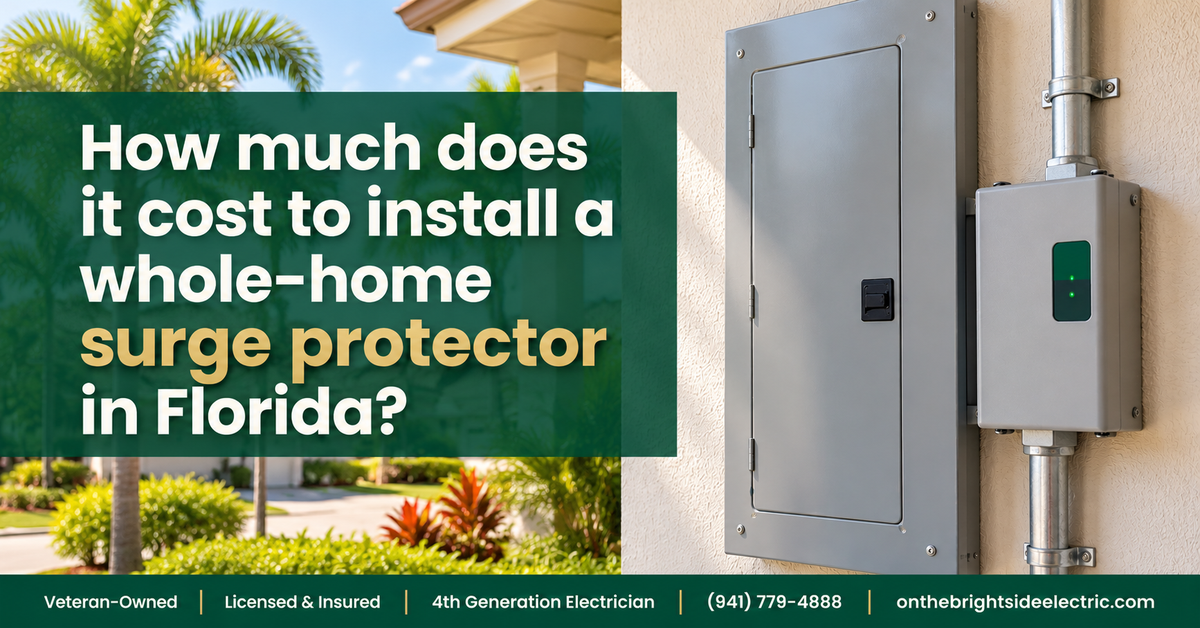
For many homeowners, the answer is more affordable than expected. As a general market reference, installing a whole-home surge protector often costs approximately $200 to $800 for a straightforward residential installation. These are general market ranges, not On The Bright Side Electric pricing or a project-specific estimate.
For homeowners in Manatee County and Sarasota County, whole-home surge protection is a practical electrical upgrade to consider. Understanding what you are paying for can help you decide whether to move forward and what questions to ask an electrician.
What is a whole-home surge protector?
A whole-home surge protector is an electrical safety device designed to help limit sudden voltage spikes before they reach equipment throughout your home. These voltage spikes, commonly called power surges, can come from several sources, including lightning-related electrical disturbances, changes or interruptions in utility power, electrical equipment switching on or off, large motors and appliances operating within the home, and other electrical disturbances affecting the home's wiring.
A professionally installed whole-home surge protective device, often abbreviated SPD, is typically connected at or near the main electrical panel or service equipment. When a surge occurs, the device helps limit excess voltage reaching connected equipment by diverting surge current through a safe path.
This can help reduce the risk of damage to appliances, air-conditioning equipment, televisions, computers, and other connected electronics. However, surge protection is not an absolute guarantee against electrical damage. Its effectiveness depends on the surge, the installation, and the equipment involved.
How much does whole-home surge protector installation cost in Florida?
The price generally includes two main components: the surge protective device itself and the labor required to install it correctly. Some projects also require additional electrical work, which should be quoted separately.
General market cost ranges
The following figures are broad residential market estimates for budgeting, not local quotes or On The Bright Side Electric prices.
- Whole-home surge protective device: $60-$500 or more
- Professional installation labor: $140-$300
- Device and standard installation combined: $200-$800
- Additional electrical panel repairs or upgrades: Quoted separately
These figures are illustrative market ranges, and individual project costs vary. The components should not be added together automatically, because combined installation pricing often reflects the complete job rather than a simple sum of parts.
A straightforward installation involving an accessible, compatible electrical panel may be relatively simple. A project requiring panel repairs, additional electrical equipment, service modifications, or more complicated access may cost more. The best way to establish an accurate price is to have a qualified electrician review your electrical equipment and recommend a suitable device.
What factors affect the installation price?
Not every home has the same electrical setup. Several factors can influence the cost of installing whole-home surge protection, and understanding them can help you compare estimates fairly.
The type of surge protective device
Whole-home surge protective devices are commonly categorized as Type 1 or Type 2. A Type 1 device is suitable for installation on the supply side of the service disconnect, although approved configurations vary. A Type 2 device is commonly installed on the load side of the service disconnect, often at the main electrical panel.
Both can provide valuable protection when appropriately selected and installed. The device type, electrical specifications, available installation locations, and compatibility with the home's service equipment all influence the final price.
Surge protection rating and device features
Surge protective devices have electrical ratings that help electricians determine their appropriate application. These include surge current capacity, voltage protection characteristics, and compatibility with the electrical system.
Some devices also include visible status indicators that help homeowners identify whether protection remains operational. A higher-priced unit is not automatically the best option for every home. The goal is to select a properly rated, listed device suitable for the home's electrical equipment and the intended installation location.
Electrical panel condition and available space
Your electrical panel can make a significant difference in installation complexity. An electrician will evaluate whether the panel is suitable for the selected protective device and whether adequate space and connection options are available.
The electrician may also check for visible corrosion, moisture damage, overheating, damaged components, or other conditions that should be addressed. If the existing panel is in good condition, installation may be comparatively straightforward. If repairs or modifications are needed, they can increase the total project cost.
Additional electrical work
Sometimes surge protection is requested as a standalone improvement. Other times, homeowners choose to install it while replacing an aging electrical panel or completing a service upgrade.
Combining compatible electrical improvements may help avoid scheduling separate visits and repeating certain setup steps. However, a surge protector does not automatically require replacing the electrical panel. Whether additional work is necessary should be determined by the actual condition and compatibility of the electrical equipment.
Installation location and accessibility
The location of the electrical panel or service equipment can affect how an electrician approaches installation. Some Florida homes have electrical panels inside garages or utility spaces, while others have outdoor service equipment.
The device must be suitable for its location, including environmental exposure where applicable. Difficult access, outdoor mounting requirements, or additional wiring arrangements may increase installation complexity and cost.
Does a panel-mounted surge protector cost less than a meter-mounted option?
Panel-mounted surge protectors are common residential solutions because they can often be installed directly at or near the main electrical panel. A meter-mounted or meter-base surge protection option may involve different equipment, utility-company requirements, and coordination.
Meter-mounted options are not automatically more expensive or more effective. Costs depend on the specific equipment, utility policies, who owns the meter equipment, and whether the selected configuration is approved for the home.
Homeowners should not attempt to remove a utility meter or modify sealed equipment. An electrician can explain which options are appropriate for the home and whether utility coordination is necessary.
Why is whole-home surge protection especially relevant in Florida?
Living in Florida means enjoying warm weather, coastal communities, and plenty of sunshine. It also means preparing for thunderstorms, seasonal lightning activity, and occasional electrical service interruptions.
Homes in Bradenton, Palmetto, Parrish, Lakewood Ranch, Sarasota, and surrounding communities can all experience electrical surges. Lightning does not need to strike a home directly to create a potentially damaging electrical surge, because nearby lightning activity and disturbances affecting utility infrastructure can introduce electrical transients into a home's wiring.
Electrical surges can also originate inside the home when equipment switches on or off. This is one reason whole-home surge protection is worth considering even when a homeowner already uses plug-in surge protectors. The objective is not to eliminate every electrical risk. It is to add a practical layer of protection to the home's overall electrical system.
What happens during a professional installation visit?
Installing a whole-home surge protector usually involves a few important steps, and a professional visit should begin with a review of your existing equipment rather than a rushed installation.
Step 1: Review the existing electrical equipment
The electrician begins by evaluating the main electrical panel or service equipment. This includes identifying the equipment configuration, available connection options, and any visible conditions that could affect the installation.
Step 2: Select the appropriate device
The electrician determines which surge protective device is suitable for the home's electrical system. The selection should account for equipment ratings, panel compatibility, installation location, and applicable requirements.
Step 3: Install the surge protection equipment
A qualified electrician installs the device according to its listing, manufacturer instructions, and applicable electrical requirements. Depending on the configuration, this may involve connecting the device to a suitable breaker or another approved connection point.
Electrical service or panel components must be handled using appropriate safety procedures, which is why this work should not be attempted as a do-it-yourself project.
Step 4: Verify the installation
After installation, the electrician checks the connections and confirms that the device's available status indicators show normal operation. The electrician may also review relevant grounding and bonding conditions.
Step 5: Explain ongoing checks
Before completing the visit, the electrician can show the homeowner how to identify the device's operational status. This may include explaining indicator lights, manufacturer guidance, and circumstances that warrant inspection or replacement.
For a compatible panel without complications, the installation itself may be relatively brief. Additional electrical work, panel repairs, or coordination can extend the visit.
What does whole-home surge protection actually protect?
A whole-home surge protective device is designed to limit voltage transients affecting the home's electrical distribution system. Depending on the installation and characteristics of a surge, this may help reduce exposure for equipment such as refrigerators and kitchen appliances, washing machines and dryers, heating and air-conditioning equipment, televisions and entertainment systems, computers and home-office electronics, smart-home equipment, and other connected household appliances.
It is important to distinguish surge protection from other electrical safety features. A surge protector does not replace circuit breakers, grounding, electrical inspections, or proper wiring, and it does not prevent every possible electrical failure. Whole-home surge protection is best understood as one component of a well-maintained electrical system.
Will a whole-home surge protector protect against a direct lightning strike?
No surge protective device can guarantee protection against a direct lightning strike. Lightning can involve extremely high energy, and damage may occur even when surge protection is installed.
A whole-home surge protector is designed to help limit certain voltage surges, including those associated with nearby lightning activity and utility disturbances. It is not a substitute for a properly designed lightning protection system.
Homeowners should be cautious of any claim suggesting a single surge protector makes an entire home lightning-proof. Surge protection is valuable because it reduces certain risks, not because it eliminates them.
Should you still use plug-in surge protectors?
Yes. Whole-home surge protection and point-of-use surge protection can work together. A whole-home device provides protection at the electrical service or distribution level, while a properly rated point-of-use surge protector adds another layer near sensitive electronics.
For example, a homeowner may install a whole-home surge protector at the electrical panel and continue using suitable plug-in protection for a home office, entertainment system, or other sensitive equipment. This layered approach can be especially useful for electronics that homeowners rely on every day.
Remember that an ordinary power strip is not necessarily a surge protector. Look for equipment specifically identified as surge protective and suitable for the intended use.
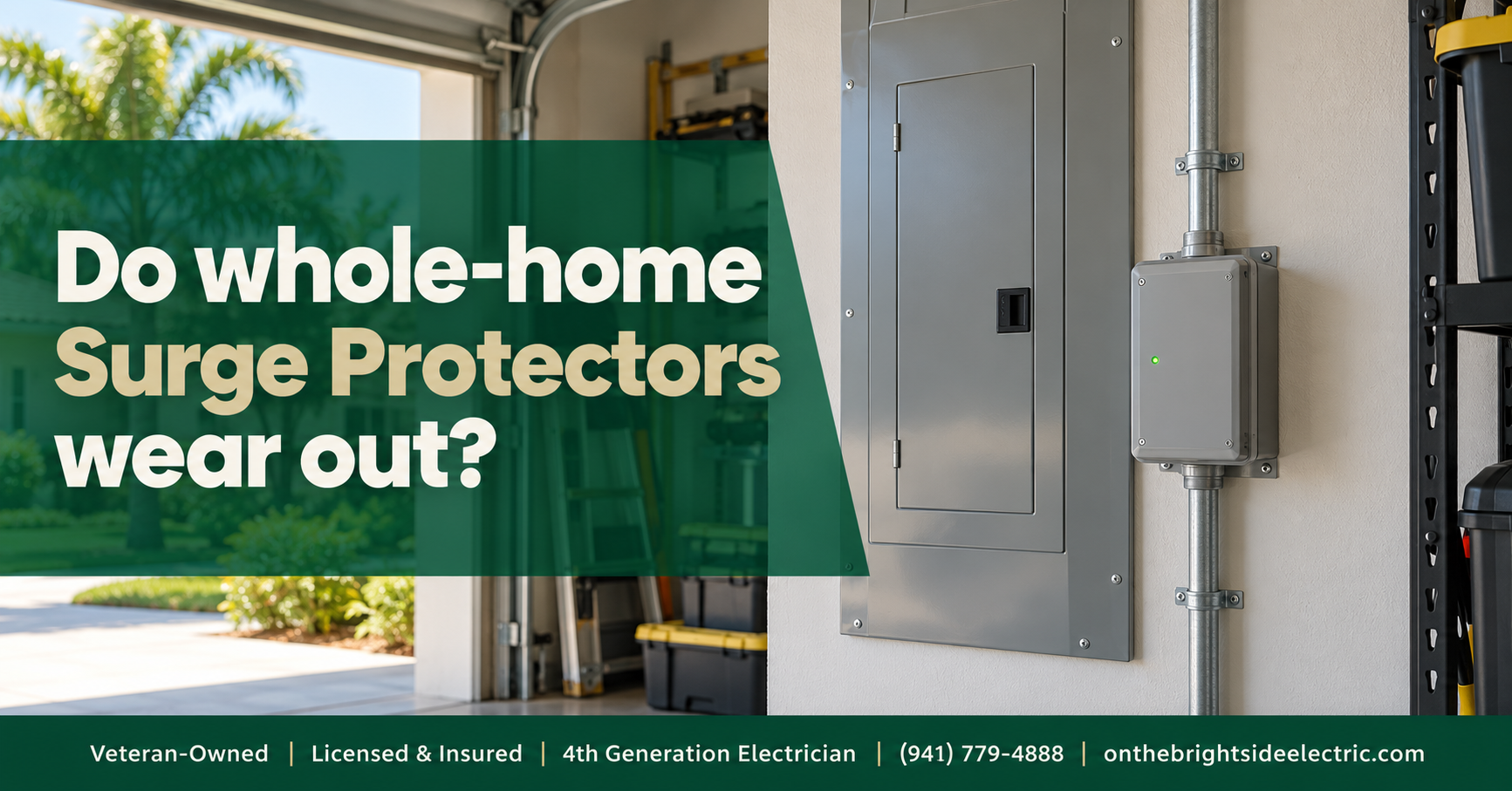
Do whole-home surge protectors need replacement?
Yes. Surge protective devices do not necessarily last forever. Their internal protective components can deteriorate as they respond to electrical surges, and some devices include status lights or other indicators that help identify when protection may no longer be operational.
A device may also require evaluation after a significant electrical event. Homeowners should follow manufacturer guidance and consult a qualified electrician when an indicator shows a problem.
For additional information about device lifespan and maintenance, read Do whole-home surge protectors wear out?. Including periodic visual checks of the device's status indicator in your home maintenance routine is a practical habit.
Is whole-home surge protection required by Florida electrical code?
Florida's electrical code includes surge protection requirements for qualifying dwelling-unit electrical services. Under the applicable provisions based on NEC Section 230.67, surge protection is required for certain new residential service installations and certain service equipment replacements.
Requirements can depend on the nature of the project, the currently adopted code, and local enforcement. An existing home does not necessarily need immediate electrical modifications simply because it lacks a whole-home surge protector.
However, when electrical service equipment is replaced, surge protection may need to be incorporated into the work. For a more detailed explanation, see Is whole-home surge protection required by Florida building code?. A licensed electrician can determine which requirements apply to your project and coordinate applicable permits or inspections.
Is a whole-home surge protector worth the cost?
For many Florida homeowners, whole-home surge protection is a sensible improvement to consider. Modern homes rely on electrical equipment for comfort, communication, work, entertainment, and everyday convenience, and replacing damaged electronics or appliances can be inconvenient and potentially expensive.
Surge protection cannot promise that damage will never happen. It can, however, provide an additional protective measure at the point where electricity enters the home's distribution system.
The decision should consider the condition of the home's electrical panel, the types of equipment connected, existing point-of-use protection, and other electrical priorities. If the panel has an existing safety problem, that issue should be evaluated rather than overlooked in favor of a new accessory. The best electrical improvements begin with an accurate understanding of the home's current condition.
Frequently asked questions
1. How much does a whole-home surge protector cost with installation?
General market estimates commonly place a straightforward residential installation around $200 to $800, including the device and standard professional installation. These are general ranges, not a quote, and panel repairs or additional work are quoted separately.
2. Can a whole-home surge protector be installed on an older electrical panel?
Sometimes. Installation depends on the panel's condition, compatibility, available connection options, and applicable requirements. An electrician can evaluate the panel and explain whether a straightforward installation is possible.
3. Does a whole-home surge protector protect my air conditioner?
It can help limit certain electrical surges affecting equipment connected to the home's electrical system, including air-conditioning equipment. It does not guarantee protection against every surge, and it does not replace proper maintenance or other electrical safety features.
4. How long does it take to install whole-home surge protection?
A straightforward installation may be completed during a relatively short professional visit, although the total visit can vary. Panel repairs, difficult access, or additional electrical work can extend the time required.
5. Is professional installation necessary?
Professional installation is strongly recommended. Whole-home surge protection involves electrical service or panel equipment, and correct device selection, connection, and verification require appropriate training and safety procedures.
6. Do I still need surge-protective power strips?
Yes, suitable point-of-use surge protectors can complement whole-home protection. Using protection at the electrical panel and near sensitive electronics provides a layered approach that can be more effective than either layer alone.
Protect your Florida home with professional surge protection
Whole-home surge protection is a practical electrical improvement for homeowners who want another layer of protection for the equipment they use every day. The right installation depends on your electrical panel, the selected device, and your home's existing electrical condition.
If you are considering whole-home surge protection, our team can help evaluate your electrical setup and recommend an appropriate option. On The Bright Side Electric is a fourth-generation veteran-owned family company in Palmetto, FL, serving homeowners across Manatee and Sarasota County.
Protect Your Florida Home With Professional Surge Protection
Protect the electrical equipment your Florida home depends on with professionally installed whole-home surge protection. Ready to get it handled? Request your free estimate here, or call/text (941) 779-4888.