October 22, 2026 | On The Bright Side Electric
When a hurricane or severe storm knocks out power in Manatee or Sarasota County, a portable generator can help keep essential parts of your home running. But having a generator is only part of the equation. You also need a safe way to connect it to your home's electrical system.
Two components you may hear about are a generator inlet box and a transfer switch. They work together, but they do very different jobs.
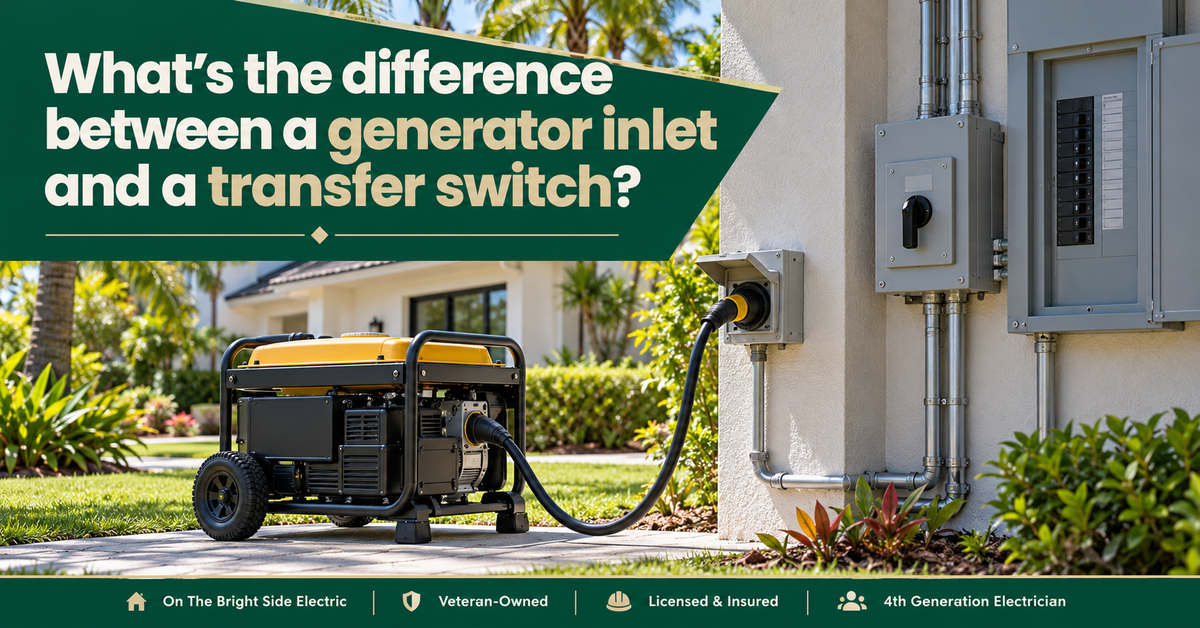
The simple difference is this: A generator inlet box provides the outdoor connection point where your portable generator plugs into your home. A transfer switch controls whether designated household circuits receive electricity from the utility or your generator, while preventing power from flowing back into the utility grid.
Think of the inlet as the connection point and the transfer switch as the traffic controller.
Understanding what each component does can help you prepare your home for the next power outage without putting your family, neighbors, or utility workers at risk.
What Is a Generator Inlet Box?
A generator inlet box is a weather-resistant electrical connection point installed on the exterior of your home. It allows you to connect a portable generator to your home's electrical system using a properly rated generator power cord.
Instead of running multiple extension cords through doors or windows, you connect the generator to a dedicated outdoor inlet designed for that purpose.
The inlet box typically has a covered connection that protects it from outdoor conditions when it isn't being used. It is connected through permanently installed wiring to the appropriate equipment inside your home.
What Does a Generator Inlet Actually Do?
The generator inlet has one primary function: It provides a designated connection for bringing generator power into your home's electrical system.
Here's what it does:
- Provides a fixed outdoor connection point for a compatible portable generator.
- Accepts a properly rated generator cord designed for the connection.
- Carries generator power through installed wiring toward the home's transfer equipment.
- Eliminates the need to route generator cords through open windows or doors to reach the home's wiring.
However, there's one important limitation.
A generator inlet box does not switch your home between utility power and generator power.
It also does not independently prevent electricity from feeding backward into utility lines.
That protective function must be provided by properly installed transfer equipment, such as a transfer switch or an approved panel interlock arrangement.
An inlet box by itself is not a complete or safe whole-home wiring connection system.
What Is a Transfer Switch?
A transfer switch is an electrical device that allows your home to receive power from one of two sources: your normal utility service or your backup generator.
Its most important job is making sure those power sources are properly separated.
During normal operation, your electrical circuits receive electricity from the utility company.
When an outage occurs, a transfer switch allows the connected circuits to be supplied by the generator instead.
A correctly installed transfer switch prevents the generator and utility supply from being connected to those circuits at the same time.
This isolation is essential for electrical safety.
How Does a Manual Transfer Switch Work?
For many portable generator installations, homeowners use a manual transfer switch.
When utility power goes out, the homeowner follows the installed system's operating instructions to switch selected circuits from utility power to generator power.
The transfer switch physically changes which source supplies those circuits.
Once utility service is restored and the generator is no longer needed, the homeowner follows the proper shutdown and switching procedure to return those circuits to utility power.
Manual transfer switches commonly serve specific household circuits, such as those supplying a refrigerator, certain lights, or other essential equipment.
The exact circuits depend on the home's electrical configuration and the installation.
The key point is that the transfer switch manages the power source. It is not simply a place to plug in your generator.
Generator Inlet vs. Transfer Switch: What's the Difference?
Although these devices are commonly installed as part of the same system, their responsibilities are separate.
| Feature | Generator Inlet Box | Transfer Switch |
|---|---|---|
| Primary purpose | Connects a portable generator to the home's wiring | Selects utility or generator power |
| Typical location | Exterior of the home | Near or integrated with electrical distribution equipment |
| Generator cord connection | Yes | Typically supplied through the inlet |
| Changes power source | No | Yes |
| Prevents backfeeding by itself | No | Yes, when properly installed |
| Role in the system | Connection point | Power-source control and isolation |
One way to remember the distinction:
The inlet lets generator power enter the system. The transfer switch determines where that power can safely go.
Neither component replaces the other.
A transfer switch still needs an appropriate generator connection, and an inlet cannot safely perform the transfer switch's job.
How Do a Generator Inlet and Transfer Switch Work Together?
Imagine a homeowner in Palmetto preparing for a hurricane-related power outage.
The home has a professionally installed generator inlet outside and a manual transfer switch connected to designated electrical circuits inside.
When utility power fails, the homeowner can use the installed equipment to supply those circuits from a portable generator.
Here's how the equipment works together:
1. The portable generator produces electricity.
The generator is placed and operated safely outdoors, away from the home.
2. The generator connects to the inlet box.
A compatible, properly rated generator cord connects the generator to the dedicated exterior inlet.
3. The inlet carries electricity toward the transfer equipment.
The permanently installed wiring provides the electrical path from the inlet to the transfer arrangement.
4. The transfer switch isolates utility power and selects generator power.
Following the system's instructions, the homeowner uses the transfer switch to supply the designated circuits from the generator rather than the utility.
5. The selected household circuits receive generator power.
Electricity reaches the circuits included in the installation, subject to the generator's available capacity.
When regular utility service returns, the homeowner follows the proper procedure to switch back, remove the generator load, shut down the generator, and disconnect it.
This arrangement provides a controlled connection without exposing household wiring to two competing power sources.
What About a Generator Interlock? Is That the Same as a Transfer Switch?
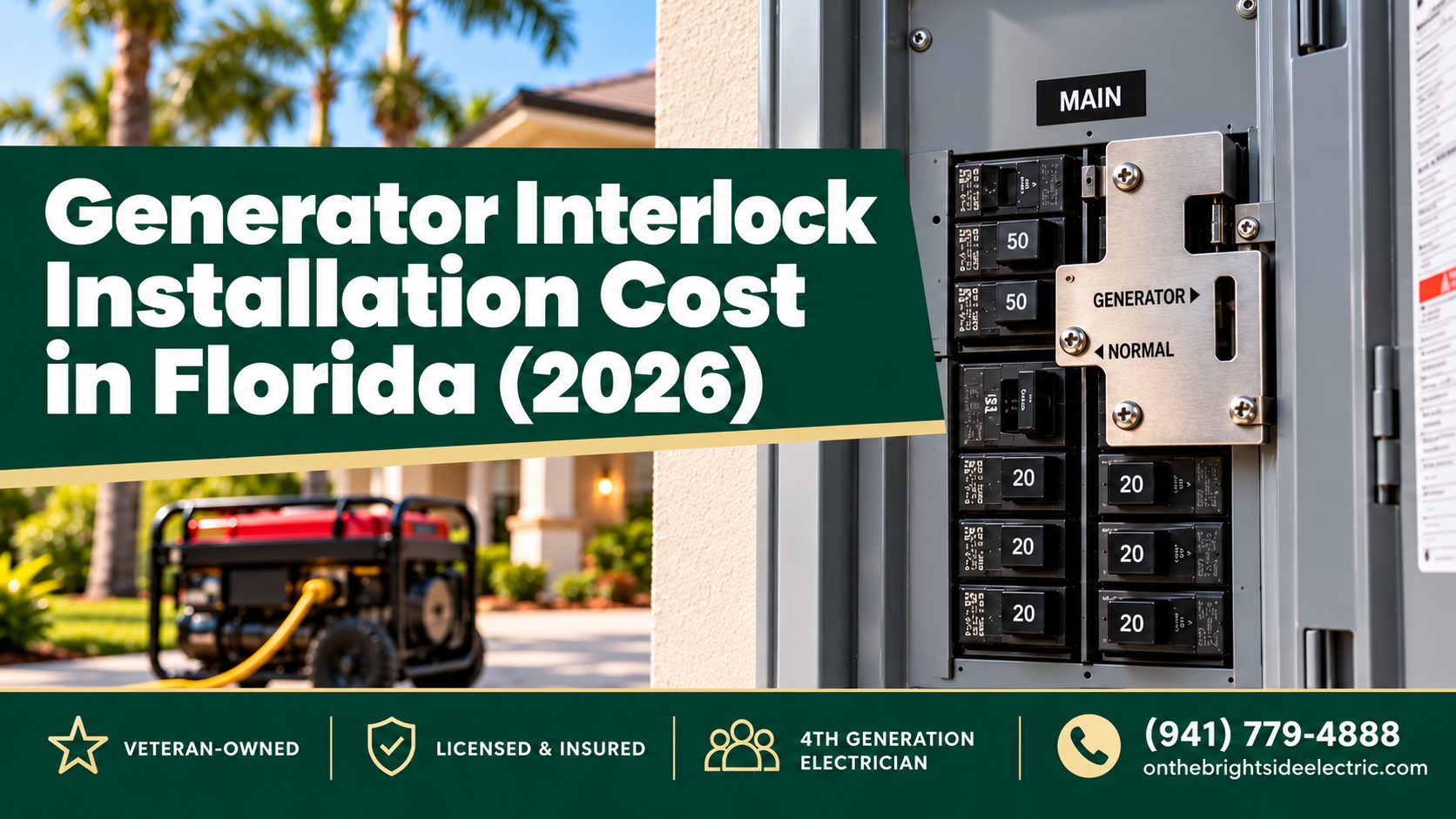
A generator interlock serves a similar safety purpose, but it works differently.
Instead of using a separate transfer switch to select the power source, an approved panel interlock uses a mechanical arrangement at the electrical panel to prevent the utility main breaker and generator supply breaker from being switched on simultaneously.
For example, when the generator breaker is allowed to turn on, the interlock requires the utility main breaker to be off.
When the utility main breaker is on, the interlock prevents the generator breaker from being switched on.
That mechanical restriction helps keep utility power and generator power separated.
The distinction is straightforward:
- Transfer switch: A dedicated switching device selects between the utility supply and generator supply.
- Panel interlock: A mechanical arrangement controls breaker positions so the utility and generator supply cannot be connected simultaneously.
Both are intended to provide the necessary power-source isolation when correctly designed, approved, and installed.
Importantly, neither replaces the generator inlet connection itself.
Not every electrical panel supports an approved interlock, and the appropriate equipment depends on your home's electrical system. A licensed electrician should determine which arrangement is suitable.
What Is Generator Backfeeding, and Why Is It Dangerous?
Backfeeding happens when electricity from a generator flows into electrical wiring in a direction or location where it should not be supplied.
One especially dangerous example occurs when someone connects a generator directly to household wiring without properly isolating the home from utility power.
Electricity can travel backward through the electrical system and potentially energize utility lines outside the home.
During a hurricane or major outage, utility crews may be repairing lines they expect to be de-energized.
If an improperly connected generator sends electricity onto those lines, workers could suffer severe or fatal electrical shock.
Backfeeding can also endanger neighboring properties, damage electrical equipment, and create serious fire hazards.
This is why electrical safety organizations, including the Electrical Safety Foundation International, emphasize proper transfer equipment when connecting generators to household wiring.
Never Use Homemade Generator Backfeed Cords
A particularly dangerous practice involves using a homemade cord with two male plug ends, sometimes called a backfeed cord or "suicide cord."
These cords can expose energized metal prongs and allow someone to feed generator electricity into a household receptacle.
Never connect a generator to your home through a dryer outlet, ordinary wall receptacle, or homemade backfeed cord.
Turning off the main breaker manually is not an acceptable substitute for properly installed transfer equipment. It does not provide the required mechanical protection against accidentally connecting the two sources.
Don't Run Extension Cords Through Windows
Running extension cords through open windows or doors is not a substitute for a professionally installed home generator connection.
Cords can become pinched, damaged, or exposed to water. Leaving windows open can also allow generator exhaust, including carbon monoxide, to enter the house.
If you're powering individual appliances directly from a portable generator rather than connecting to household wiring, follow the generator manufacturer's instructions and use only suitable, properly rated outdoor cords where permitted.
Never improvise a connection to your home's wiring.
How to Safely Connect a Portable Generator During a Power Outage
If your home already has a professionally installed generator inlet and transfer equipment, understanding the general sequence can help you prepare.
However, equipment and operating procedures vary. Always follow the written instructions for your particular generator and installed transfer system. Have your electrician demonstrate the process before an outage.
When Connecting Your Generator
- Confirm the area is safe. Do not operate electrical equipment where there is flooding, standing water, or visible damage to the electrical system.
- Position the generator outdoors. Place it at least 20 feet from doors, windows, vents, and other building openings, with the exhaust directed away from the home. Never operate it in a garage, carport, enclosed porch, or near an opening.
- Verify that the generator is off. Before connecting, make sure the generator is stopped and its electrical output is off as directed by its manufacturer.
- Connect the approved generator cord. Use the correct cord and connections for the installed inlet and generator.
- Follow the transfer equipment's starting procedure. Make sure the utility supply is properly isolated before supplying household circuits from the generator.
- Start the generator according to its instructions. Allow it to stabilize, then apply electrical loads using the procedure specified for your system.
- Monitor the generator and connected loads. Avoid overloading the generator and watch for unusual sounds, warning lights, or electrical problems.
When Disconnecting After Power Returns
- Confirm utility power has been restored and is stable.
- Remove generator-powered loads as directed by your system's instructions.
- Use the approved transfer procedure to return the household circuits to utility power.
- Make sure the generator is no longer supplying the home's electrical system.
- Shut down the generator following the manufacturer's instructions.
- Disconnect the generator cord only after the electrical output is off, and secure the inlet cover.
Never attempt to unplug an energized generator connection under load.
If you're uncertain about the correct switching sequence, do not guess. Contact the electrician who installed the system.
Additional Generator Safety for Manatee and Sarasota County Homeowners
In Southwest Florida, tropical storms, hurricanes, heavy rain, and extended outages make generator preparation especially important.
A safe electrical connection is essential, but it isn't the only precaution.
Protect Against Carbon Monoxide
Portable generators produce carbon monoxide, an invisible, odorless gas that can be fatal.
Keep generators outdoors at least 20 feet from building openings and away from occupied areas. Make sure your home has working carbon monoxide alarms.
Never assume an open garage door or nearby fan provides adequate ventilation.
Keep Electrical Equipment Dry
Do not handle generator plugs, cords, or electrical controls while standing in water.
Generators must be protected from rain and moisture according to their manufacturer's instructions without restricting ventilation or allowing exhaust to accumulate.
Never operate a generator in a flooded area.
Inspect Your Equipment Before Hurricane Season
A generator connection that worked previously should not automatically be assumed safe.
Check for visible damage, corrosion, loose covers, or deteriorating cords.
If anything looks damaged, have a qualified electrician inspect the system before using it.
For homeowners in Palmetto, Bradenton, Sarasota, and surrounding communities, preparing the connection system ahead of hurricane season is much safer than trying to figure it out during an outage.
Frequently Asked Questions
Here are the questions Florida homeowners ask most often about generator inlets, transfer switches, and safe backup power connections.
Do I need both a generator inlet box and a transfer switch?
If you're connecting a portable generator to your home's wiring through a typical exterior inlet, you need both an appropriate connection point and equipment that safely isolates generator power from utility power. That isolation may be provided by a transfer switch or an approved panel interlock arrangement.
Can I use a generator inlet without a transfer switch?
Not by itself to safely power household wiring. An inlet box is only a connection point. It does not prevent backfeeding or switch between utility and generator power. A properly installed transfer arrangement is required.
Does a generator inlet box automatically turn on my generator?
No. A generator inlet is a passive electrical connection. It does not start your generator, detect outages, or change power sources.
Does a transfer switch provide electricity?
No. A transfer switch does not generate power. It controls which electrical source supplies the connected household circuits. The generator produces the backup electricity.
Can a transfer switch power my entire house?
Some transfer arrangements can serve a home's main electrical system, while others serve only selected circuits. The equipment and generator must be appropriate for the installation. A licensed electrician can explain which circuits your particular arrangement supplies.
Can I install a generator inlet or transfer switch myself?
Generator connections involve electrical panels, grounding and bonding considerations, circuit protection, and utility isolation. Incorrect installation can create life-threatening hazards. Have a licensed electrician evaluate and install the system in accordance with applicable electrical codes and local requirements.
Make Sure Your Generator Connection Is Ready Before the Next Outage
A portable generator can be a valuable part of your home's emergency preparedness plan, but the connection to your electrical system matters just as much as the generator itself.
The distinction is simple:
The generator inlet provides the connection. The transfer switch, or an approved interlock arrangement, safely controls the power source.
Together, these components create a safer, more practical way to use a portable generator during an outage while protecting your home and helping prevent dangerous backfeeding.
If you're considering a generator connection for your home in Palmetto, Bradenton, Sarasota, or elsewhere in Manatee or Sarasota County, On The Bright Side Electric can help you understand your options.
As a veteran-owned electrical company with fourth-generation electrical experience, we're here to help local homeowners prepare with safety and confidence.
Request a free estimate from On The Bright Side Electric.
Call (941) 779-4888 or visit www.onthebrightsideelectric.com to get started.
On The Bright Side Electric | Where You Never Get Left In The Dark.