It is the biggest backup-power decision a Florida homeowner faces, and the price difference is enormous: permanently installed standby systems are often more expensive upfront than portable setups with approved transfer equipment. Both can power selected loads when sized and installed correctly. Here is how to choose. For the full service overview, see our generator services page.
Table of Contents
- How each option works
- Cost comparison
- Convenience comparison
- Capacity: what each can power
- Maintenance and lifespan
- Which homes suit which option
- A note on timing
- FAQ
How Each Option Works
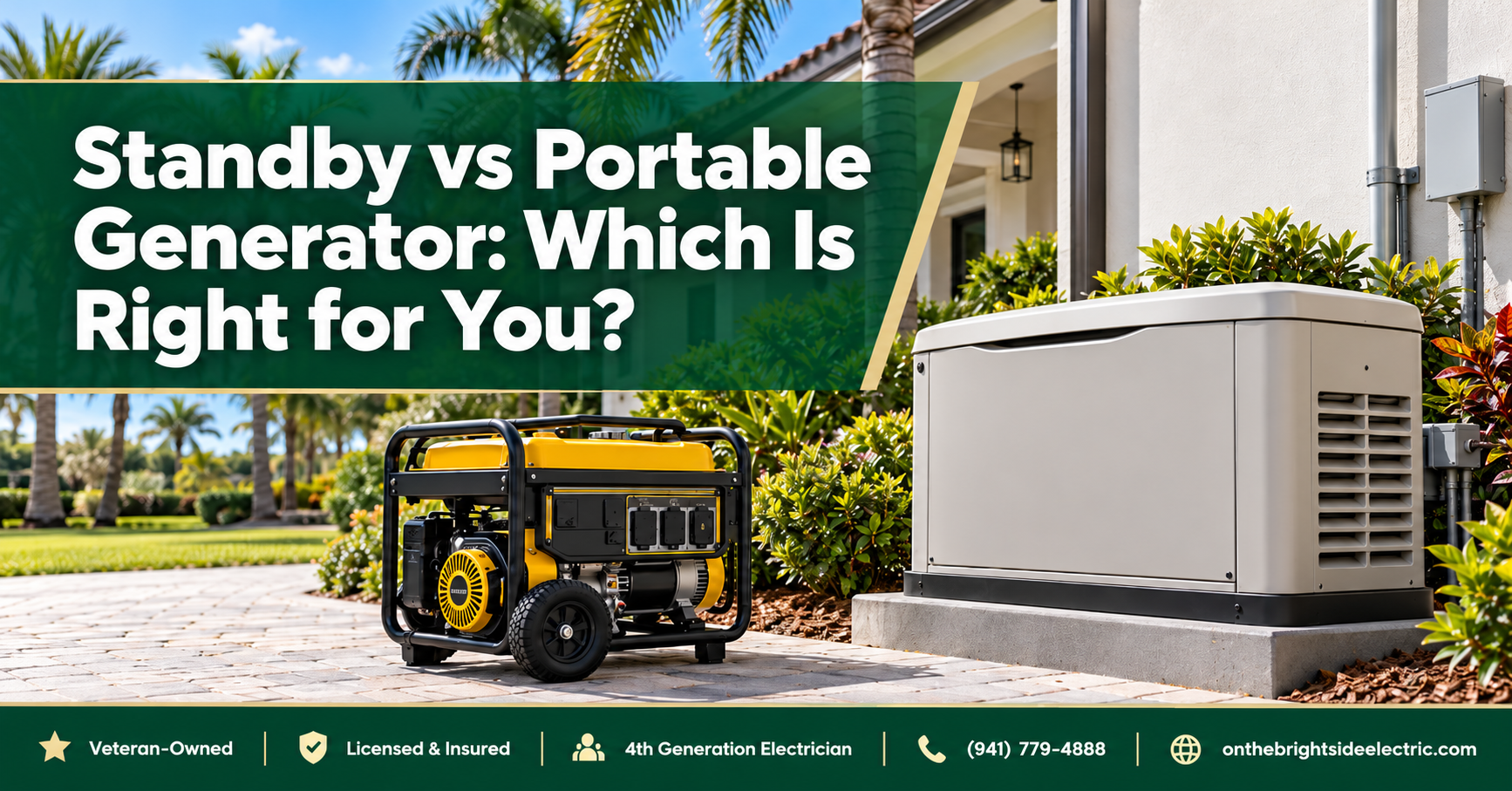
Standby generator: Permanently installed outside your home, wired into your electrical system through an automatic transfer switch, fueled by natural gas or propane. When the power goes out, it detects the outage and starts itself, usually within seconds. Automatic systems typically start and transfer loads without manual intervention when operating correctly.
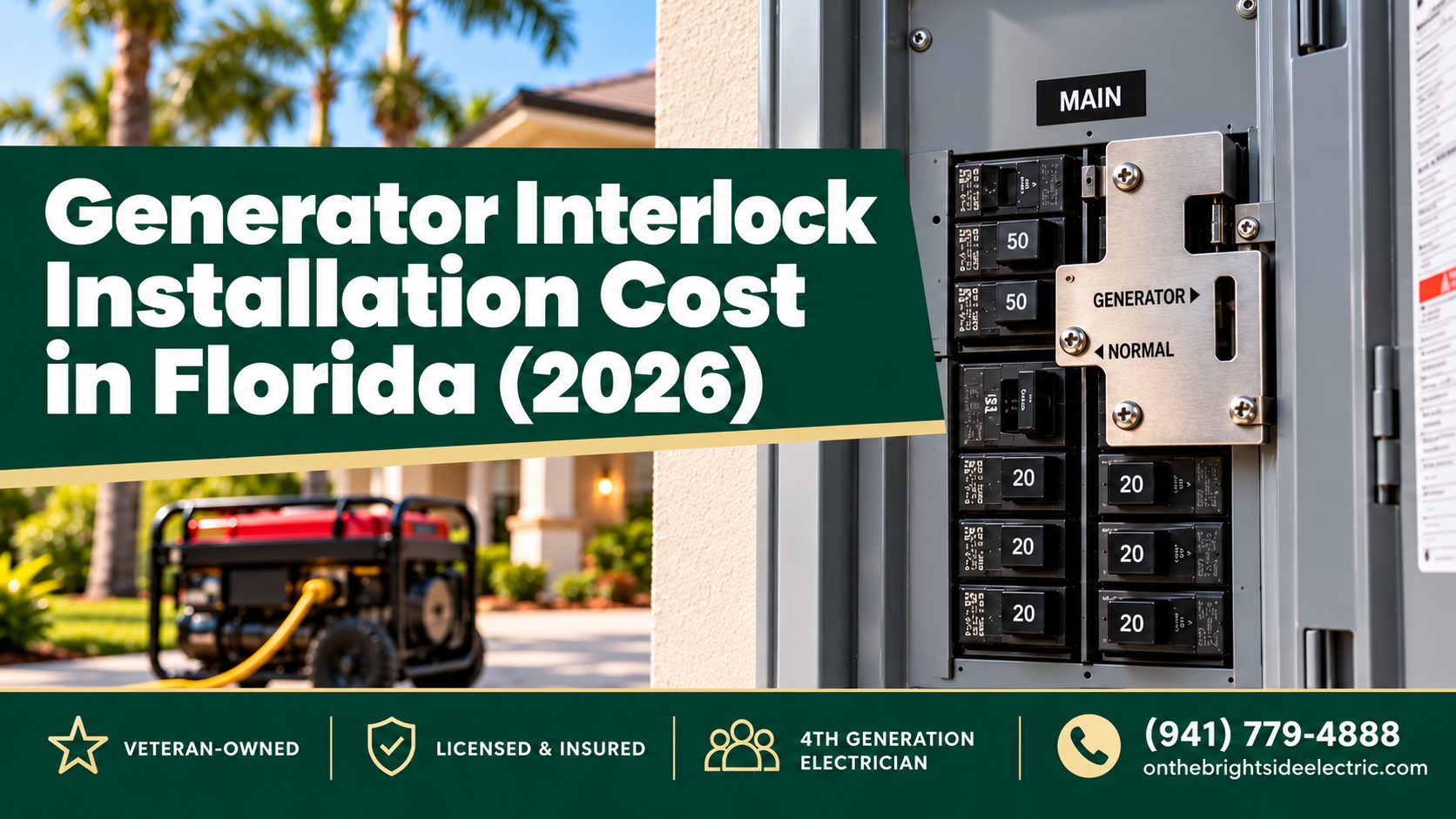
Portable generator with interlock: A portable generator you roll out of the garage, connected through an outdoor inlet to your panel via an interlock kit. You start it manually, manage fuel yourself, and choose which circuits to power. Installed once by an electrician through a proper generator interlock installation; operated by you during each outage.
Cost Comparison
| Standby Generator | Portable + Interlock | |
|---|---|---|
| Equipment | $5,000-$12,000+ | $800-$2,500 (generator) |
| Installation | $3,000-$6,000+ | High hundreds to mid-one-thousands |
| Total typical | Five figures | A fraction of standby |
| Fuel | Natural gas/propane (plumbed) | Gasoline (you refuel) |
The standby is a major home investment. The portable-plus-interlock is the value play that still gives you real, code-compliant backup power. For the itemized breakdown on the interlock side, see our interlock installation cost breakdown.
Convenience Comparison
Automatic standby systems can offer significant convenience advantages:
- Automatic start. You can be on vacation and the house stays powered.
- No refueling. Plumbed fuel means it runs as long as the gas flows.
- Quieter. Standby units are engineered for lower noise.
- Whole-house. Sized to run everything, including central air.
Portable requires you to be home, to start it, to refuel every several hours, and to manage which circuits are on. During a multi-day outage, that is real work.
Capacity: What Each Can Power
A standby generator may power most or all selected household loads, including air conditioning, if designed for those loads. A portable generator generally powers selected circuits, based on its rating and the approved connection: refrigerator, lights, fans, phone charging, internet, and often a window unit or the air handler fan. Running central air on a portable requires a large unit and careful sizing.
Be honest about what you need. If keeping the whole house at 72 degrees through a week-long outage matters, that is a standby. If keeping food cold, phones charged, and a bedroom cool matters, a portable does the job.
Maintenance and Lifespan
- Standby: Annual professional maintenance, like an HVAC system. Service life varies widely by manufacturer, load, environment and maintenance.
- Portable: Oil changes, fresh fuel or stabilizer, periodic test runs. Lifespan is shorter, and neglecting maintenance is the number one reason portables fail when needed.
Either way, the maintenance matters more than the machine.
Which Homes Suit Which Option
Standby makes sense when:
- You have medical equipment that cannot lose power
- You travel frequently or own a second home
- You want whole-house coverage including central air
- Budget allows a five-figure investment
Portable with interlock makes sense when:
- You want real backup power at a sensible price
- You are home during most outages
- Your must-run list is essentials, not everything
- You prefer a smaller upfront investment
If you are leaning toward standby, read our guide on what to know before buying a standby generator first. Either route can also pair with dedicated transfer switch options depending on your panel and load plan.
A Note on Timing
Do not wait until a hurricane is in the forecast. Electricians book out fast before storm season, portable generators sell out at every hardware store, and permit offices get slammed. If backup power is on your list, handle it in the calm months. October, right now, is ideal.
Frequently Asked Questions
Here are the questions Florida homeowners ask most often about choosing between standby and portable generator backup.
Can a portable generator run my central air?
Only a large portable unit, carefully sized, and it will consume most of the generator's capacity. Most portable setups prioritize essentials over central air.
How long can a portable generator run?
Run time per tank depends on the generator model, fuel capacity and electrical load; check manufacturer specifications. You refuel it yourself, with the generator off and cooled.
Does a standby generator need a permit?
Yes. Standby installations require permits, inspections, and often gas-line work coordinated with your gas provider.
Which option is better for resale value?
Either system may appeal to buyers, but added resale value is uncertain and depends on local demand and installation documentation.
Can I start with portable and upgrade to standby later?
Absolutely. Many homeowners do exactly this. The interlock gives you protection now; the standby comes when the budget allows.
Still Deciding? Talk It Through With a Local Electrician.
Call or text (941) 779-4888 for a free estimate. We will help you size the right backup power for your home and budget. No pressure.
On The Bright Side Electric LLC
Veteran-Owned | 4th Generation Electrician | Licensed & Insured | EC#13014677