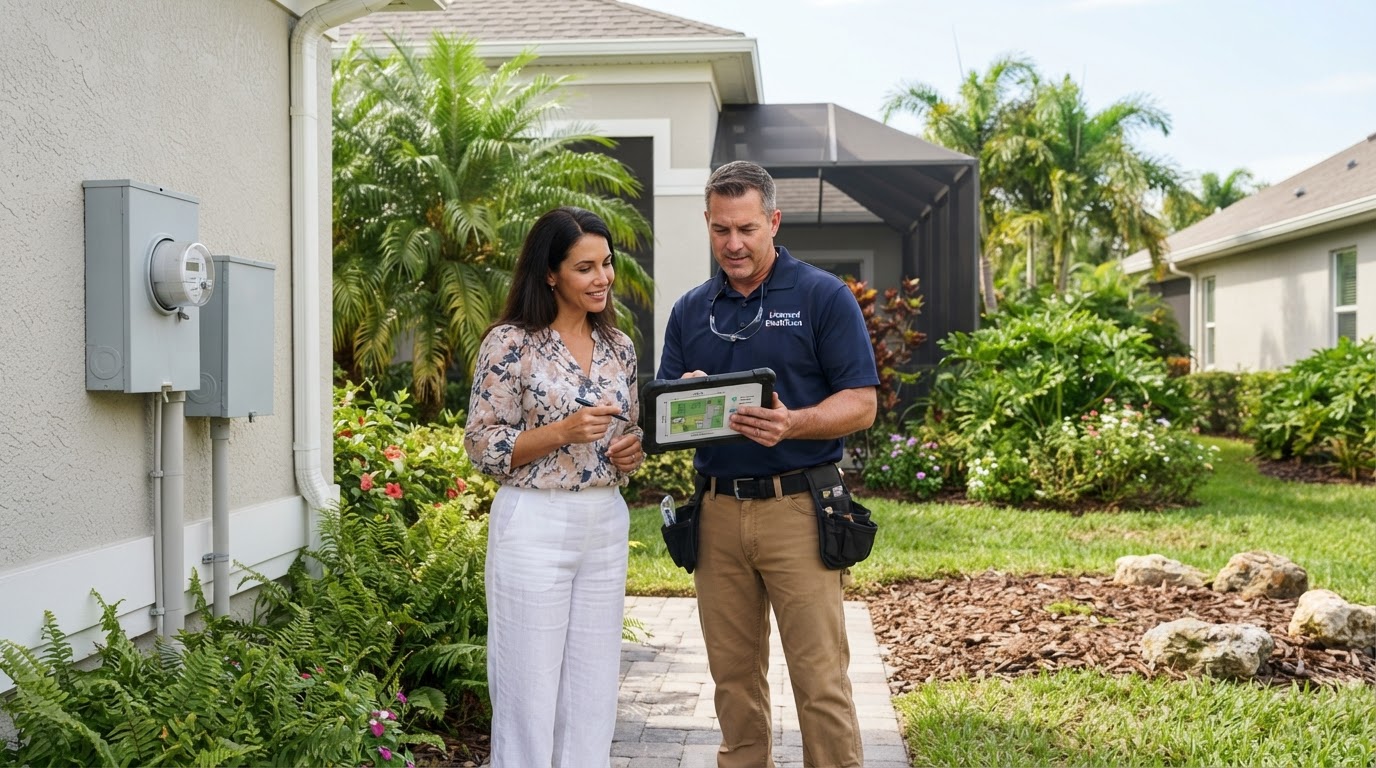
A standby generator is not just an appliance you buy and set beside the house.
It is part of a larger backup-power system that can involve electrical load planning, transfer equipment, fuel supply, site placement, permits, wiring, and sometimes changes to the home's electrical equipment.
That is why it can be smart to involve an electrician or qualified generator installer before you finalize the purchase.
The goal is not to slow down the project.
It is to make sure the generator you buy actually fits the home, the loads you want to back up, and the installation you are prepared to complete. For a deeper look at matching equipment to your household, see our generator sizing guide for Florida homes.
The Generator Size Is Only One Decision
Homeowners often start with a generator size in kilowatts.
That matters, but it is not the whole system.
A standby-generator project may also include:
- automatic transfer equipment
- load-management equipment
- electrical conductors and disconnecting equipment
- a pad or approved mounting base
- fuel connection and fuel-capacity planning
- placement clearances
- permits and inspections
- electrical panel or meter considerations
- surge protection or other related equipment where appropriate
A lower-priced generator unit can still become an expensive project if the property requires substantial site, fuel, or electrical work. To understand what the full installation involves, read our overview of standby generator installation for Florida homeowners.
Decide What You Actually Want to Power During an Outage
Before sizing the generator, make a realistic list of the loads that matter during an outage.
For some homeowners, the priority is basic backup:
- refrigerator
- lighting
- internet
- selected receptacles
- medical equipment
- garage door
For others, the goal is much closer to whole-home operation, including:
- central air conditioning
- well or pool equipment
- electric water heating
- cooking equipment
- clothes drying
- multiple refrigerators or freezers
- EV charging
The more large loads you expect to run, the more important the sizing and load-management discussion becomes.
Whole-Home Backup Does Not Always Mean Every Load Runs at Once
Modern standby systems can use load management to prioritize or temporarily limit certain loads.
That can help match the generator to the household without simply buying the largest unit available.
The correct strategy depends on the equipment, electrical system, homeowner priorities, and installation design.
A site review can help determine whether load management makes sense for your home.
Transfer Equipment Is Part of the Generator System
A standby generator needs a safe way to transfer the home from utility power to generator power.
Automatic transfer equipment is a core part of a typical standby-generator installation.
The exact arrangement can depend on:
- service configuration
- panel layout
- whether the system is whole-home or selected-load
- load-management design
- generator equipment
- utility and local requirements
Do not choose the generator while treating the transfer equipment as an afterthought. Learn more in our guide to generator transfer switch installation in Sarasota.
The Installation Location Can Affect the Equipment Choice and Cost
A generator must be installed in an appropriate outdoor location with consideration for the equipment instructions and local requirements.
Site factors can include:
- distance from the electrical service
- distance from the fuel source
- required clearances
- windows, doors, and openings
- drainage and flooding
- maintenance access
- property setbacks
- HOA or community restrictions
- noise considerations
- coastal conditions
In Florida, flood exposure can also affect site planning in some properties.
The best generator on paper can be the wrong choice if the intended location does not support the installation. Manufacturer resources such as the Generac backup generator installation guide note that site consultation considers generator placement, fuel, system requirements, and property restrictions.
Fuel Planning Matters Before the Generator Arrives
Standby generators commonly use natural gas or propane.
The available fuel source and capacity need to support the selected equipment.
A propane installation may involve tank capacity and location planning.
A natural-gas installation may require evaluation of the existing service and piping by the appropriate fuel professional.
The electrical contractor and fuel contractor may need to coordinate so the entire system is planned together.
Your Electrical Panel May Affect the Installation
The electrician may review:
- service size
- panel condition
- panel location
- available space
- existing loads
- transfer-equipment location
- grounding and bonding considerations
- whether other electrical upgrades are already planned
This does not mean a standby generator automatically requires a panel replacement.
It means the existing electrical system should be part of the design before the equipment is ordered. If your system needs preparation first, see our article on how to prepare your home electrical system for a generator installation.
What to Review Before Buying a Standby Generator
| Planning Question | Why It Matters |
|---|---|
| What do you want to power? | Drives generator sizing and load-management decisions |
| Whole-home or selected loads? | Affects transfer and distribution strategy |
| Natural gas or propane? | Fuel capacity and routing can affect equipment and installation |
| Where can the generator be located? | Clearances, flood exposure, maintenance access, and property restrictions matter |
| Where are the meter and panels? | Electrical layout affects installation scope |
| Do you have large electric loads? | HVAC, water heating, cooking, EV charging, and pool equipment can change sizing |
| Are permits or HOA approvals needed? | Timing can affect the project schedule |
Working through these items before purchase can prevent expensive surprises. A manufacturer sizing tool such as the Generac home standby generator sizing tool can be a useful starting point, though final selection depends on the actual home and installation.
Before You Buy Checklist
- ✓Backup loads you want to support
- ✓Generator size and load-management strategy
- ✓Transfer switch or load-management equipment
- ✓Fuel source and capacity
- ✓Installation location and clearances
- ✓Electrical panel and service capacity
- ✓Permitting and utility requirements
- ✓Budget for the full installation, not just the unit
Should You Buy a Generator Online First and Find an Installer Later?
You can, but it creates risk.
The installer may discover that:
- the generator is oversized or undersized for the plan
- the transfer equipment is not the right configuration
- additional equipment is needed
- the intended location does not work
- fuel requirements are different than expected
- the electrical system needs changes you did not budget for
A pre-purchase consultation lets the equipment decision follow the installation plan instead of forcing the installation around a purchase that has already been made.
What Information Helps With a Generator Consultation?
Before contacting the electrician, gather:
- property address
- photo of the electrical panel exterior and breaker directory
- photo of the electrical meter area
- preferred generator location if you have one
- fuel source available
- list of loads you want backed up
- HVAC equipment information
- major electric appliances
- whether you want whole-home or selected-load backup
- generator make and model if you are already considering one
Do not open electrical panels or remove covers for photos.
Standby Generator Planning in Sarasota and Manatee County
On The Bright Side Electric helps Florida homeowners plan standby-generator electrical installations throughout Sarasota and Manatee County, including Sarasota, Bradenton, Parrish, Palmetto, Ellenton, Lakewood Ranch, Siesta Key, and Longboat Key.
A useful first conversation focuses on your backup priorities, existing electrical system, equipment options, and likely installation scope.
That gives you a better basis for purchasing the generator and budgeting for the complete project.
Frequently Asked Questions
Should I choose the generator size before calling an electrician?
You can research sizes, but final selection should consider the actual loads you want to support, electrical system, transfer strategy, fuel, and site conditions.
Does a standby generator always need an automatic transfer switch?
A typical automatic standby system uses transfer equipment so the home can safely switch between utility and generator power. The exact equipment depends on the system design.
Can I install a generator next to the electrical meter to save money?
Proximity can affect installation cost, but the location still has to meet equipment instructions and applicable site, clearance, fuel, property, and local requirements.
Will I need a new electrical panel for a standby generator?
Not automatically. The existing service and panel need to be evaluated as part of the generator-system design.
Can OTBSE help before I buy the generator?
Yes. Send your backup-power goals, panel and meter photos, fuel information, and any generator model you are considering so the project can be reviewed before equipment is finalized.
Planning a Standby Generator?
Before you order the equipment, make sure the generator, transfer system, fuel plan, and electrical installation all work together. Send On The Bright Side Electric your project information for a free remote consultation and next-step recommendation.
Request a Free Remote Generator Consultation →Related Articles
- Generator Sizing Guide: How to Choose the Right Backup Power for Your Florida Home
- Standby Generator Installation: What Florida Homeowners Need to Know
- How to Prepare Your Home Electrical System for a Generator Installation
- Generator Transfer Switch Installation in Sarasota FL
- Request a Free Remote Estimate