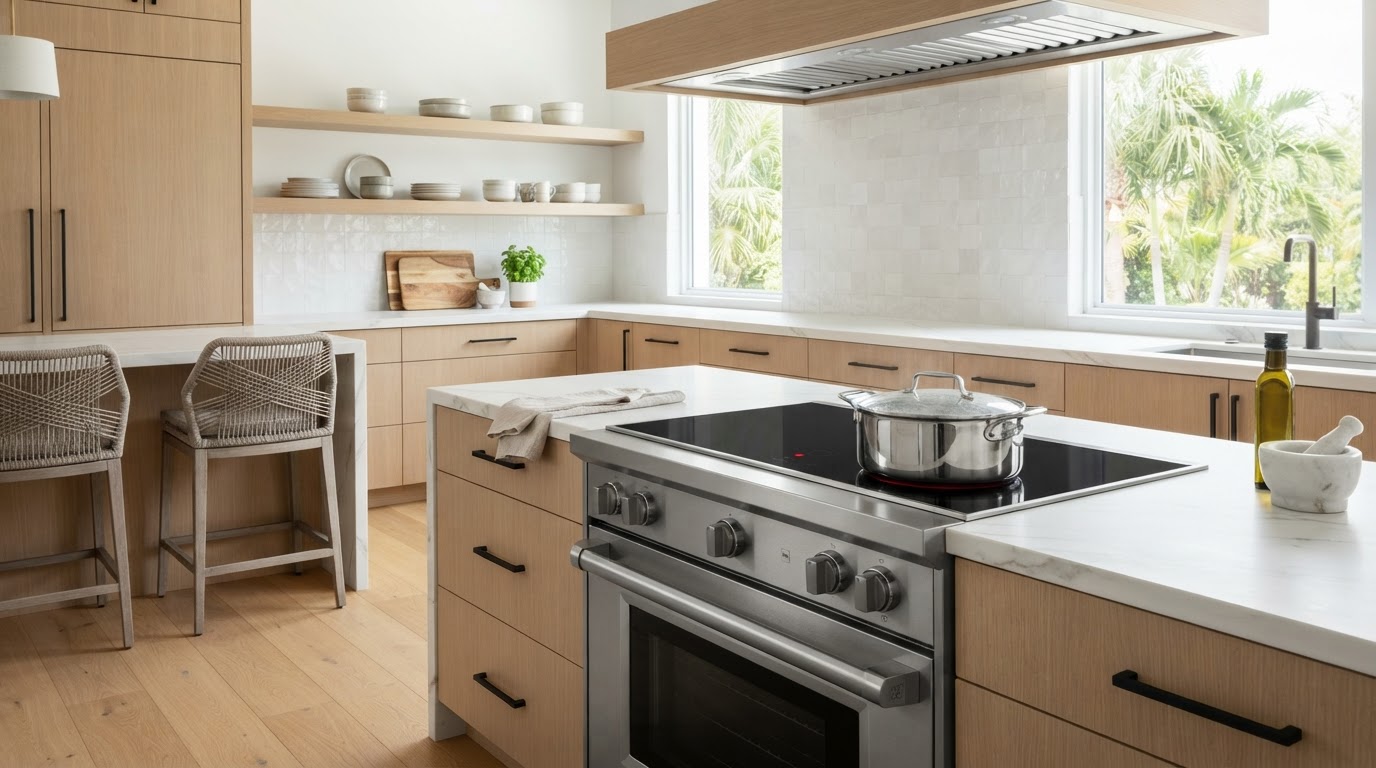
Induction cooking is becoming a popular choice for homeowners who want fast heat response, a smooth cooktop, and an all-electric kitchen.
But the electrical question should come before the appliance delivery truck arrives.
A new induction range may require a different circuit, connection, or electrical capacity than the appliance it is replacing. Even if an existing range is electric, you should not assume the old circuit automatically matches the new model.
The exact requirements come from the appliance manufacturer, the existing electrical system, and the applicable installation requirements.
Start With the Exact Induction Range Model
Do not plan the electrical work from a generic online statement such as "induction ranges use 240 volts."
Start with the exact make and model you intend to install.
The installation instructions and rating information may specify:
- required voltage
- minimum circuit rating
- connection method
- cord requirements
- conductor configuration
- grounding requirements
- clearance and installation conditions
For example, some full-size induction ranges, such as certain GE induction range models, specify an individual 40-amp branch circuit, while another model may have different requirements.
That is why the model number matters before the electrician prices the work.
Your Existing Electric Range Circuit May or May Not Be Reusable
If you are replacing an older electric range, the existing circuit might already be close to what the new appliance needs.
But it still needs to be evaluated.
The electrician may need to confirm:
- breaker size
- conductor size and type
- condition of the wiring
- grounding and neutral arrangement
- receptacle or hardwire connection
- compatibility with the new appliance instructions
- panel capacity
Older installations can also have connection arrangements that were acceptable when installed but are not the preferred setup for a new appliance installation.
The goal is not to change wiring simply because it is old. The goal is to verify that the existing installation is suitable for the new equipment. For more background on when a single circuit is involved, see our guide to dedicated circuits in Sarasota, FL.
Switching From Gas Can Be a Bigger Electrical Project
If your current range is gas, you may not have a high-capacity 240-volt range circuit at that location at all.
A gas range often uses electricity only for ignition, controls, lights, and accessories.
An induction range uses electricity for the cooking load itself.
That can mean installing a new branch circuit from the electrical panel to the kitchen.
Depending on the home, that project can involve:
- a new breaker
- new cable or raceway
- a new range receptacle or approved connection point
- routing through attic, crawlspace, garage, walls, or cabinetry
- drywall or finish considerations
- panel or service evaluation
The route from the panel to the kitchen can affect labor and project cost as much as the appliance itself.
An Empty Breaker Space Does Not Automatically Mean You Have Capacity
Homeowners often open the panel door, see an unused breaker position, and assume the new range will fit electrically.
Physical space is only one part of the question.
The electrician may also need to consider the home's existing electrical loads and the rating of the service and panel.
That is particularly important in homes that have added other large electrical loads such as:
- EV charging
- electric water heating
- electric clothes drying
- pool or spa equipment
- large HVAC equipment
- additional kitchens or accessory spaces
Many homes can support an induction range without a panel upgrade.
But the answer should come from an evaluation, not from the number of blank spaces in the panel. For related warning signs, see our article on signs your electrical panel may need an upgrade.
What Should Be Checked Before You Buy?
A quick pre-purchase review can prevent a common remodeling problem: the new appliance arrives, but the electrical system is not ready for it.
The checklist below summarizes the most important items to verify before delivery.
Pre-Purchase Checklist
- Exact range model number
- Voltage and amperage requirements
- Existing receptacle or hardwire connection
- Panel capacity
- Distance and route from panel to range
| Item to Check | Why It Matters |
|---|---|
| Exact range make and model | Manufacturer instructions determine the actual electrical requirements |
| Existing breaker and circuit | The old circuit may not match the new appliance |
| Connection type | Receptacle, cord, and hardwired arrangements vary by equipment and installation |
| Panel and service capacity | A physically open breaker space does not prove sufficient electrical capacity |
| Route from panel to kitchen | Distance and access can materially affect installation scope |
For general code context, the National Electrical Code information from the NFPA is a useful reference, but the applicable requirements for your installation come from the manufacturer and your local authority.
Do Induction Ranges Need a Dedicated Circuit?
A full-size electric or induction range is typically supplied by an individual branch circuit sized for the appliance and installation.
Do not choose the breaker or wiring size from a blog chart.
Use the installation instructions and have the existing circuit verified for the actual appliance.
This is especially important because manufacturers can specify different electrical requirements between models that look very similar in a showroom.
Does an Induction Cooktop Have the Same Requirements as a Range?
Not necessarily.
A freestanding or slide-in range combines the cooktop and oven in one appliance.
A separate induction cooktop is a different piece of equipment and may have different electrical requirements.
If you are installing a separate wall oven and induction cooktop, the kitchen may need multiple circuits designed around the specific appliances.
Send both model numbers when requesting an electrical estimate.
What If You Are Remodeling the Kitchen at the Same Time?
A kitchen remodel is the best time to coordinate electrical changes before cabinets, countertops, backsplash, and finished walls limit access.
If the induction range is part of a larger project, discuss:
- final appliance locations
- model numbers
- receptacle placement
- island or peninsula power
- countertop appliance circuits
- microwave or speed-oven requirements
- dishwasher and disposal changes
- lighting and controls
- future appliance plans
Planning these items together can reduce rework later. See our guide to electrical decisions to make before a kitchen remodel starts for a broader planning checklist.
Should the Electrician Review the Project Before Appliance Delivery?
Yes, especially when switching from gas, changing appliance types, or working with an older electrical system.
Before delivery, the electrician can identify whether the home appears ready or whether electrical work should be scheduled first.
Useful information to send includes:
- range make and model
- photo of the existing range connection if safely visible without moving equipment or opening electrical boxes
- photo of the electrical panel exterior and breaker directory
- approximate location of the kitchen relative to the panel
- whether the existing range is gas or electric
- any planned kitchen remodeling
This can make the estimate process much more efficient.
Induction Range Electrical Upgrades in Sarasota and Manatee County
On The Bright Side Electric helps homeowners prepare electrical systems for appliance upgrades and kitchen remodeling throughout Sarasota and Manatee County, including Sarasota, Bradenton, Parrish, Palmetto, Ellenton, Lakewood Ranch, Siesta Key, and Longboat Key.
Depending on the project, the work may involve evaluating the existing circuit, installing a new dedicated circuit, changing the connection arrangement, or reviewing panel capacity.
The exact scope depends on the appliance and the home.
Planning an Induction Range Upgrade?
Before the appliance is delivered, send On The Bright Side Electric the make and model, panel photos, and basic project details. We can review the information and help determine the appropriate next step for your Florida home.
Request a Free Remote Estimate →