Florida homeowners deal with something most of the country doesn’t: near-daily summer lightning, powerful hurricane-season storms, and electrical systems that take a beating year-round. Most know they should do something about it. Far fewer know whether they already have adequate protection — or what “adequate” actually means.
This guide walks you through the specific signs that a whole-home surge protector makes sense for your home, explains what it actually protects against (and what it doesn’t), and helps you make an informed decision before the next storm season peaks.
What a Whole-Home Surge Protector Actually Does
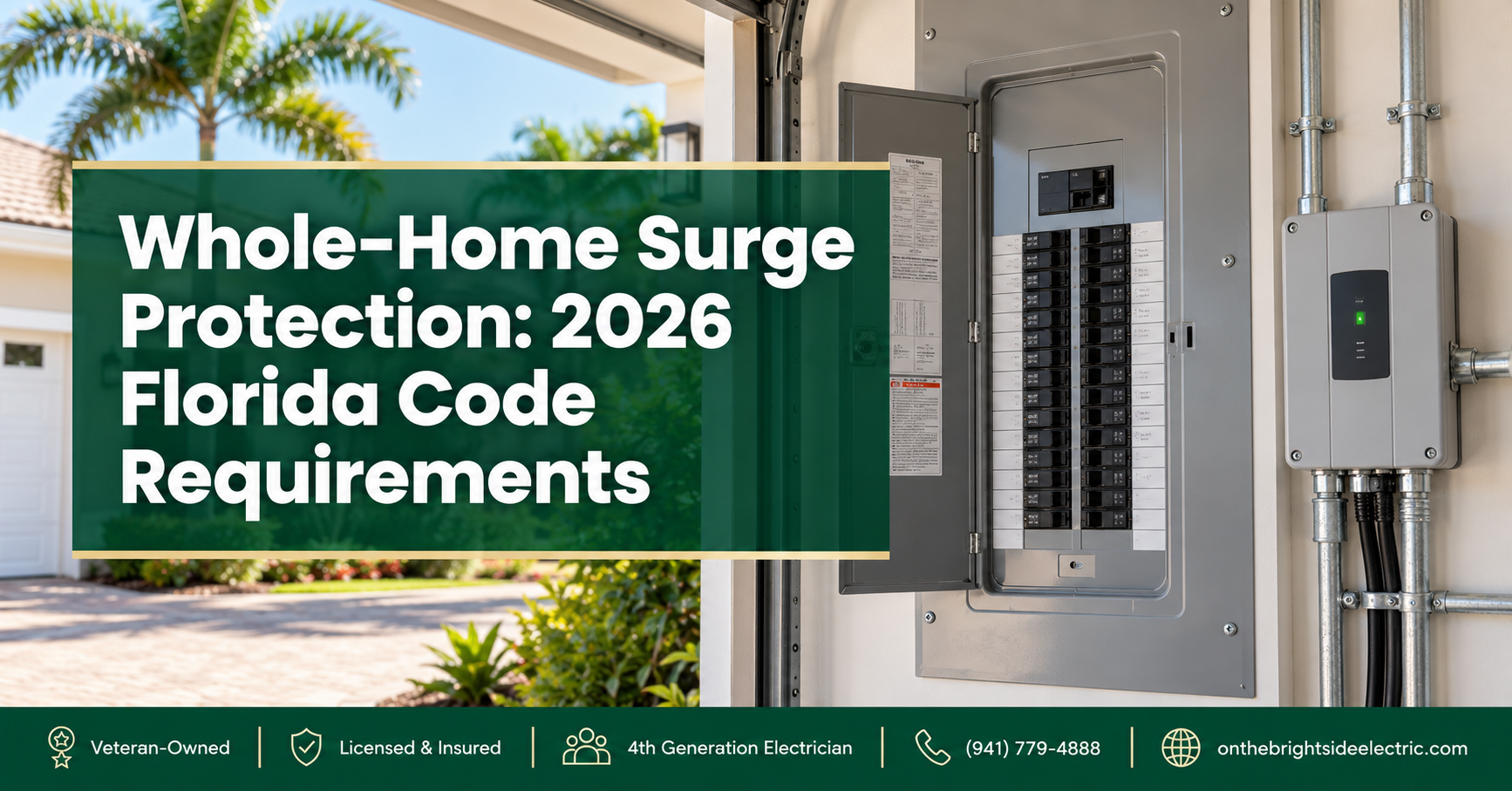
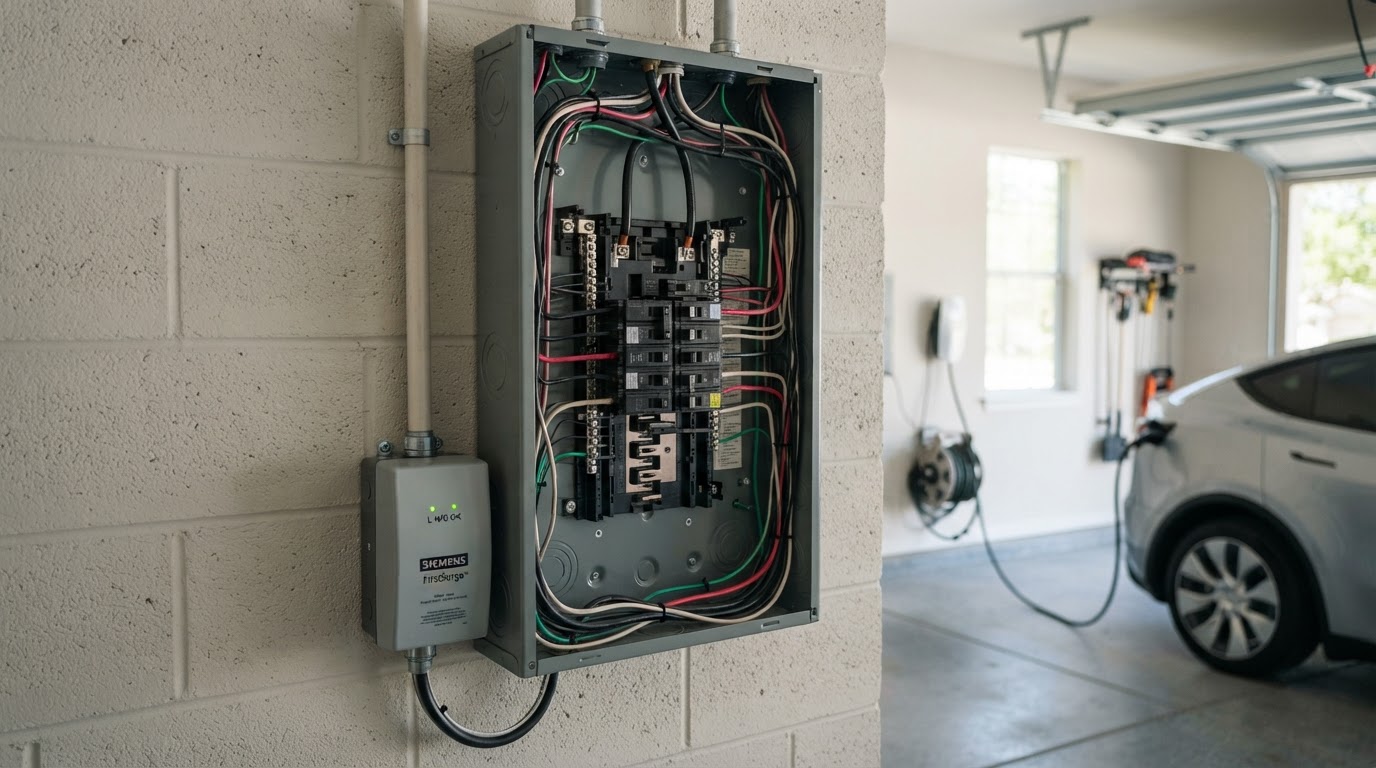
A whole-home surge protector — also called a service entrance surge protection device (SPD) — installs at your electrical panel, where power enters your home from the utility grid. When a voltage spike occurs, the device detects it and diverts the excess energy to ground before it can travel through your home’s wiring.
This is fundamentally different from a power strip surge protector, which only protects the specific devices plugged directly into it. Your hardwired HVAC system, your refrigerator, your well pump, your EV charger — none of those are covered by a power strip.
A whole-home device works upstream from all of your circuits. Everything in the house benefits.
7 Signs Your Florida Home Needs One
1. Your Lights Flicker or Dim During Storms
If your lights flicker, dim, or briefly go out when a storm rolls through — even if power stays on — that is a sign your electrical system is experiencing voltage fluctuations. Storms don’t have to produce a direct lightning strike to send surges through your home via the utility grid. This symptom is one of the clearest indicators that surge protection is warranted.
2. You’ve Had Appliances or Electronics Fail After Storms
A refrigerator compressor that stops working after a bad storm. A TV that goes out during hurricane season and never comes back. A router that stops functioning for no apparent reason. These are often surge casualties — and they often go unrecognized because the failure doesn’t always happen immediately. Cumulative surge damage can degrade electronics over months before they fail entirely.
3. You Have an HVAC System, Pool Pump, or Other High-Value Equipment
HVAC systems are among the most expensive appliances in a Florida home — and one of the most vulnerable to surge damage. Pool pumps, well pumps, and irrigation systems are also high-value targets for surge damage. These are hardwired systems that cannot be protected by a power strip. If you have any of them, you have assets worth protecting at the panel level.
4. You Have Smart Home Devices, a Home Office, or Security Systems
Smart thermostats, security cameras, smart locks, home automation hubs, routers, NAS drives, workstation computers — all of these are sensitive to voltage fluctuations. A single significant surge can wipe out thousands of dollars of equipment. If your home relies on connected technology for work, security, or daily function, you have meaningful exposure without panel-level protection.
5. You Have an EV Charger or Are Planning to Add One
A Level 2 EV charger represents a significant electrical investment — and it’s directly connected to your home’s electrical panel. EV charging equipment is sensitive to power quality and can be damaged by surges. If you are charging a vehicle worth $40,000 or more using your home electrical system, panel-level protection is simply responsible ownership.
6. Your Home Is More Than 20 Years Old
Older Florida homes — particularly those built before the mid-2000s — were designed around different electrical loads and different appliance categories. Many were built before smart devices, EV chargers, and high-efficiency inverter-driven HVAC became standard. Older wiring, older panels, and older infrastructure are generally more vulnerable to the effects of surge events than newer construction.
7. You Don’t Have Whole-Home Surge Protection at All
This is the most straightforward sign of all: if you don’t know whether your home has a surge protection device installed at the panel, it almost certainly doesn’t. Whole-home SPDs are not typically included in standard home construction. They are an upgrade — one that most Florida homeowners have not made, despite living in the highest-lightning-density state in the country.
What Florida-Specific Factors Increase Your Risk
Beyond the seven signs above, Florida homeowners face surge exposure that homeowners in other states don’t:
Lightning density: Florida’s central corridor and coastal regions experience more lightning strikes per square mile than any other state. The Tampa Bay metro area — which includes Sarasota and Manatee Counties — sits squarely in this zone.
Utility grid events: Surges don’t only come from direct lightning strikes to your home. When lightning hits a transformer or power line nearby, the resulting spike can travel through the grid into homes on that circuit. Florida’s summer storm pattern makes these grid-level surge events frequent.
AC motor cycling: Florida HVAC systems run more months of the year than in any other state. Every time a compressor motor starts or stops, it creates a small internal surge. These internal surges are lower in magnitude than lightning events, but they cause cumulative damage to sensitive electronics over time — shortening appliance lifespans in ways that are easy to miss.
Hurricane season duration: Florida’s official hurricane season runs from June through November. That’s six months of elevated storm activity, each storm capable of producing multiple surge events. Protection should be in place before the season peaks — not after a damaging storm.
What Whole-Home Surge Protection Does Not Cover
Being clear about limitations is important:
- Power outages: A surge protector keeps voltage spikes from damaging your equipment. It does not keep power on during an outage. For outage protection, you need a generator or battery backup system.
- Direct lightning strikes to your home: A direct strike produces energy levels beyond what most residential surge protection devices are rated to handle. Whole-home SPDs protect against the surges that travel through the utility grid — the far more common threat — not a direct hit to your structure.
- Internal surge events in your own appliances: If a motor fails inside your own refrigerator and produces a surge, that originates inside your home’s wiring rather than coming from the utility service entrance. Layered protection — panel-level plus point-of-use protection at sensitive devices — provides the most complete coverage.
Does Homeowner’s Insurance Cover Surge Damage?
Policies vary significantly. Some homeowner’s policies in Florida include coverage for lightning-caused surge damage. Many have sublimits, deductibles, or exclusions that make claims for individual appliances impractical. Coverage for internal surge damage (from your own appliances cycling) is often excluded entirely.
Filing a claim also comes with consequences: deductibles, time, documentation requirements, and potential premium increases. Surge protection at $200–$400 installed is typically far less than the cost of a single major appliance claim — and it eliminates the claim entirely.
How Surge Protection Works With Your Existing Panel
Whole-home surge protection installs at or near your electrical panel. The licensed electrician connects the device to your main service entrance, where it monitors incoming voltage continuously. Installation is typically completed in a single visit and requires no changes to your home’s wiring or circuits.
If your panel is in good condition and the appropriate breaker space is available, installation is straightforward. At On The Bright Side Electric, we review your panel configuration before recommending a specific device, and we can often give you a cost estimate based on a description of your panel without an on-site visit.
Ready to Find Out if Your Home Is Protected?
If you recognize two or more of the signs above, a conversation with a licensed electrician is worth having before the next storm. We offer free remote consultations — no sales pressure, just straight answers.
Request a Free Surge Protection Consultation →Daniel Spears — Master Electrician, 4th-generation electrician, veteran-owned business owner — serves homeowners throughout Sarasota and Manatee Counties, including Sarasota, Bradenton, Palmetto, Parrish, Lakewood Ranch, North River Ranch, Ellenton, and surrounding communities.
EC#13014677 | Licensed & Insured | Serving Sarasota & Manatee County