Florida hurricane season runs from June 1 through November 30. During those six months, power outages are a real possibility across Sarasota and Manatee County. Many homeowners invest in a generator to keep the lights on, the refrigerator cold, and the AC running when the grid goes down.
But a generator without a proper transfer switch is not just inefficient. It is dangerous and illegal in Florida. Without the right connection method, you risk electrocution, fire, and code violations that can void your insurance coverage.
This guide explains what a generator transfer switch is, the types available, what Florida code requires, and how to prepare your home for hurricane season the right way.
Why Every Generator in Sarasota and Bradenton Needs a Transfer Switch
Without a transfer switch, running a portable generator creates three serious problems.
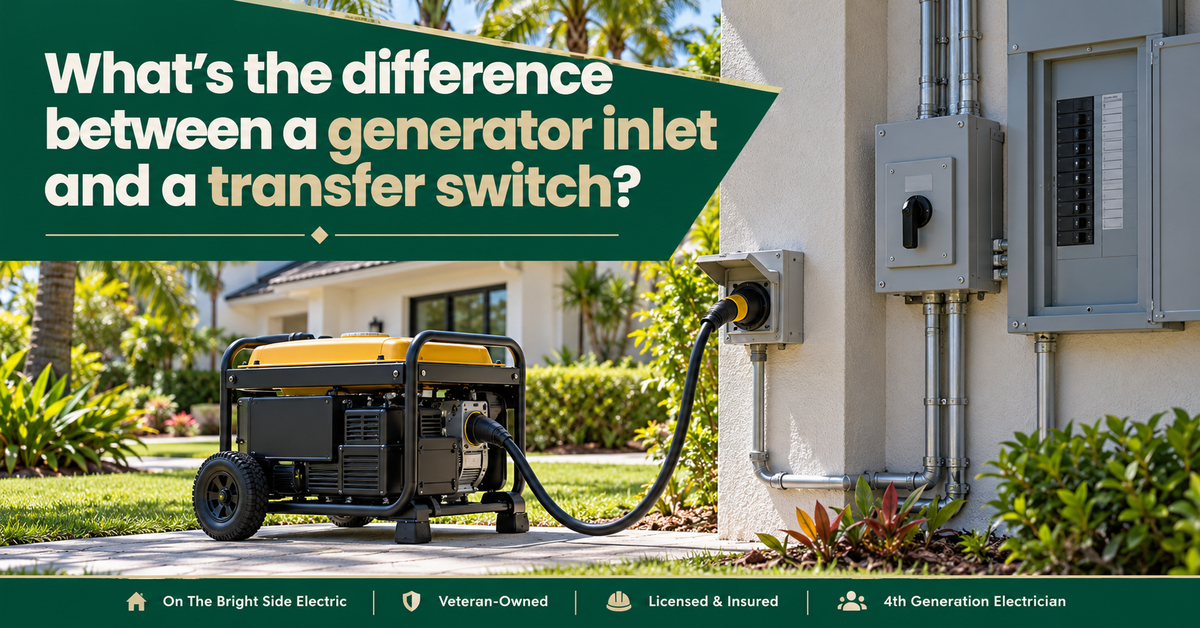
Dangerous: If you connect a generator directly to your panel or through a dryer outlet, power flows backward through the utility lines. This is called backfeed. Backfeed can electrocute utility workers who are restoring power after a storm. It is one of the most dangerous things a homeowner can do with a generator.
Illegal: Florida code requires a proper transfer switch or interlock kit for any generator connection to your electrical panel. Direct connections without a transfer mechanism are code violations. If your home is inspected and found to have an illegal generator connection, you may be required to remove it and redo the work properly.
Inefficient: Running extension cords from a generator through a window does not power your most important systems. Your AC, well pump, water heater, and hardwired appliances cannot be reached with extension cords. A transfer switch lets you power specific circuits directly from your panel, safely and efficiently.
Hurricane season in Sarasota and Manatee County makes generator readiness a necessity, not a luxury. Doing it right means installing a proper transfer switch before the next storm.
Types of Transfer Switches and Interlock Kits
There are three primary ways to connect a generator to your home electrical system. Each has a different cost, convenience level, and use case.
Manual Transfer Switch: A manual transfer switch is a separate panel installed next to your main panel. It connects to specific circuits in your home. When the power goes out, you start your generator, flip the transfer switch to generator power, and those circuits are powered. Manual transfer switches typically handle 6 to 10 circuits and are ideal for portable generators.
Generator Interlock Kit: An interlock kit is a mechanical device installed inside your main electrical panel. It physically prevents the main breaker and the generator breaker from being on at the same time. This is the most affordable option. It allows you to power any circuit in your panel, limited only by your generator output. You still start and connect the generator manually.
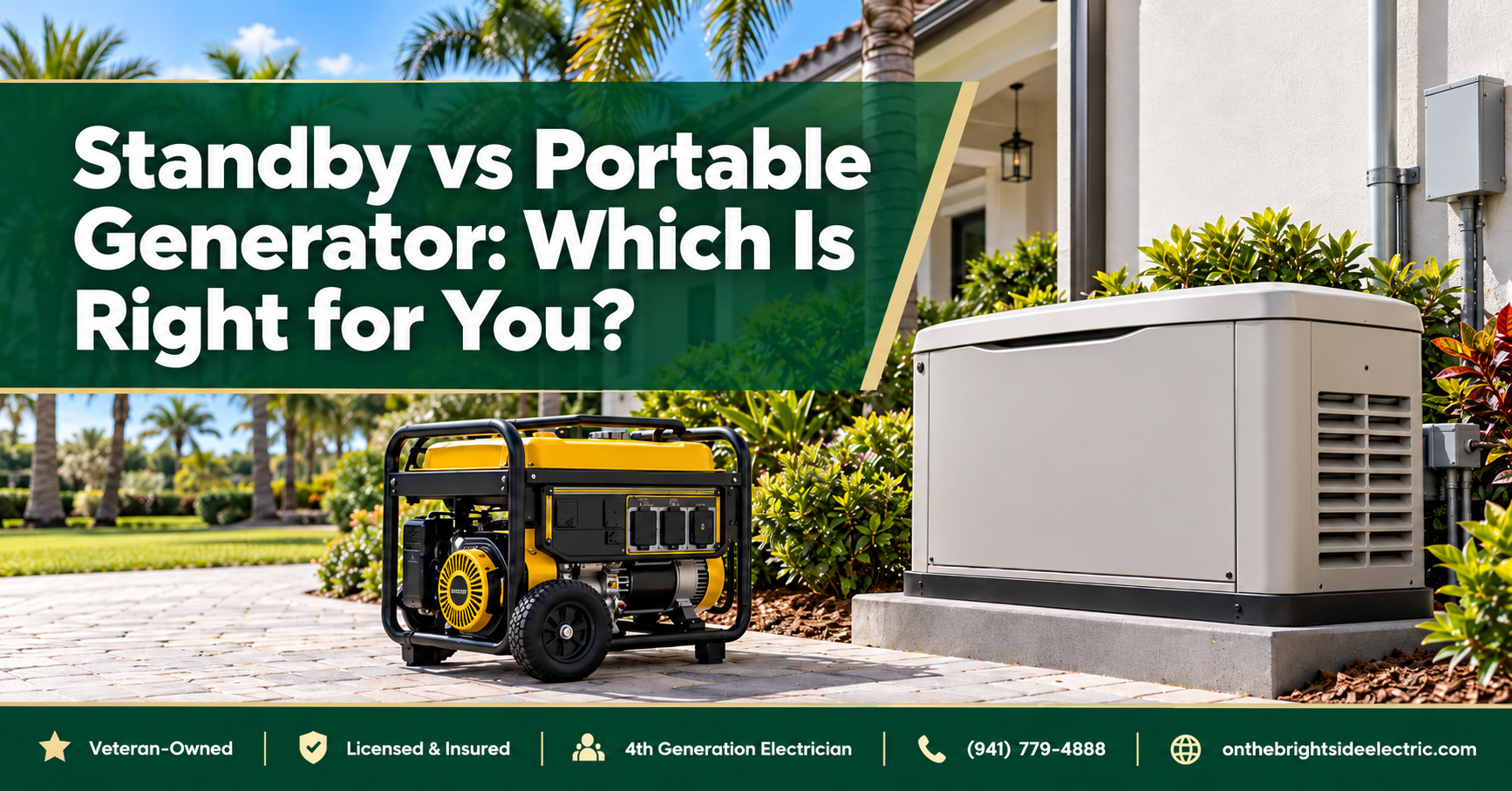
Automatic Transfer Switch (ATS): An ATS detects when utility power fails and automatically starts your generator and switches your home to generator power. When utility power is restored, it switches back and shuts down the generator. ATS units are used with whole-home standby generators. They are the most convenient option but also the most expensive.
Interlock Kits vs Manual Transfer Switches vs Automatic Transfer Switches
Understanding which option fits your situation and budget helps you make the right choice.
Interlock kits are the least expensive option. They work with portable generators and your existing panel. You can power any circuit in your home, but you must manage the load manually to avoid overloading the generator. Installation is straightforward for a licensed electrician. This is the most popular choice for homeowners who already own a portable generator.
Manual transfer switches isolate specific circuits, which means you cannot accidentally overload the system. They are slightly more expensive than interlock kits but offer better control over which circuits are powered. This is a good choice if you want a dedicated set of circuits for outage use.
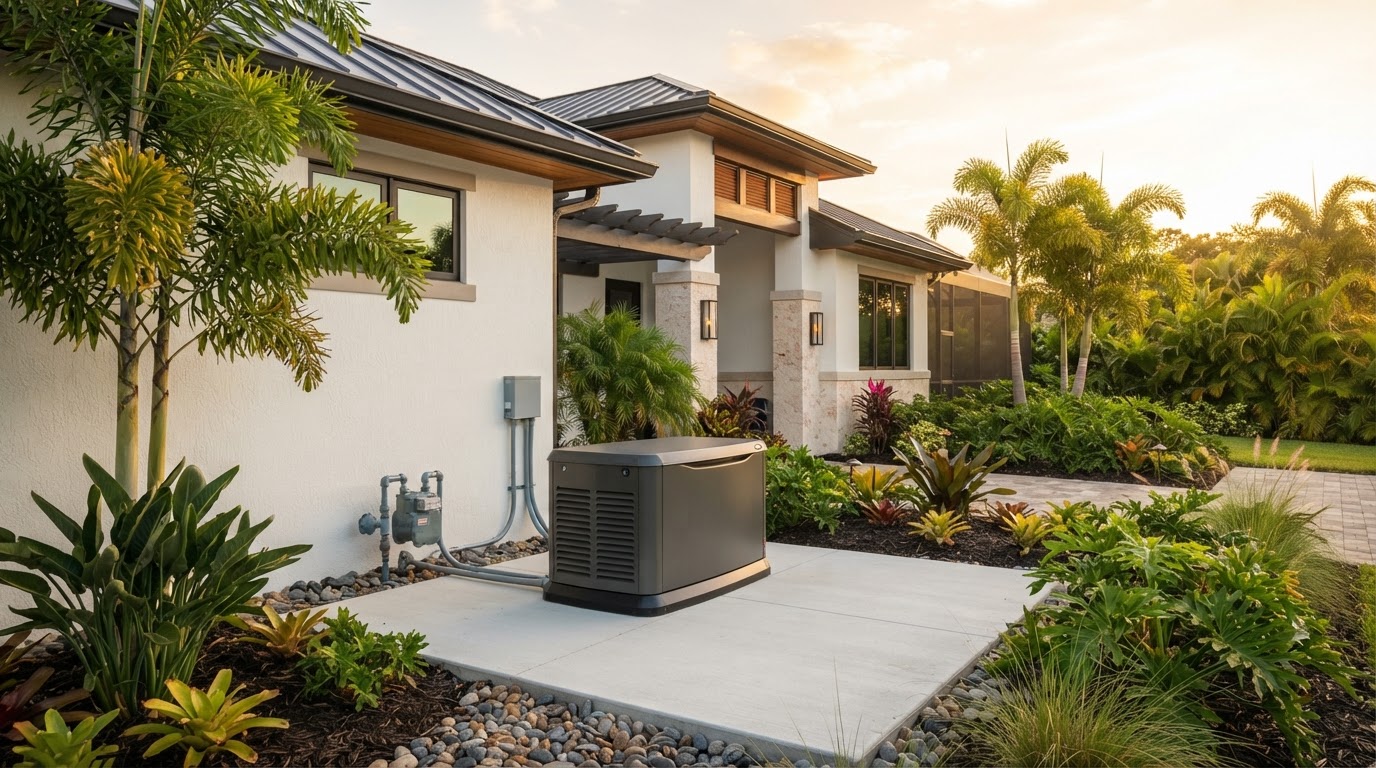
Automatic transfer switches are the most convenient. You do not need to be home for the system to work. When the power goes out, the generator starts automatically and your home switches to generator power within seconds. ATS units are paired with whole-home standby generators, which are permanently installed and run on natural gas or propane. This is the most expensive option but provides seamless backup power.
What Florida Code Requires for Generator Connections
Florida follows the National Electrical Code (NEC) for generator connections. The requirements are clear and non-negotiable.
- Permits are required for transfer switch installation, interlock kit installation, and any generator connection to your panel.
- A licensed electrician must perform the installation. Unlicensed electrical work on a generator connection is a code violation.
- Proper grounding is required for all generator connections.
- Breaker sizing must match your generator output. An oversized breaker can cause overheating and fire.
- Transfer mechanism is required to prevent backfeed. There is no legal way to connect a generator to your panel without one.
Warning: Hiring someone without a license to install a generator connection puts you at risk during hurricane insurance claims. If a claim is filed for damage related to an unpermitted generator installation, your insurance company may deny the claim. The cost savings of hiring an unlicensed worker are not worth the risk.
Our Generator Transfer Switch Installation Process
We make the installation process straightforward and fully code-compliant.
- Assessment: We evaluate your current panel, generator capacity, and the circuits you want to power during an outage.
- Permit application: We handle the permit process with your local building department.
- Installation: We install your chosen solution, whether it is an interlock kit, manual transfer switch, or automatic transfer switch.
- Wiring and breaker installation: We install the generator breaker and wiring to code, with proper grounding and sizing.
- Safety testing and load verification: We test the system to confirm it works correctly and safely handles the load.
- Permit inspection: We coordinate the inspection so the work is documented and approved.
- Documentation provided: You receive all permit documentation for your records and insurance file.
We serve homeowners throughout Sarasota, Bradenton, Venice, Palmetto, Nokomis, Lakewood Ranch, North Port, Osprey, and Siesta Key.
Preparing for Hurricane Season in Sarasota and Manatee County
Your generator transfer switch or interlock kit should be installed before hurricane season begins on June 1. Waiting until a storm is in the forecast creates scheduling delays and puts you at risk of going without power when you need it most.
Late season rush is a real problem. Once the first major storm forms, electricians across Sarasota and Manatee County get flooded with calls. Planning ahead means you are ready when the power goes out.
Beyond the transfer switch, consider these hurricane season electrical preparations:
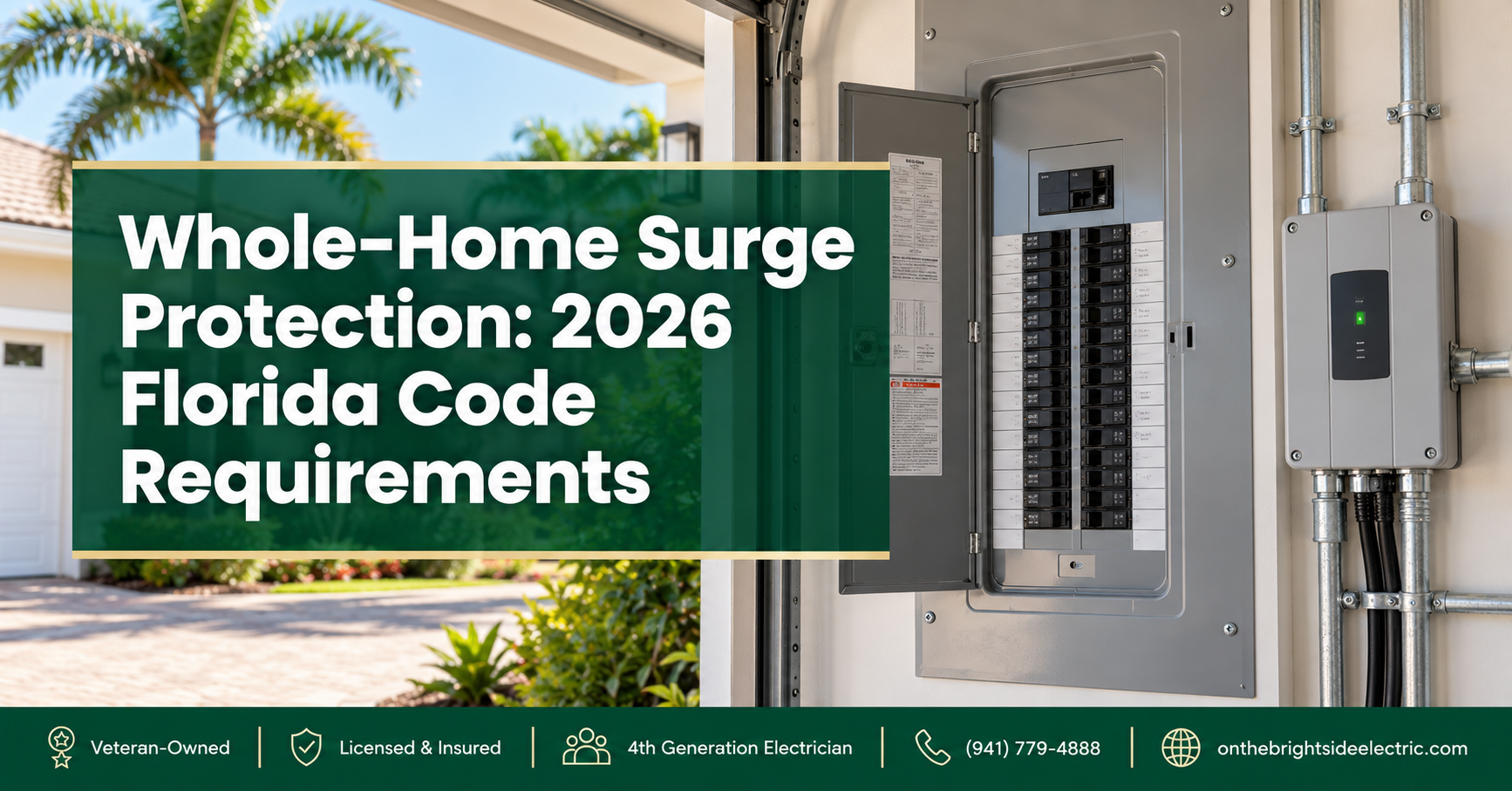
- Whole-home surge protection: When power is restored after an outage, the surge can damage electronics and appliances. Surge protection at your panel guards against this.
- Outdoor generator placement: Never operate a generator indoors, in a garage, or near open windows. Carbon monoxide is deadly and builds up quickly in enclosed spaces.
- Fuel storage: Store generator fuel in approved containers, in a cool, ventilated area, away from living spaces.
- Generator maintenance: Test your generator before hurricane season. Check oil, fuel, and battery condition. A generator that does not start when you need it is useless.
Frequently Asked Questions about Generator Transfer Switches in Sarasota FL
Hurricane Season Is Here
Do not wait until the next storm warning to prepare your generator connection. We serve all of Sarasota and Manatee Counties and can often schedule within days. $59.99 dispatch fee. Veteran-owned.
Licensed Electrical Contractor | EC#13014677 | (941) 779-4888