It is a fair question, and you should ask it. A panel upgrade is a significant investment, and "you need a new panel" is one of the easiest things for a less scrupulous contractor to say. So let us give you a straight answer: sometimes you do need one, often you do not, and there is a simple calculation that settles it.
Table of Contents
- What the data actually says
- What a load calculation is (and why it matters)
- When you genuinely need a panel upgrade
- When you probably do not
- Alternatives to a full panel upgrade
- How to tell an honest assessment from an upsell
- FAQ
What the Data Actually Says
A panel upgrade is not automatically required when adding Level 2 charging. The correct decision depends on the existing service rating, an electrical load calculation, panel condition, equipment listing, and the proposed charger output.
A written load calculation and a clear explanation of alternatives are more useful than assumptions about whether a contractor is upselling. For an overview of what we install, see our EV charger installation services page.
What a Load Calculation Is (and Why It Matters)
A load calculation is the math electricians use to determine how much electrical capacity your home actually uses and how much headroom is left. It accounts for your square footage, your major appliances, such as air conditioning, range, dryer, and water heater, and the new EV charger circuit you want to add.
This is not guesswork. It follows a standard method in the National Electrical Code. Any electrician who tells you that you need a panel upgrade for an EV charger should be able to show you this calculation and walk you through it. If they cannot, that is your answer to the upsell question.
When You Genuinely Need a Panel Upgrade
A panel upgrade is the right call when:
- The load calculation shows you are over capacity. If the load calculation exceeds service capacity, an appropriately designed upgrade or listed load-management solution may be necessary. Our panel upgrade services page explains what that scope involves.
- Your panel is Federal Pacific, Zinsco, or another obsolete brand. These deserve a separate safety assessment and may warrant replacement independent of EV charging. Your insurer may already be asking about it.
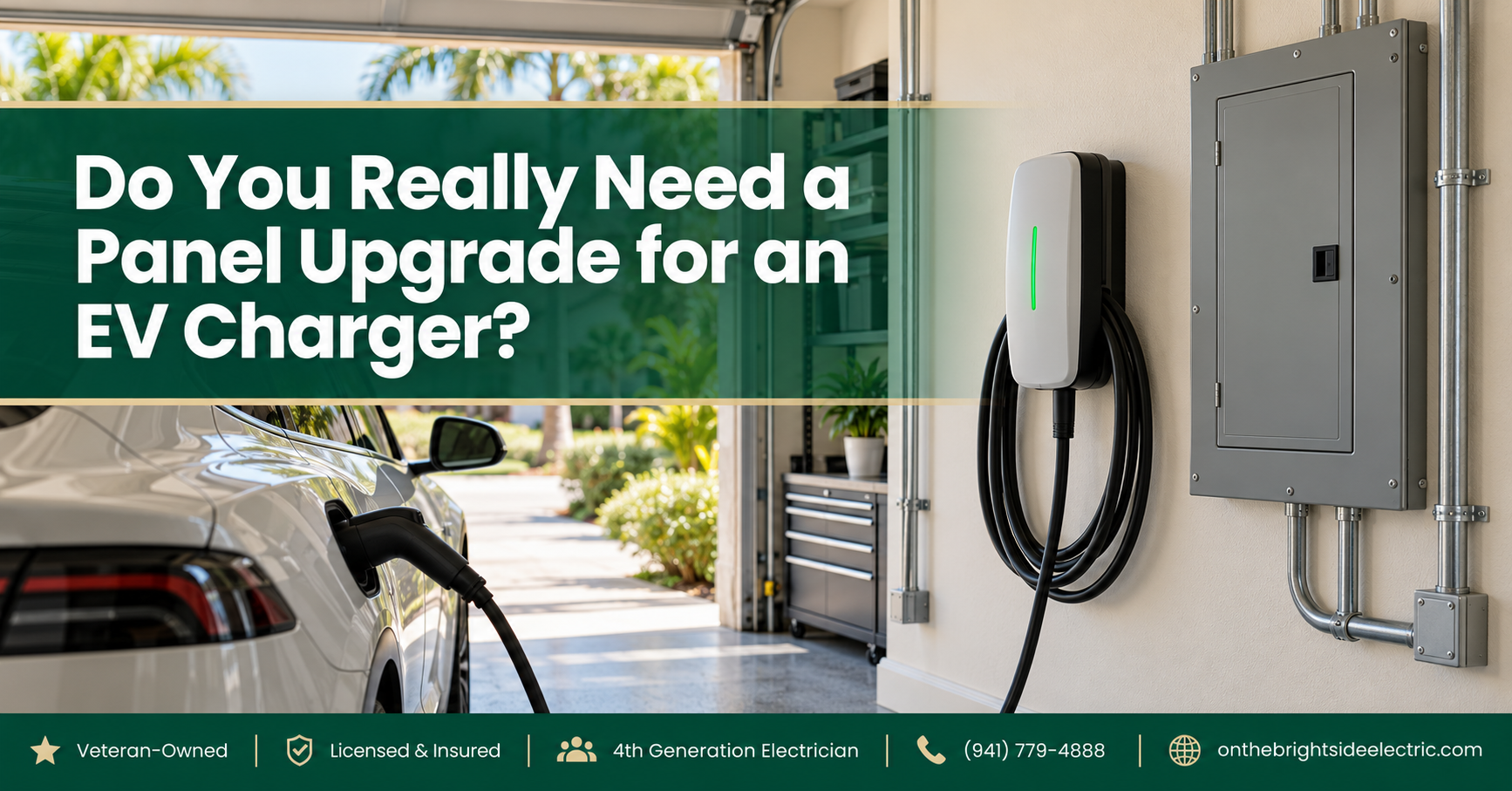
- Your panel is full with no room for a new double-pole breaker. Breaker-space problems and service-capacity problems are different; a dedicated circuit or subpanel may address space but does not create additional service capacity.
- You are planning more additions. A pool heater, a workshop, an addition. If the EV charger is the first of several new loads, upgrading once is smarter than piecemealing.
When You Probably Do Not
You may not need an upgrade if:
- The load calculation shows sufficient headroom. Many 200-amp services have room for a 40-amp EV circuit without breaking a sweat.
- You can use a lower-amperage charger setting. Many Level 2 chargers can be configured for 24 or 32 amps instead of 40 or 48. For overnight charging, the difference is often meaningless: your car still wakes up full.
- Load management devices are an option. Smart devices can pause EV charging when the air conditioner kicks on and resume afterward, keeping your total draw under the limit without a panel swap.
Alternatives to a Full Panel Upgrade
Before you sign off on a panel replacement, ask about:
- A load calculation first. Always. This is step one.
- A subpanel. If the issue is breaker space rather than total capacity, a subpanel is far less expensive.
- A lower charger amperage. Charging speed depends on the vehicle and conditions; a lower-current configuration can meet many overnight charging needs.
- Load management. Technology that sequences your heavy loads so they never peak together.
A trustworthy electrician presents these options before recommending a panel upgrade. For more on the underlying requirements, see our guide to panel requirements for a Level 2 charger.
How to Tell an Honest Assessment From an Upsell
- They show you the load calculation. In writing, with your home's actual numbers.
- They explain the alternatives. And the trade-offs of each.
- They do not pressure you. "Your panel will catch fire if you don't upgrade today" is a sales tactic, not an assessment.
- They answer "why" clearly. You should understand the reason in plain language.
If an electrician cannot explain why you need the upgrade in terms you understand, get a second opinion. For a broader look at the process, read our guide to EV charger installation in Florida.
Frequently Asked Questions
Here are the questions Florida homeowners ask most often when a quote says their panel needs an upgrade for an EV charger.
How many amps does a home EV charger need?
Level 2 charging equipment can be configured for different circuit ratings, subject to manufacturer instructions and code, though many can be set lower. A load calculation determines what your panel can support.
Can I install an EV charger on a 100-amp panel?
Sometimes. It depends entirely on your existing loads. Homes with gas appliances and modest electrical demand can often fit an EV circuit on 100-amp service, especially with a lower charger setting or load management.
What is load management for EV charging?
Smart devices that monitor your home's total electrical draw and temporarily reduce or pause EV charging during peaks, like when the AC cycles on, then resume automatically.
Should I get multiple quotes for EV charger installation?
Yes. And ask each electrician whether they performed a load calculation. The ones who did are the ones giving you a real answer.
Does adding an EV charger require a permit in Florida?
Yes, EV charger installations require a permit and inspection in Manatee and Sarasota County.
Not Sure If Your Panel Can Handle an EV Charger?
Call or text (941) 779-4888 for a free estimate. We will run a real load calculation on your home and tell you honestly what you need. No upsell, just answers.
On The Bright Side Electric LLC
Veteran-Owned | 4th Generation Electrician | Licensed & Insured | EC#13014677