Coming back to your Florida home for the season is something to look forward to. After months away, there is nothing quite like opening the doors, enjoying the warmer weather, and settling back into your familiar routine.
But before you unpack completely, it is worth taking a little time to check on your home's electrical system.
Many seasonal homeowners in Manatee and Sarasota County leave their Florida properties vacant for several months during the warmer part of the year. During that time, the home may experience summer thunderstorms, heavy rain, humidity, and extended periods with limited activity.
Even when everything appears perfectly normal, a few simple electrical checks can help you identify potential concerns before you begin using the home regularly again.
The good news is that most of these initial checks are straightforward. You do not need electrical experience to recognize when something looks, sounds, or operates differently than expected.
Here is a practical guide to checking your Florida home's electrical system when you return for the season, including what you can safely inspect yourself and when it makes sense to call a licensed electrician.
1. Start With a General Electrical Walkthrough
Before turning on every appliance and light, take a few minutes to walk through your home.
If the property has been vacant for several months, this initial walkthrough gives you a chance to notice anything unusual before placing normal demands on the electrical system.
Start by observing the condition of the home.
Look for:
- Signs of water intrusion near walls, ceilings, or electrical outlets.
- Discoloration around outlets, switches, or light fixtures.
- Unusual odors, especially burning or overheated plastic smells.
- Visible damage to electrical devices or covers.
- Evidence of insects or rodents near accessible electrical areas.
- Lights or appliances that appear damaged or have been exposed to moisture.
If everything looks normal, that is a reassuring starting point.
However, if you notice visible moisture around electrical equipment, a burning smell, or damaged wiring, avoid using the affected equipment until it has been evaluated.
Pay Attention to Rooms That Have Been Closed Up
Bathrooms, laundry rooms, garages, and utility areas deserve particular attention.
These spaces may have higher humidity levels or contain equipment that was not used while you were away.
Look for staining, condensation, corrosion, or other visible changes around electrical equipment.
You should never remove outlet covers, open electrical panels, or touch exposed wiring to perform this walkthrough.
A visual inspection is enough to help you identify whether further attention is needed.
2. Restore Power Carefully If It Was Turned Off
Some seasonal homeowners leave their electrical service operating while they are away. Others turn off selected circuits or shut down certain equipment before leaving Florida.
If you turned off power before your departure, avoid rushing to restore everything at once.
First, make sure there are no visible signs of water intrusion or electrical damage.
If you suspect electrical equipment became wet during your absence, have it inspected before restoring power to that equipment.
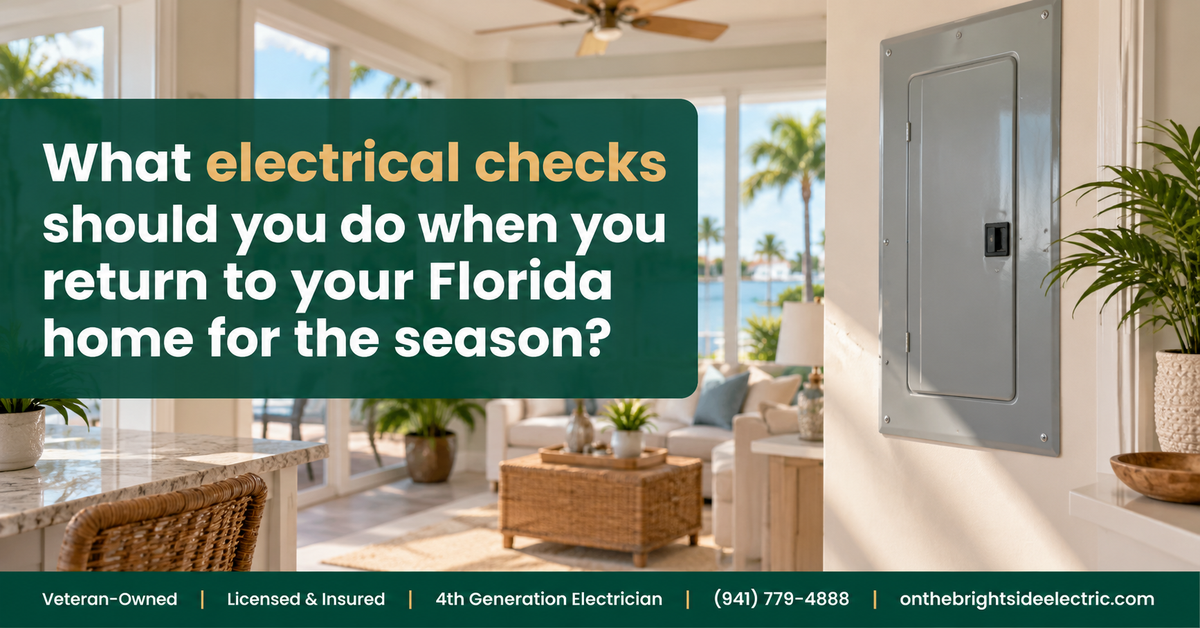
Check the Electrical Panel From the Outside
Your electrical panel is the central distribution point for your home's electrical circuits.
Before operating any breakers, look at the exterior of the panel enclosure.
Check for:
- Rust or corrosion on the panel exterior.
- Water stains or evidence of moisture.
- A damaged or loose panel cover.
- Unusual buzzing or crackling sounds.
- A noticeable burning smell.
- Signs of insects or pests around the enclosure.
You do not need to remove the panel cover or inspect the internal components.
If the panel shows signs of damage, water intrusion, or overheating, leave it alone and contact a licensed electrician.
What About Breakers That Were Turned Off?
If individual breakers were intentionally switched off before you left, and the panel and surrounding area are dry and undamaged, you can follow the manufacturer's normal operating instructions to restore those circuits.
Make sure equipment connected to those circuits is ready to receive power.
If a breaker immediately trips, will not reset, or repeatedly trips after being restored, do not keep attempting to reset it.
Repeated breaker trips may indicate an electrical problem that needs professional evaluation.
A breaker that has tripped is providing an important warning that should not be ignored.
If you are unsure why power was disconnected or whether it is safe to restore it, contact an electrician first.
3. Test Your GFCI Outlets
Ground Fault Circuit Interrupter outlets, commonly called GFCI outlets, provide an important layer of electrical protection in areas where moisture may be present.
You will often find them in bathrooms, kitchens, garages, outdoor locations, and other areas where GFCI protection is required.
Because your Florida home may have been sitting unused for months, testing accessible GFCI receptacles is a sensible part of your seasonal checklist.
How to Test a GFCI Outlet
For a typical GFCI receptacle with built-in TEST and RESET buttons:
- Identify the outlet's TEST and RESET buttons.
- Follow the manufacturer's testing instructions.
- Press the TEST button. The outlet should interrupt power.
- Press RESET to restore normal operation.
- Confirm the outlet operates normally afterward.
Some GFCI protection is provided through a breaker or another upstream device rather than buttons on the outlet itself.
If you are unsure where a receptacle receives its protection, an electrician can help identify it.
If a GFCI outlet does not trip during testing, cannot be reset, or behaves inconsistently, have it evaluated.
Do not assume an outlet is operating safely simply because an appliance receives power when plugged into it.
Why GFCI Testing Matters in Florida
Florida homes often have electrical outlets in locations exposed to moisture, humidity, and outdoor conditions.
GFCI protection is particularly important in these environments because it helps reduce the risk of electric shock.
Testing your GFCI outlets when you return is a simple way to confirm that this important protective feature is functioning as intended.
4. Check Your Whole-Home Surge Protection
Florida's summer thunderstorms can bring frequent lightning activity and electrical disturbances.
Even if your seasonal home was unoccupied, its electrical system may have remained connected to utility power throughout the summer.
That means surge protection is worth checking when you return.
A whole-home surge protective device is designed to help limit certain voltage surges that could otherwise affect electrical equipment.
However, surge protective devices do not necessarily last indefinitely.
Their protective components may degrade after exposure to electrical surges, and some devices include indicators that help identify their operating status.
What Homeowners Can Check
If your home has a whole-home surge protective device and its status indicator is readily visible without opening electrical equipment, check the indicator according to the manufacturer's instructions.
An indicator that shows a fault or loss of protection deserves attention.
If you cannot locate the device or do not know how to interpret its status, a licensed electrician can help.
Do not open the electrical panel or remove equipment covers to search for surge protection.
If your home does not have whole-home surge protection, returning for the season is a reasonable time to ask whether it would be beneficial for your property.
Surge protection can help reduce certain electrical risks, but it does not eliminate every possible source of electrical damage.
For a closer look at how these devices age and when they may need attention, read our guide: Do whole-home surge protectors wear out?
5. Pay Attention When Starting Your Air Conditioning System
Your air conditioning system is one of the most important systems in your Florida home.
After months of limited use or operation under different temperature settings, you may be ready to turn the thermostat down and make the house comfortable.
Before doing so, take a moment to check for any obvious concerns.
Look at the thermostat and confirm that it is responding normally.
Check accessible areas around the indoor air conditioning equipment for signs of water leaks, unusual moisture, or visible damage.
If you have not already done so, review the air filter and replace it when appropriate.
Then operate the system according to its normal instructions.
What Should You Watch For?
As the air conditioner starts, pay attention to:
- Unusual buzzing or electrical sounds.
- A burning or overheating smell.
- Lights that dim significantly or repeatedly flicker.
- A breaker that trips when the system starts.
- Equipment that repeatedly starts and stops unexpectedly.
- A thermostat that does not respond or loses power.
A brief, minor change in lighting may sometimes occur when equipment with a motor starts, but pronounced or recurring electrical symptoms deserve further evaluation.
If the air conditioner repeatedly trips a breaker or produces signs of electrical overheating, stop using it until the problem has been assessed.
Some air conditioning problems require an HVAC professional, while concerns involving the electrical supply, wiring, breakers, or disconnect may require a licensed electrician.
Do Not Ignore an Electrical Problem Just Because the AC Still Runs
An appliance can sometimes continue operating even when there is an underlying electrical concern.
Repeated breaker trips, unexplained flickering, and unusual electrical sounds should not become part of your normal seasonal routine.
Having the issue evaluated early can help you understand what is happening before you depend on the system every day.
6. Look for Moisture and Pest Activity Around Electrical Areas
Homes that sit vacant for extended periods may experience moisture intrusion or unwanted pest activity without anyone noticing immediately.
Florida's humid climate makes these concerns especially worth considering when returning to a seasonal property.
You do not need to inspect hidden wiring or enter difficult-to-access spaces.
Instead, pay attention to visible signs in areas you can safely observe.
Signs of Moisture Near Electrical Equipment
Look for water stains, corrosion, damp surfaces, or discoloration near:
- Electrical panels and surrounding walls.
- Outlets and switches.
- Garage electrical equipment.
- Outdoor electrical boxes and receptacles.
- Laundry and utility areas.
- Ceiling-mounted light fixtures.
If you see evidence of water near an outlet, switch, panel, or other electrical device, do not operate that equipment until it is safe to do so.
A surface that looks dry today does not necessarily mean electrical components were unaffected by earlier water exposure.
Signs of Pest Damage
Rodents and insects can sometimes enter garages, utility spaces, and other sheltered areas.
Visible nesting material, chewed cable insulation, or damaged wiring may indicate that further investigation is necessary.
Do not handle damaged wiring or attempt to repair it with tape.
Keep clear of exposed conductors and contact a licensed electrician.
A professional can evaluate the affected area and determine what corrective work, if any, is needed.
7. Test Your Lights, Switches, and Frequently Used Outlets
Once the initial checks are complete and your home's electrical service is operating normally, take some time to test the electrical features you use most often.
Walk through the home and turn on lights in each room.
Test accessible switches and outlets using appropriate devices in normal condition.
Pay attention to anything that is not working the way you remember.
Watch for Changes in Electrical Performance
Potential concerns include:
- Lights that flicker repeatedly without an obvious explanation.
- Switches that feel unusually warm.
- Outlets that are loose, cracked, or discolored.
- Receptacles that no longer hold plugs securely.
- Buzzing or crackling from switches or outlets.
- Multiple outlets or fixtures that have stopped working.
A light bulb that needs replacement is generally a simple maintenance issue.
However, recurring flickering, overheating, or electrical noise should be evaluated rather than ignored.
Do not continue using outlets or switches that appear damaged or overheated.
Check Outdoor Electrical Features, Too
Many Florida homes have outdoor outlets, landscape lighting, pool-area electrical equipment, or covered lanai lighting.
These areas may have been exposed to rain, moisture, and changing weather conditions while the home was vacant.
Look for damaged outlet covers, loose fixtures, visible corrosion, or other signs of deterioration.
For pool, spa, or other specialized electrical equipment, follow the equipment's operating instructions and arrange professional service when something appears abnormal.
Avoid opening outdoor electrical boxes or handling wiring yourself.
8. Check Smoke Alarms and Carbon Monoxide Alarms
Electrical safety is also about making sure your home's warning systems are ready for occupancy.
After being away for several months, check your smoke alarms and any carbon monoxide alarms installed in the home.
Use the TEST button according to the manufacturer's directions.
Review whether the alarms require battery replacement, cleaning, or replacement based on their age and operating instructions.
An alarm that chirps, fails its test, or shows a fault indication should receive attention.
For interconnected or hardwired alarm systems, an electrician may be needed if there is a wiring or power supply issue.
If your home does not have carbon monoxide alarms, ask a qualified professional whether they are required or appropriate for your home's equipment and configuration.
Do not assume an alarm is functioning correctly simply because no warning sound is present.
9. Know When to Schedule a Professional Electrical Safety Check
Many seasonal electrical checks can be completed visually or through normal testing procedures.
However, homeowners should not attempt to inspect internal panel wiring, diagnose electrical faults, or repair damaged electrical equipment.
A licensed electrician can perform a more detailed evaluation when concerns are present.
Consider scheduling a professional electrical safety check if:
- The property experienced known flooding, water intrusion, or storm damage.
- The electrical panel shows visible corrosion, damage, or signs of overheating.
- Breakers trip repeatedly or will not reset.
- GFCI outlets fail testing.
- Lights flicker frequently or unexpectedly.
- There are signs of damaged wiring or pest activity.
- Your surge protective device indicates a fault.
- Electrical equipment behaves differently than it did before you left.
- You are uncertain about the condition of an older or unfamiliar electrical system.
You may also choose to schedule a seasonal check simply because you want a professional assessment before occupying the home for several months.
A professional inspection can help identify visible issues, evaluate accessible equipment, and recommend any additional testing or corrections that may be appropriate.
For more information about what a typical inspection covers, read What does an annual electrical safety check actually include?
10. Make Electrical Safety Part of Your Seasonal Homecoming Routine
Returning to your Florida home should be about enjoying the season, not worrying about what happened while you were away.
Establishing a simple arrival routine can make electrical safety another manageable part of getting the house ready.
Before fully settling in, review the areas you can safely access, test your protective outlets and alarms, observe how major equipment operates, and make a note of anything that needs attention.
Consider keeping a seasonal home maintenance checklist so that these checks become part of your annual return.
It can also be helpful to retain records of electrical inspections, repairs, and upgrades.
That information gives you a clearer picture of your home's electrical history and can make future maintenance conversations easier.
A Local Electrician Who Understands Florida Seasonal Homes
At On The Bright Side Electric, we understand that homeowners in Manatee and Sarasota County want their Florida properties to be comfortable, dependable, and ready when they return.
As a fourth-generation, veteran-owned family electrical company based in Palmetto, Florida, we take a practical, straightforward approach to residential electrical service.
Whether you have noticed a specific electrical concern or simply want to discuss seasonal electrical checks, our team can help you understand the next appropriate step.
The goal is not to create unnecessary work. It is to help you identify issues that deserve attention and make informed decisions about your home's electrical system.
Frequently Asked Questions About Electrical Checks for Seasonal Florida Homes
1. Should I have my electrical system inspected every time I return to Florida for the season?
A professional inspection is not automatically necessary after every extended absence. However, it may be worthwhile if your home experienced storm damage, moisture intrusion, repeated electrical problems, or other unusual conditions. Homeowners may also choose periodic professional safety checks for additional reassurance.
2. Is it safe to turn the main breaker back on after my Florida home has been vacant for months?
If power was intentionally shut off, first look for visible damage, moisture, or other warning signs. Do not restore power when you suspect electrical equipment has been affected by water or damage. If you are uncertain about the condition of the system or the proper restoration procedure, have a licensed electrician evaluate it before power is restored.
3. Do I need to test GFCI outlets after being away for several months?
Yes. Testing accessible GFCI outlets according to the manufacturer's instructions is a sensible part of your return-home routine. If a device fails to trip or reset correctly, have it evaluated before relying on its protection.
4. Can summer thunderstorms affect my home's electrical system even when nobody is there?
Yes. Electrical disturbances and storm-related damage can occur regardless of whether the property is occupied. When returning, check for visible storm damage, unusual electrical performance, and any fault indicators on an accessible whole-home surge protective device.
5. When should I call an electrician after returning to my seasonal Florida home?
Contact a licensed electrician if you notice repeated breaker trips, damaged outlets, burning smells, electrical buzzing, signs of water near electrical equipment, failed GFCI tests, or damaged wiring. You can also request a seasonal electrical safety check if you want a professional evaluation before settling in.
Welcome Back to Florida With Confidence
Your first days back in Florida should be spent getting comfortable, reconnecting with neighbors, and enjoying everything you love about the season.
A few thoughtful electrical checks can help you start that season knowing you have paid attention to an important part of your home's maintenance.
From checking the electrical panel and testing GFCI outlets to reviewing surge protection and watching for unusual equipment behavior, the process does not have to be complicated.
And when something needs a closer look, having a trusted local electrician available makes the next step easier.
Returning to Your Florida Home Should Feel Like a Fresh Start
Returning to your Florida home should feel like a fresh start, and a few thoughtful electrical checks can help you settle in with confidence. Comment QUOTE on our Facebook or Instagram post, or call/text (941) 779-4888 for a free estimate on seasonal electrical checks.
On The Bright Side Electric | Where You Never Get Left In The Dark.