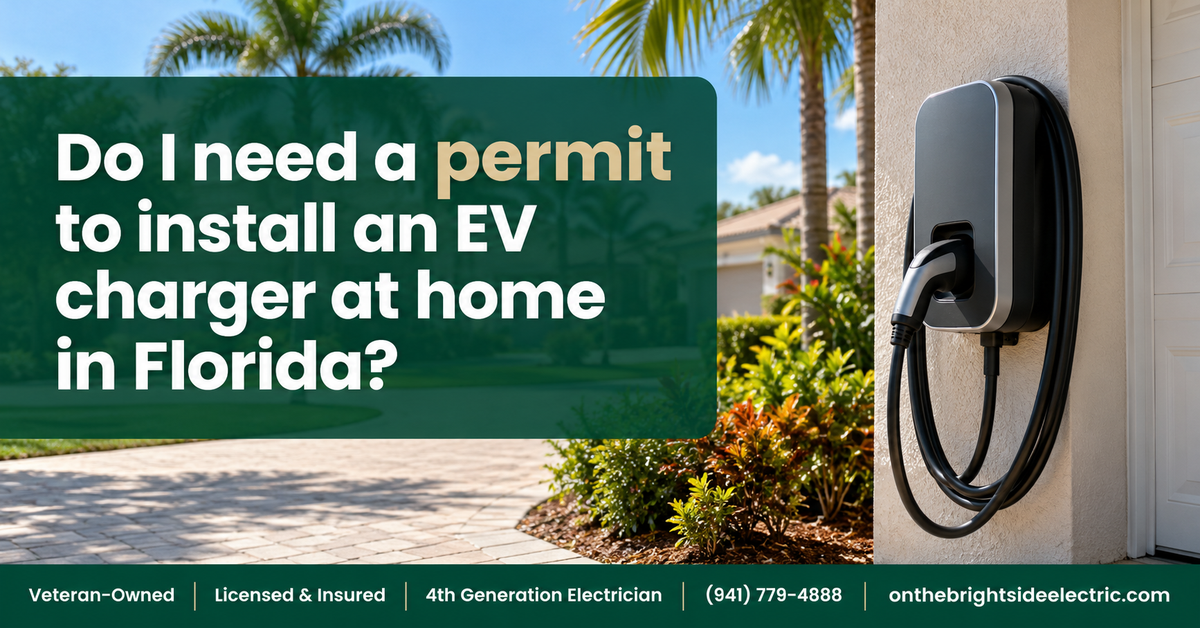
If you are planning to install an electric vehicle charger at your Florida home, you may be wondering whether you need an electrical permit before work begins.
For most professionally installed Level 2 home EV chargers, the answer is yes. A permit and electrical inspection are generally required in Florida because a Level 2 installation is new electrical work, not simply plugging a device into a wall.
That applies to many residential installations throughout Manatee and Sarasota Counties, including homes in Palmetto and the surrounding communities served by On The Bright Side Electric.
The good news is that obtaining a permit does not have to become another project on your to-do list. When you work with a qualified licensed electrician who includes permitting in the scope of work, the electrician handles the technical details for you.
At On The Bright Side Electric, we believe homeowners should understand what is happening in their homes without having to become electrical experts themselves.
Here is what you need to know about EV charger permits in Florida, what the inspection involves, and what to expect when your installation is handled end to end.
Do you need an electrical permit for a Level 2 EV charger in Florida?
In most cases, yes.
A Level 2 EV charger typically operates using a dedicated 240-volt electrical circuit. Installing that circuit generally requires an electrical permit and an inspection to confirm that the work meets the applicable electrical requirements.
An electrical permit provides a formal process for reviewing the work and confirming that the installation meets the applicable safety standards for your home.
Whether you are installing a wall-mounted charging station in your garage or adding a dedicated charging receptacle, planning for a permit is the practical starting point for most Level 2 projects.
What if I already have a garage outlet?
That depends on the outlet, the circuit supplying it, and the charging equipment you intend to use.
A standard household outlet used with compatible Level 1 charging equipment is different from installing a new Level 2 circuit.
Simply plugging approved equipment into an existing, suitable outlet generally does not require a new installation permit.
However, having a larger outlet in your garage does not automatically mean it is appropriate for EV charging.
The existing circuit must be suitable for the charging equipment, the expected continuous electrical load, and applicable requirements.
Before connecting a Level 2 charger to an existing outlet, have a licensed electrician verify that the circuit and receptacle are appropriate for that use.
Does a hardwired charger require a permit?
Generally, yes, when the project involves installing new wiring, adding a circuit, or modifying existing electrical equipment.
A hardwired charger connects directly to the home's electrical system rather than plugging into a receptacle.
The electrician must evaluate the electrical supply, wiring, circuit protection, and installation location.
Although the exact permitting requirements depend on the work and the local authority, homeowners should plan for permit and inspection requirements for a hardwired Level 2 installation.
What does an EV charger installation permit actually cover?
An EV charger permit is about more than approving a charging device on the garage wall.
The permit and associated electrical review help verify that the supporting electrical installation is appropriate for the charger and for the home as a whole.
Several important considerations may be involved.
1. Your home's electrical load calculation
Before adding a Level 2 EV charger, an electrician needs to determine whether the home's electrical system can safely accommodate the additional load.
This assessment is commonly called a load calculation.
It considers your home's electrical service, existing electrical loads, and the proposed charging equipment.
For example, your home may already use electricity for air conditioning, water heating, cooking, laundry, and other household needs.
Adding an EV charger introduces another potentially substantial electrical load.
A proper load calculation helps determine whether your existing electrical system can support it or whether additional electrical work is needed first.
2. Electrical panel capacity
Not every electrical panel has the same available capacity.
An electrician will evaluate your existing panel to determine whether the proposed charging circuit can be added safely.
This assessment may include the panel's condition, its electrical capacity, the existing circuits, and available space for the new circuit.
Importantly, having an open breaker position does not necessarily mean your electrical system has enough capacity for a Level 2 charger.
Likewise, a full panel does not automatically mean a complete panel replacement is required.
The appropriate solution depends on the home's actual electrical conditions and applicable requirements.
3. Dedicated circuit installation
Level 2 charging equipment generally requires a properly sized dedicated circuit.
That means the charger has electrical wiring and circuit protection selected for its intended use rather than sharing a circuit with other household loads.
The electrician must consider the charging equipment's electrical rating, the required conductors, protective devices, and installation methods.
The permit review and inspection help confirm that the circuit has been installed appropriately.
4. Wiring and installation location
The distance between your electrical panel and the proposed charger location can affect how the installation is designed.
A charger installed near the electrical panel may require a different wiring route than one installed on the opposite side of the garage or outside the home.
The installation must also account for environmental conditions, physical protection, accessibility, and the manufacturer's instructions.
In Florida, moisture and exposure to outdoor conditions are especially relevant when a charger is installed outside or in a partially exposed location.
These considerations help determine which materials and installation methods are appropriate.
Who is responsible for pulling the EV charger permit?
When you hire a licensed electrical contractor who includes permitting in the agreed scope of work, the contractor should handle the permit process.
You should not have to figure out electrical drawings, technical permit classifications, or inspection procedures on your own.
The electrician should explain what the project requires and how the approval process will work.
For a typical professionally managed installation, the process includes:
- Evaluating your home's existing electrical system.
- Determining the appropriate charging setup.
- Identifying the applicable local permitting requirements.
- Preparing and submitting the required permit information.
- Scheduling the electrical installation after required approvals.
- Coordinating any required inspections.
- Addressing inspection-related corrections if needed.
Florida has owner-builder provisions that may allow eligible homeowners to undertake certain permitted electrical work themselves, subject to specific rules and responsibilities.
For homeowners hiring a professional, the straightforward approach is to select a licensed electrician who will take responsibility for the permit and inspection coordination.
Before work begins, ask whether obtaining the permit and coordinating the final inspection are included in your estimate.
That simple question can prevent confusion later.
Are permit requirements the same in Manatee and Sarasota Counties?
The general need for an electrical permit is similar, but the exact application process can vary depending on where you live.
Homes within unincorporated Manatee County may fall under one permitting authority, while homes inside municipal boundaries may fall under another.
The same distinction applies in Sarasota County.
For that reason, your property's actual jurisdiction matters more than the mailing address alone.
A home with a Sarasota mailing address, for example, may not necessarily be under the same permitting authority as a property with a different local jurisdiction.
Local permitting considerations for Florida homeowners
Before scheduling an EV charger installation, your electrician should confirm:
- Which local building department has jurisdiction over the property.
- Whether the proposed work requires an electrical permit.
- What information must accompany the application.
- Whether additional review is needed for any proposed electrical service changes.
- Which inspections must be completed.
The goal is to handle the process correctly for your particular property rather than assuming every Florida municipality follows the same procedure.
If you live in a condominium, townhouse community, or neighborhood governed by a homeowners association, there may also be separate association approvals to consider.
Those private property or association approvals are not necessarily substitutes for an electrical permit.
What happens during an EV charger electrical inspection?
An electrical inspection is an important part of the permitting process.
After the installation is completed, the local authority may inspect the work to confirm that it complies with the applicable electrical requirements.
The inspection focuses on electrical safety and installation compliance, not simply whether the charger powers on.
What does the inspector check?
Depending on the installation, the inspection may include reviewing:
- Circuit protection: Whether the installed circuit protection is appropriate for the charger and electrical wiring.
- Wiring and connections: Whether the wiring methods, connections, and conductor sizes meet the applicable requirements.
- Grounding and required protection: Whether the installation includes the grounding and protective measures required for the equipment and location.
- Panel connections: Whether the new circuit has been connected appropriately inside the electrical panel.
- Equipment installation: Whether the charging equipment is installed securely and according to applicable instructions.
- Permit scope: Whether the completed work matches the approved installation and any applicable conditions.
The exact inspection procedure depends on the jurisdiction and the scope of the installation.
Some projects may require inspection at specific stages, especially when portions of the electrical work will become concealed after installation.
Your electrician should coordinate those requirements before the work is covered or completed.
Does passing inspection mean the charger never needs maintenance?
No.
An approved inspection provides confirmation that the installation met the applicable requirements at the time of inspection.
Homeowners should still follow the charging equipment's operating and maintenance instructions.
If you notice unusual heat, damaged equipment, recurring breaker trips, or other electrical concerns, stop using the charger and have it evaluated.
What happens if an EV charger is installed without a permit?
Skipping a required electrical permit may seem like an easy way to simplify a project.
However, an unpermitted installation can create complications later, even when the charger appears to work normally.
Problems during a home sale
When selling a home, buyers may ask about electrical improvements and whether required permits were obtained.
If the property has an EV charger installation without an expected permit record, that may raise questions during inspections or the sale process.
Depending on the circumstances, additional verification or corrective work may be requested.
Having documentation of a properly permitted installation helps provide a clearer record of the improvement.
Insurance questions
Homeowners sometimes ask whether an unpermitted EV charger installation could affect their insurance coverage.
Insurance outcomes depend on the specific policy, circumstances of a claim, and applicable law.
An unpermitted installation does not automatically mean an insurance claim will be denied.
However, questions about the installation's code compliance or workmanship could complicate the review of a claim in some situations.
For that reason, maintaining permit and inspection documentation is a sensible precaution.
Home inspections and four-point inspections
In Florida, some homeowners encounter four-point inspections when obtaining or renewing property insurance.
These inspections typically review the home's roof, electrical, plumbing, and HVAC systems.
A four-point inspection is not the same as a building department's electrical permit inspection.
However, an inspector may identify observable electrical concerns associated with a charger installation, such as questionable wiring or installation methods.
Those findings could lead to requests for additional evaluation or corrective work.
A properly permitted installation can help establish a documented history, although it does not guarantee a favorable result on a separate insurance inspection.
Electrical safety and corrective work
The most important concern is the quality and safety of the electrical installation.
A charger may function even when its supporting wiring or circuit protection is inappropriate.
If unpermitted work is later discovered, the property owner may need to obtain permits, arrange inspections, or have portions of the work corrected.
Depending on the jurisdiction and the work performed, additional steps may be necessary to resolve the issue.
Starting with a properly planned, professionally permitted installation is generally much simpler.
How long does it take to get an EV charger permit in Florida?
There is no single permitting timeline that applies to every Florida home.
The time required can depend on the permitting authority, the completeness of the application, the proposed electrical work, and the scheduling of any required reviews or inspections.
A straightforward residential installation that uses an existing electrical system may involve a different review process than a project that requires panel work or other electrical upgrades.
Additional information requests, permit revisions, or scheduling constraints can also affect the overall timeline.
What should homeowners expect?
The most useful approach is to begin planning before you need the charger operational.
Your electrician can determine which approvals are needed and explain the expected sequence for your specific project.
If you are purchasing a new electric vehicle or preparing to move into a home, it is worth scheduling an electrical assessment early in the process.
That gives you time to evaluate the charging location, review any necessary electrical upgrades, and complete the required permitting steps in an orderly way.
A reputable electrician should explain the process without promising a permit approval date that is outside their control.
Does an EV charger permit affect installation costs?
Permitting is one of several factors that can influence the overall cost of installing a home EV charger.
The final project cost depends on the home's electrical system, the charging equipment, the installation location, and any additional work required.
For example, an installation using an electrical system with sufficient capacity may have different requirements than one that requires additional electrical work.
Additional wiring, equipment, and any required permitting can also affect the estimate.
The best way to understand the total project is to request an installation estimate that explains what is included.
For a closer look at pricing considerations, read our guide: How much does it cost to install a home EV charger in Florida?
A clear estimate should help you understand the proposed electrical work and whether permit-related services are included.
Planning your EV charger installation before buying equipment
You do not necessarily need to purchase your charging equipment before speaking with an electrician.
In fact, discussing your home's electrical system first can help you make a more informed decision.
Different charging equipment and installation configurations can have different electrical requirements.
The right setup depends on your vehicle's charging capabilities, your driving habits, the available electrical capacity, and where you plan to charge.
Questions to consider before installation
Think about the following:
- Where do you normally park your vehicle?
- Do you prefer a wall-mounted charger or another compatible charging arrangement?
- Is your electrical panel located near the proposed charging area?
- Is the charging location indoors or exposed to weather?
- Would you like to plan for possible future vehicle charging needs?
- Are you considering a utility-sponsored charging program?
Florida homeowners may also want to compare available home charging programs with purchasing their own equipment.
Our article, Should I sign up for FPL's EVolution home charging plan or buy my own charger?, discusses considerations that can help you evaluate those options.
Regardless of the equipment you choose, any required electrical work still needs to meet the applicable permitting and inspection requirements.
How On The Bright Side Electric handles EV charger permitting and installation
Installing a home EV charger should feel like a practical improvement to your home, not an overwhelming construction project.
On The Bright Side Electric is a fourth-generation, veteran-owned family electrical company based in Palmetto, Florida.
Our approach focuses on helping you understand the installation before the work begins.
Step 1: Discuss your home charging needs
We start by learning about your vehicle, your preferred charging location, and what you want from your home charging setup.
We can discuss whether your existing electrical system may be suitable and what additional information is needed.
Step 2: Evaluate the electrical requirements
We assess the relevant electrical conditions to determine the installation requirements.
This may include reviewing your electrical panel, the available electrical capacity, the proposed circuit, and the charging location.
If additional electrical work is necessary, we explain the recommendation and how it affects the project.
Step 3: Provide an installation estimate
We prepare an estimate based on the proposed installation and the conditions identified.
You can review the scope before moving forward.
Our goal is to help you understand the electrical work involved and avoid uncertainty about the planned installation.
Step 4: Coordinate required permits
For installations requiring permits, our project process includes identifying the appropriate permitting requirements and preparing the necessary information.
We explain any jurisdiction-specific requirements and keep the permitting process connected to the installation plan.
You should not have to independently navigate the electrical permitting process after hiring us to manage the project.
Step 5: Complete the installation
Once the necessary approvals are in place, the electrical installation can proceed.
The work is completed according to the applicable electrical requirements and the approved project scope.
We focus on a safe, properly installed charging setup suited to your home.
Step 6: Coordinate inspection and closeout
When an inspection is required, we coordinate the applicable inspection process and address installation-related corrections if needed.
We also review the completed installation with you so you understand the basic operation of your charging setup.
The goal is a properly completed project with the required approvals and clear installation documentation.
The bottom line: Get the permit, then enjoy home charging
If you are installing a Level 2 EV charger at your Florida home, you should generally expect an electrical permit and inspection.
The permit helps verify that your home's electrical system, the dedicated charging circuit, and the equipment installation are appropriate for the charger you plan to use.
It is also an opportunity to identify electrical capacity concerns before the charger becomes part of your daily routine.
For homeowners in Manatee and Sarasota Counties, the specific permitting authority and approval process will depend on the property's jurisdiction.
You do not need to figure out every technical requirement yourself.
Working with a licensed electrician who handles the installation and permitting process helps make the experience more straightforward.
Ready to install an EV charger at your Florida home?
On The Bright Side Electric can help you evaluate your electrical system, plan the installation, and coordinate the required permitting steps.
Planning a Level 2 home EV charger? Make sure your installation is properly permitted, professionally installed, and ready for inspection. Comment QUOTE on our Facebook or Instagram post, or call/text (941) 779-4888 for a free estimate on EV charger installation.