You found the sauna.
You picked the size, wood, heater technology, and where you want it to go.
Then somewhere in the specifications you see something like:
120V / 20A | Dedicated circuit required
And suddenly the project is not quite as simple as plugging in a new appliance.
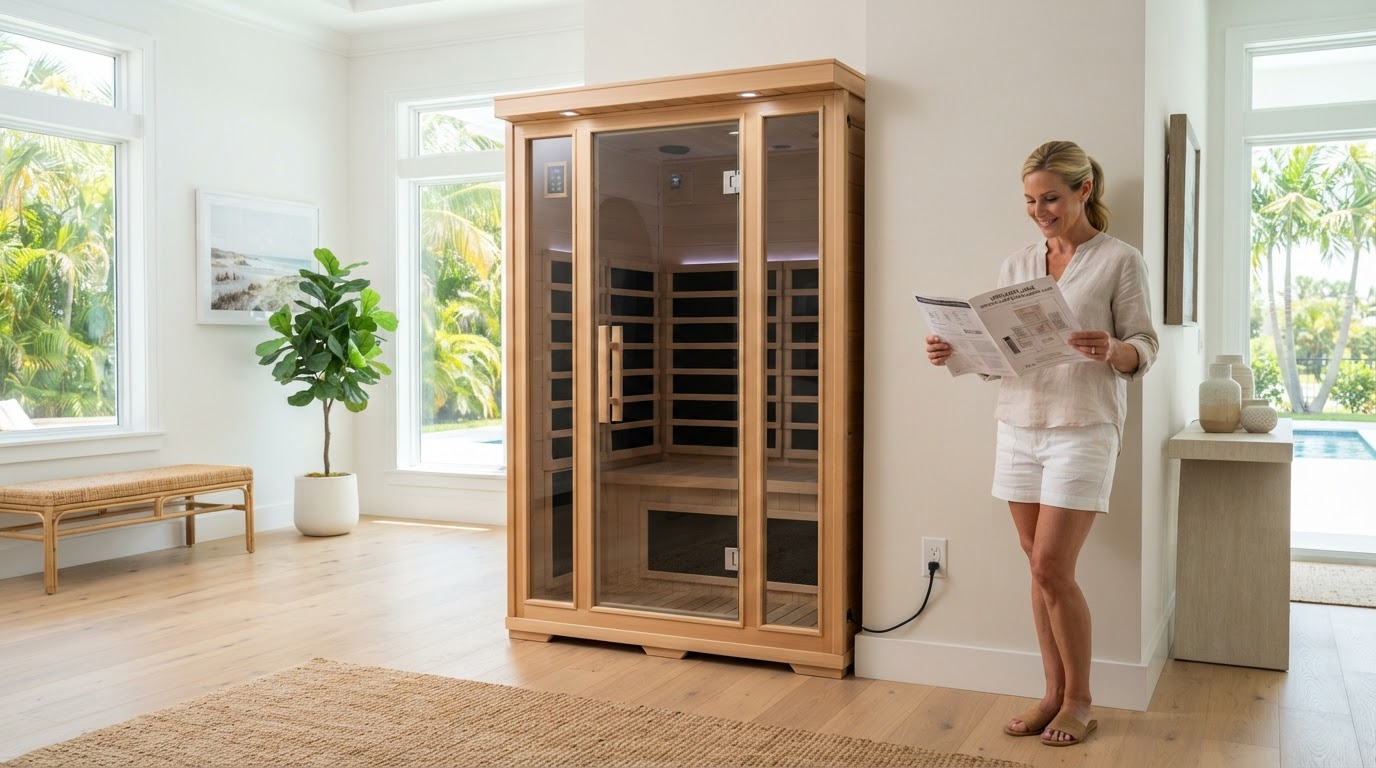
So, does an infrared sauna need a dedicated electrical circuit?
The Short Answer
Often, yes—but not every infrared sauna has the same electrical requirements.
The correct answer depends on the exact manufacturer and model.
Some infrared saunas operate on 120 volts and may use a 15-amp circuit.
Others require 20 amps.
Larger or higher-output models may have different voltage and circuit requirements entirely.
That means you should not choose:
- breaker size;
- receptacle type;
- wire size;
- circuit configuration;
- or installation method
based on a generic internet answer.
The first document that matters is the installation manual for the exact sauna you purchased or plan to purchase.
Why Infrared Sauna Electrical Requirements Vary
“Infrared sauna” describes a product category—not one electrical appliance.
Different models vary in:
- number of heaters;
- wattage;
- cabin size;
- controls;
- lighting;
- audio systems;
- red-light features;
- ventilation;
- voltage;
- current draw.
That is why two saunas that look similar can have different electrical requirements.
For example, current Tylö Kiruna infrared-sauna documentation shows certain models using 120V 15A service and another model using 120V 20A service. The manufacturer also instructs users to match the receptacle and circuit to the specific model's electrical rating and recommends or requires dedicated-circuit use depending on the installation instructions.
Sunlighten's current Signature sauna specifications are another example: its Signature line lists a dedicated 120V 20A circuit, while other Sunlighten collections vary by model and may use 120V or 240V electrical configurations.
The takeaway is simple:
“Buy the sauna first—or at least choose the exact model—before designing the electrical circuit.”
What Is a Dedicated Circuit?
A dedicated circuit supplies one specific appliance or piece of equipment rather than serving several unrelated outlets or loads.
For a sauna, that may mean:
- a circuit breaker assigned to the sauna;
- wiring sized for that circuit;
- the correct receptacle or connection method;
- no other household loads sharing the same branch circuit.
Why does that matter?
Because sauna heaters can represent a significant sustained electrical load.
If the sauna shares a circuit with lights, televisions, bedroom outlets, office equipment, or other appliances, the combined demand can create nuisance tripping or other problems.
Some sauna manufacturers specifically warn against using a shared circuit because it can cause poor performance, breaker tripping, or overheating of wiring.
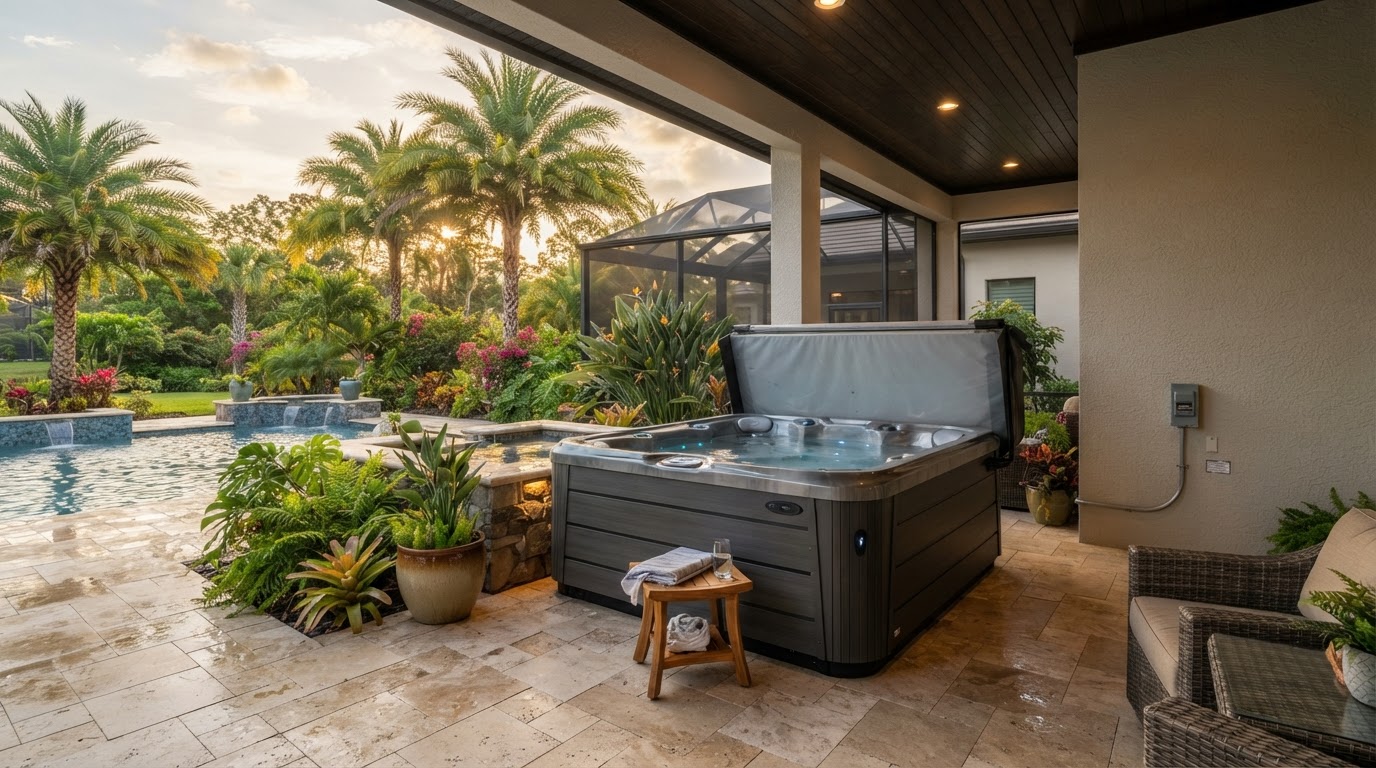
Similar to how an outdoor spa or hot tub requires careful load planning, high-demand home equipment relies on exact electrical matching. Learn more in our guide on why certain high-demand equipment requires dedicated electrical planning.
Does Every Infrared Sauna Need a 20-Amp Circuit?
No.
This is one of the most important misconceptions to avoid.
Some infrared saunas do use 120V / 20A and may require a NEMA 5-20R receptacle.
Others operate at 120V / 15A with different manufacturer requirements.
Still others may require 240V.
For example, Tylö's Kiruna documentation lists certain models at 15A and another at 20A.
That is why the correct question is not:
“What size breaker does an infrared sauna use?”
It is:
“What does my exact sauna model require?”
Can You Plug an Infrared Sauna Into an Existing Outlet?
Sometimes an existing outlet may appear to have the right shape and voltage.
That does not automatically mean the existing circuit is suitable.
Before using an existing receptacle, you need to know:
- what breaker serves it;
- what else is on that circuit;
- whether the circuit rating matches the sauna;
- whether the receptacle type is correct;
- whether the wiring is appropriate;
- whether the manufacturer requires a dedicated circuit.
A standard-looking receptacle does not tell you everything about the circuit behind it.
For example, a manufacturer may require or recommend that a 120V sauna be the only equipment served by that circuit even though the plug looks familiar.
If the sauna manual calls for a dedicated circuit, sharing the circuit with other household loads defeats the purpose.
Why Extension Cords Are Not the Solution
If the nearest outlet is not convenient, it can be tempting to use an extension cord.
Do not assume that is acceptable.
Current Tylö infrared-sauna instructions specifically warn against extension cords and undersized or improperly rated wiring.
The sauna manufacturer's instructions should always be followed.
If the cord does not reach the intended location, that is usually a sign that the electrical connection and sauna placement should be planned together—not that the cord should simply be extended.
Should You Choose the Sauna Location Before Calling an Electrician?
Ideally, choose:
- the exact sauna model;
- the general installation location;
before requesting the electrical estimate.
That gives the electrician useful information about:
- electrical requirements;
- distance from the panel;
- where the receptacle or connection needs to go;
- access;
- wall construction;
- existing circuit availability;
- whether new wiring is required.
For a Florida home, the location may also affect how practical the electrical installation is.
A sauna planned for a primary bedroom, bonus room, home gym, converted garage, enclosed lanai, pool-house area, or wellness room can present very different electrical conditions.
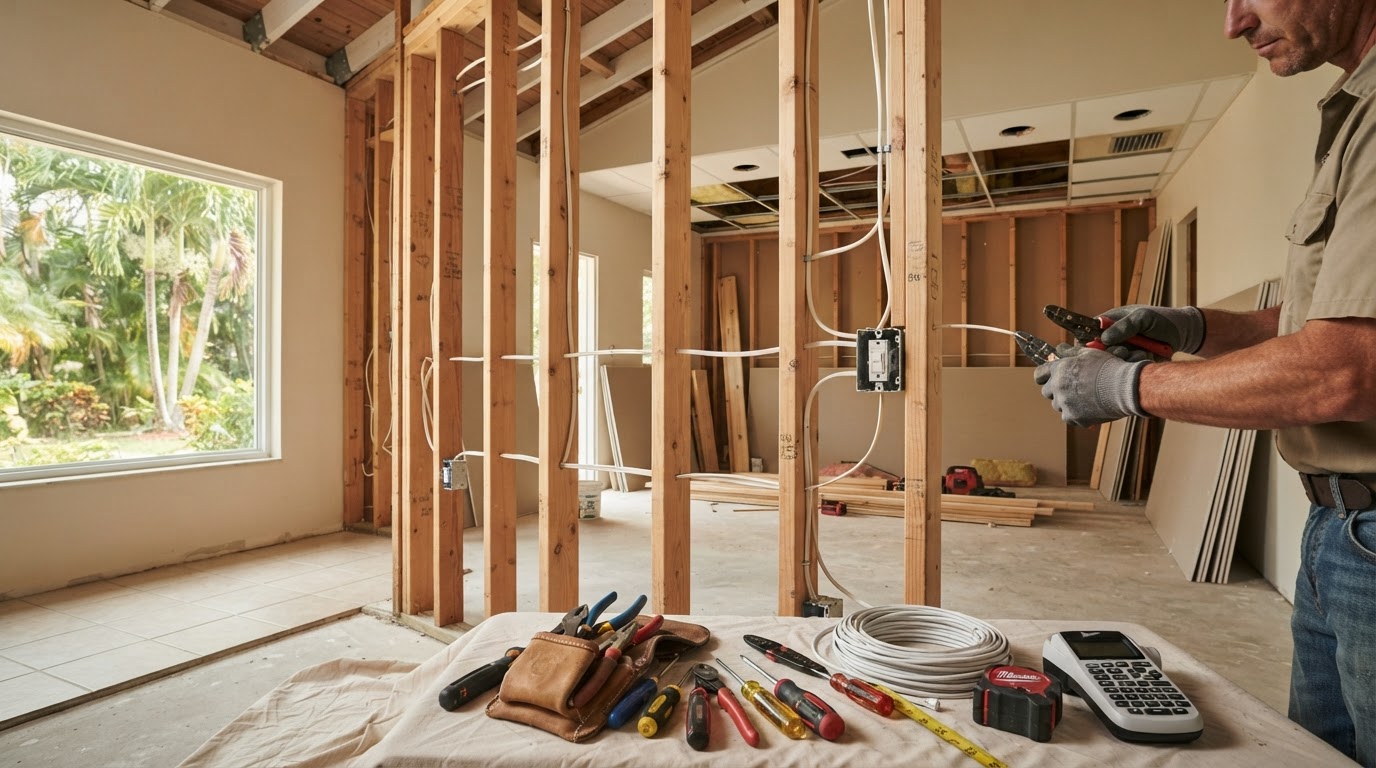
If you are also renovating or adapting a room for your new sauna, explore our services for planning electrical work for a home remodel or specialty upgrade.
The sauna manual should also be reviewed for location, clearance, ventilation, and environmental restrictions.
Do not assume a sauna rated for an interior conditioned space is automatically appropriate for every garage, lanai, or outdoor-adjacent Florida environment.
Does Your Electrical Panel Have Enough Capacity?
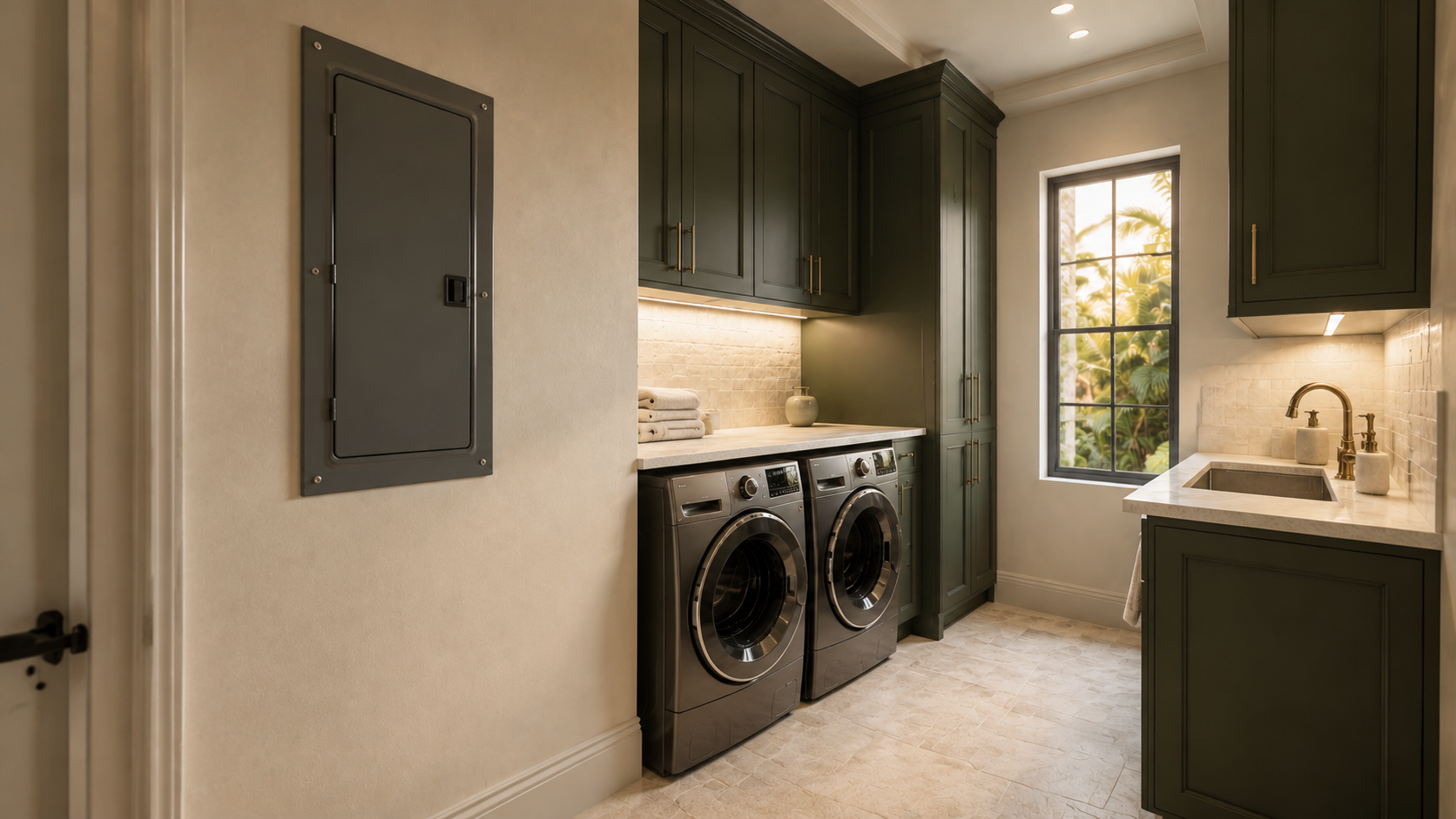
Installing a dedicated circuit is not only about finding an empty breaker space.
The electrician may need to consider:
- existing panel configuration;
- service size;
- existing electrical loads;
- available breaker positions;
- equipment specifications;
- future planned electrical additions.
For many modern homes, a sauna circuit may be straightforward.
For others—especially homes already supporting EV charging, electric water heating, electric ranges, pool equipment, large HVAC systems, hot tubs, or additional specialty equipment—the bigger question may be overall electrical capacity.
Do not assume that an empty-looking breaker position automatically means the electrical system can support any new load.
What If Your Sauna Is Going Into a Garage?
Garages are popular locations for home gyms, wellness rooms, and infrared saunas.
But the electrical installation should still be planned for the actual location.
An electrician may need to evaluate:
- existing garage circuits;
- receptacle configuration;
- available capacity;
- distance from the panel;
- wall/ceiling access;
- equipment instructions;
- environmental conditions.
Do not buy a sauna based solely on the assumption: “There's already an outlet in the garage.” That outlet may already serve other loads.
What About a Sauna Near a Pool or Spa?
This deserves extra care.
If the planned sauna is in or near a pool area, spa area, outdoor living area, lanai, or other wet or damp environment, electrical requirements can become more location-sensitive.
Equipment listing, manufacturer instructions, installation environment, applicable electrical requirements, and the physical layout all matter.
Do not treat an outdoor-adjacent sauna installation like an ordinary bedroom receptacle installation. Have the actual project evaluated.
What Information Should You Send OTBSE?
This is where homeowners can make the process much easier.
If you want OTBSE to evaluate the electrical work for your sauna, send:
- Sauna Manufacturer (e.g. Sunlighten, Tylö, Finnleo, or other brand)
- Exact Model Number (critical—do not simply say “2-person infrared sauna”)
- Electrical Specification Page (screenshot, product link, manual, or spec sheet)
- Photo of the Intended Location (showing room, wall, nearby outlet, available space)
- Photo of Your Electrical Panel (exterior and breaker labels with cover on)
- Property Address (helps confirm service area and project context)
- Any Other Planned Electrical Upgrades (EV charger, hot tub, pool equipment, induction range, remodel, or generator)
That helps put the sauna project into the larger electrical picture.
Estimate or Diagnostic?
A sauna installation is often a good candidate for an estimate when the project is clearly defined.
If you can provide exact sauna model, electrical specifications, photos, installation location, and panel information, OTBSE may have enough information to evaluate the project through the existing estimate process.
If the electrical condition is unknown—for example, you do not know which circuit serves the room, breakers are already tripping, there are signs of overheating, or existing wiring is questionable—an electrical diagnostic or onsite evaluation ($59.99 diagnostic/dispatch fee) may be the more appropriate starting point.
The difference is whether the work is already known or the electrician first needs to determine what condition exists.
Should Electrical Work Be Done Before the Sauna Arrives?
Often, yes.
Once the exact sauna model and location are selected, completing required electrical work before installation can make the project much smoother.
That can help avoid:
- assembling the sauna in the wrong location;
- discovering the existing outlet is unsuitable;
- delaying installation;
- running temporary cords;
- moving the sauna later;
- ordering equipment before knowing whether the electrical setup works.
A simple sequence is: Choose sauna → Confirm electrical specifications → Choose location → Confirm electrical plan → Install required circuit → Assemble sauna.
Is This a DIY Electrical Project?
Installing or modifying a branch circuit is not the same thing as assembling the sauna cabinet.
Many infrared sauna products are designed for homeowner assembly. That does not mean permanent electrical modifications should be handled the same way.
A homeowner may be able to assemble walls, benches, panels, and trim according to the manufacturer instructions.
But if the home needs a new dedicated circuit, new wiring, a different receptacle, panel modifications, or other permanent electrical work, that portion should be handled appropriately by a qualified electrical professional.
Do not improvise circuit size or breaker capacity based on the plug alone.
Planning More Than One Electrical Upgrade?
BrightCare members receive an annual electrical safety inspection, priority scheduling, and 15% savings on eligible installations and upgrades, subject to membership terms.
Learn About BrightCare →