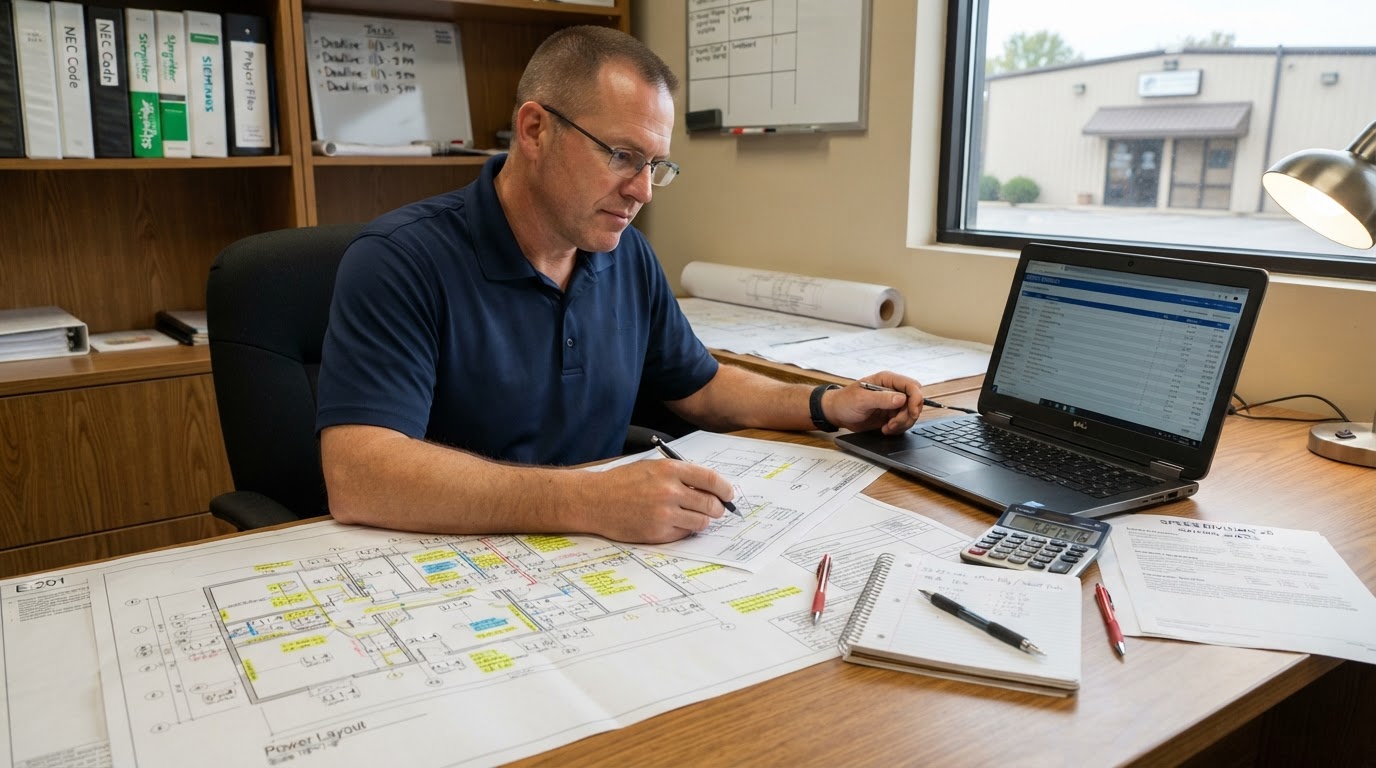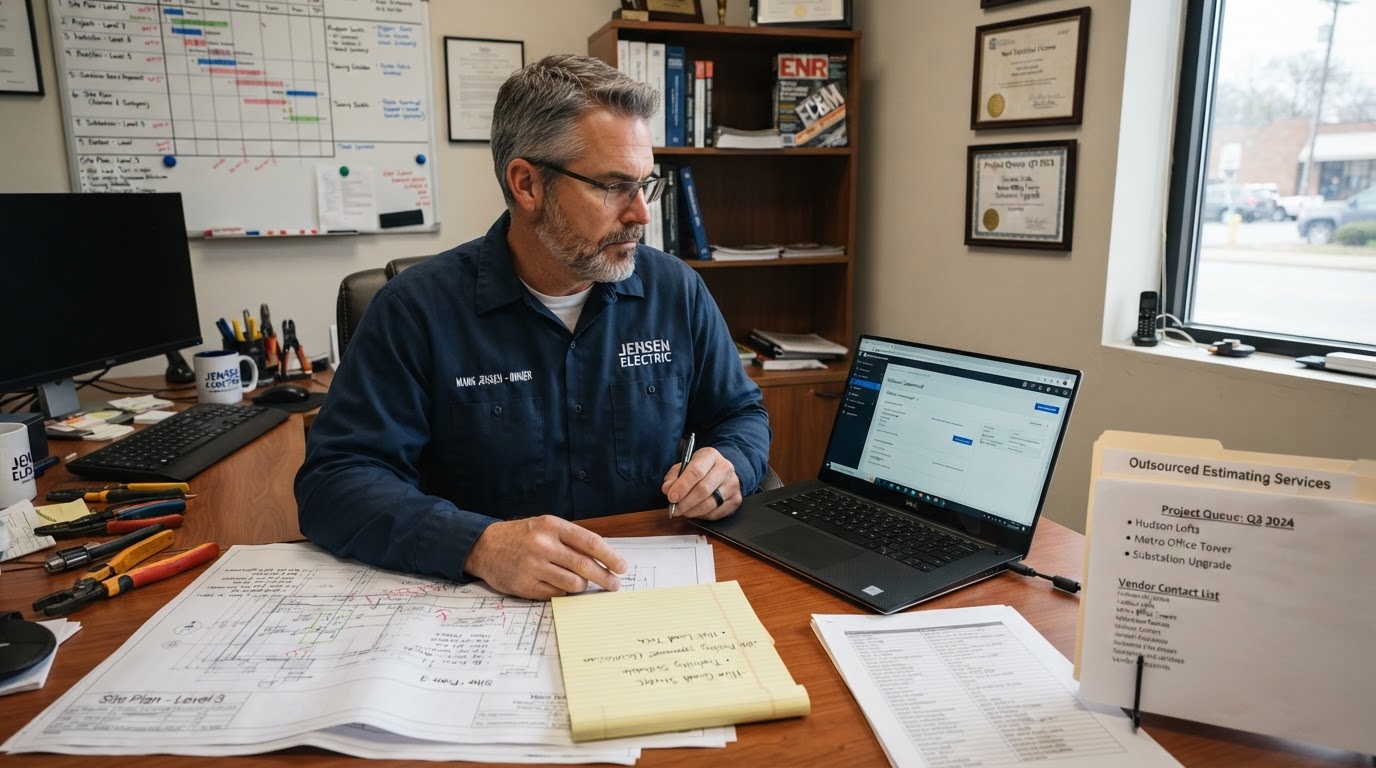
Outsourcing electrical estimating works best when the estimator receives more than a sentence that says, "Price this job."
A good estimating process begins with a good handoff.
The estimator needs enough information to understand the scope, quantify the work and apply your company's approved pricing standards without guessing at field conditions or business decisions.
That does not mean every project needs a 40-page intake package.
It means the information needed to price the job responsibly should be available before estimating begins.
Here is what electrical contractors should prepare.
1. Basic Project Information
Start with enough information to identify and organize the estimate.
That may include:
- customer or project name
- internal project number
- project address or ZIP code
- residential or light-commercial classification
- requested estimate date
- project contact when relevant
- any important bid deadline
This sounds simple, but consistent project identification prevents confusion when several estimates are moving through the workflow at the same time.
2. A Clearly Defined Scope of Work
The estimator needs to know what you are actually proposing to provide.
Compare these two submissions:
Too vague:
"200A service. Price it."
Much more useful:
"Replace existing residential service equipment with new 200A service equipment based on attached field photos and measurements. Include specified panel, grounding work identified in field notes, permit allowance per company standard and labeling. See notes for existing conditions."
The second version gives the estimator something concrete to work from.
Your estimator should not be expected to invent field conditions or decide technical scope that your company has not approved.
3. Field Notes
Field notes often carry information that cannot be seen clearly in photographs.
Useful notes might cover:
- existing equipment
- accessibility
- installation conditions
- observed damage
- routing considerations
- mounting conditions
- customer requests
- known exclusions
- work already discussed with the customer
The person who visited the site has information the remote estimator does not.
Capture it.
4. Photos and Video
Good jobsite photos can dramatically improve context.
Depending on the project, useful photos might show:
- panel and service equipment
- equipment labels
- existing devices
- proposed work area
- attic or crawlspace access
- route between equipment
- meter location
- exterior conditions
- damaged equipment
- room layout
Photographs do not replace required field verification, but they can help the estimator understand the scope you have already defined.
5. Measurements
If the estimate depends on distance, room dimensions or equipment placement, provide measurements.
Examples could include:
- panel-to-equipment distance
- approximate circuit run
- room dimensions
- service-equipment location
- mounting height where relevant
- trench or exterior routing distance when already field-verified
Do not expect the estimator to accurately determine important dimensions from a photograph unless the information can genuinely be established from the documentation.
6. Plans, Drawings, Specifications and Addenda
For remodels and light-commercial projects, send the current project documents.
That may include:
- floor plans
- electrical sheets
- reflected ceiling plans
- equipment schedules
- specifications
- addenda
- architectural sheets relevant to the electrical scope
- approved revisions
Make sure the estimator knows which version is current.
Pricing an old drawing set while the field team is looking at a newer revision creates preventable problems.
7. Equipment and Material Requirements
If a customer, GC or project specification requires a particular product, manufacturer or equipment type, tell the estimator.
Useful information may include:
- manufacturer
- model
- equipment specification
- required finish
- customer-selected fixtures
- allowances
- preferred devices
- contractor-standard products
If an allowance is being used because the final selection is unknown, define the allowance rather than leaving the estimator to guess.
8. Your Labor Rates and Labor Method
An outsourced estimating company should understand how your company prices labor.
That may involve:
- hourly labor rates
- crew rates
- standard labor units
- minimum charges
- productivity assumptions approved by your company
There is no benefit to receiving a beautifully formatted estimate built on labor assumptions that do not match your business.
Your estimating profile should establish these rules before recurring estimates are produced.
9. Your Material Pricing or Pricebook
Material cost can be handled several ways depending on the contractor and service.
You may provide:
- company pricebook
- preferred vendor pricing
- approved material database
- project-specific quotes
- equipment quotes
- standard material costs
What matters most is consistency.
The estimator should know which pricing source your company has approved.
10. Markup, Margin and Other Pricing Rules
This is one of the most important parts of the estimating handoff.
Your estimator needs to know how your company wants the estimate built.
That may include rules for:
- material markup
- labor pricing
- overhead
- profit or margin
- taxes where applicable
- subcontractor costs
- equipment rental
- permit allowances
- other approved cost categories
These are contractor decisions.
At OTBSE, the purpose of outsourced estimating is to apply your approved pricing standards consistently, not take over control of your margins or selling price.
11. Permit, Utility and Outside Costs
If the project involves known costs outside normal labor and material, provide them when available.
Examples may include:
- permit fees
- utility costs
- equipment rental
- subcontractor quote
- lift rental
- trenching by others
- engineering or design costs handled outside the electrical estimate
If a cost has not been confirmed, identify whether it should be excluded, carried as an allowance or held for contractor review.
12. Proposal Terms and Company Standards
A completed estimate is more useful when it reflects how your company actually sells work.
Your estimating profile may include approved standards such as:
- company proposal template
- estimate validity
- payment or deposit terms
- warranty language
- standard exclusions
- standard assumptions
- naming conventions
- proposal format
Do not make the estimator recreate those decisions every time.
Build them into the process once, then update them when your company changes them.
13. What Happens When Information Is Missing?
The responsible answer should be clarification, not invention.
If an estimator cannot tell:
- what equipment is being installed
- how far the run is
- which drawing revision applies
- whether an item is included
- which material was approved
- what field condition exists
the question should be returned to the contractor.
That may temporarily pause the estimate, but it is better than building a price on an unsupported assumption.
What Can OTBSE Work From?
Depending on the estimate type, OTBSE estimating support can work from project information such as:
- field notes
- scopes
- photos
- inspection reports
- plans
- supporting documents
The exact requirements depend on the complexity of the estimate.
Residential service and remodel work often begins with contractor-defined field information, which is why residential electrical estimating support is structured around field-gathered scope. Approved light-commercial work may require a more complete document package, which is where light commercial electrical estimating support is the better fit.
The objective is always the same: enough information to prepare the estimate responsibly without taking technical control away from the contractor.
One-Time Estimate or Ongoing Estimating Support?
OTBSE offers several paths depending on your estimating workload.
One-Time Estimate Preparation
Best when you need help with a specific qualifying estimate.
OTBSE Estimating Desk
Best when estimating has become a recurring capacity problem and you want predictable monthly support. The Estimating Desk focuses on estimate preparation using your approved pricing standards.
Estimate Management
Designed for contractors who need support beyond preparation, such as approved proposal delivery, estimate tracking, CRM updates, follow-up cadence and status management. See Estimate Management.
Estimate Pipeline Management
Designed for broader estimate-workflow support when the business needs help managing opportunities across more of the estimating pipeline. See Estimate Pipeline Management.
Electrical Estimating Intake Checklist
Before submitting an estimate, ask whether you have provided:
- Project/customer identification
- Property or project location
- Requested due date
- Clearly defined scope
- Field notes
- Relevant photos
- Measurements
- Current plans and specifications
- Current addenda
- Equipment selections
- Material preferences
- Labor methodology
- Material pricing source
- Markup and margin rules
- Permit or outside costs
- Approved exclusions
- Proposal standards
- Special customer or GC requirements
A repeatable intake process makes outsourced estimating much easier to scale.
Ready to Get an Estimate Off Your Desk?
If your field team is gathering the information but estimates are still waiting to be built, outsourced estimating can add capacity without taking pricing control away from your company.
Explore OTBSE Estimating Services
Explore OTBSE's one-time estimate preparation, Estimating Desk and managed estimating options.
Explore OTBSE Estimating Services →Your pricing stays yours. Your approvals stay yours. Your business decisions stay yours.