Florida hurricane season runs from June 1 through November 30. During those six months, Sarasota and Manatee County homeowners face the reality of Gulf storms, power outages, and electrical system stress.
Most homeowners think about storm shutters, water supplies, and emergency plans. Far fewer think about whether their electrical system is ready. That oversight can lead to dangerous situations, costly appliance damage, and prolonged power outages after a storm passes.
This checklist helps you prepare your electrical system before the next storm hits Sarasota or Bradenton.
Why Your Electrical System Needs a Pre-Hurricane Inspection in Sarasota and Bradenton
Sarasota and Manatee Counties are directly in the path of Gulf storms. Electrical systems that fail during or after a storm are not just inconvenient. They are dangerous.
Flooded panels can electrocute. Power surges during restoration can destroy appliances and electronics. Downed lines can create deadly hazards around your property. A pre-season inspection identifies vulnerabilities before they become emergencies.
Older homes across Sarasota and Bradenton are especially at risk. Many were built with electrical systems designed decades before modern storm patterns and load demands. A licensed electrician can identify whether your system is storm-ready or needs attention.
Hurricane Electrical Checklist: What to Inspect Before the Season
Use this checklist to assess your electrical system before hurricane season peaks.
- Test and replace any failing GFCI outlets: Focus on outdoor outlets, bathrooms, kitchens, and laundry areas. Press the TEST button. If the power does not cut, the GFCI is not protecting you.
- Inspect your electrical panel: If you have a Federal Pacific or Zinsco panel, schedule a replacement. These panels are known fire hazards and are frequently flagged by Florida insurers.
- Install or test whole-home surge protection: Power restoration surges are one of the most common causes of post-storm appliance damage. A panel-level surge protector protects your entire home.
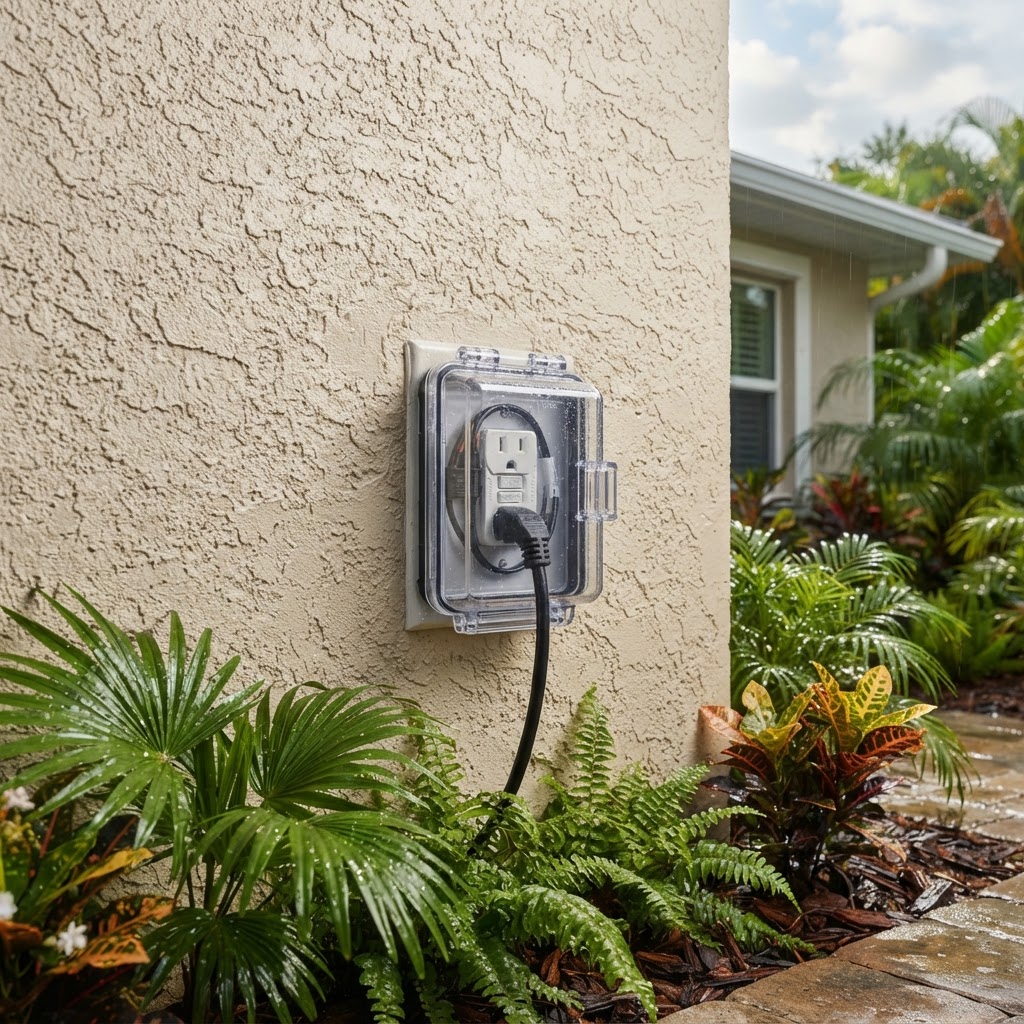
- Inspect outdoor electrical outlets and fixtures: Check for cracked covers, exposed wiring, or missing weatherproof gaskets. Replace any damaged components before storm season.
- Verify your generator transfer switch or interlock kit: Confirm it is installed correctly and functioning. Test the mechanism to ensure it operates smoothly.
- Fuel and test your portable generator: Use fresh, stabilized fuel. Run the generator under load for at least 20 minutes to confirm it is ready.
- Check your main panel for tripping breakers or signs of overheating: Warm breakers, discoloration, or burning smells indicate a problem that needs professional attention before a storm.
- Verify outdoor subpanels are properly sealed: Water intrusion during a storm can short out subpanels and create fire hazards.
- Identify your main electrical shutoff location: Know how to turn off power to your entire home before a storm. If flooding occurs, you may need to shut off power quickly.
- Schedule a licensed electrician inspection if your home is over 25 years old: Older systems across Sarasota and Bradenton are more vulnerable to storm damage and may not meet current code.
Whole-Home Surge Protection: Your Most Important Pre-Storm Investment
When power is restored after an outage, the sudden return of voltage can send a massive surge through your home electrical system. This surge can destroy HVAC systems, refrigerators, televisions, computers, and any connected appliance.
The average appliance loss per storm event far exceeds the cost of a whole-home surge protector. A panel-level surge protection device diverts excess voltage to ground before it reaches your circuits.
Power strips only protect what is plugged into them. A whole-home surge protector protects everything in your house, including hardwired appliances like your HVAC system and water heater.
We recommend whole-home surge protection for all Sarasota and Bradenton homeowners, not just during hurricane season. Florida leads the nation in lightning strikes, and utility grid fluctuations happen year-round.
Generator Safety During Hurricane Season
Generators save lives during power outages, but they are also dangerous when used incorrectly. Follow these critical safety reminders.
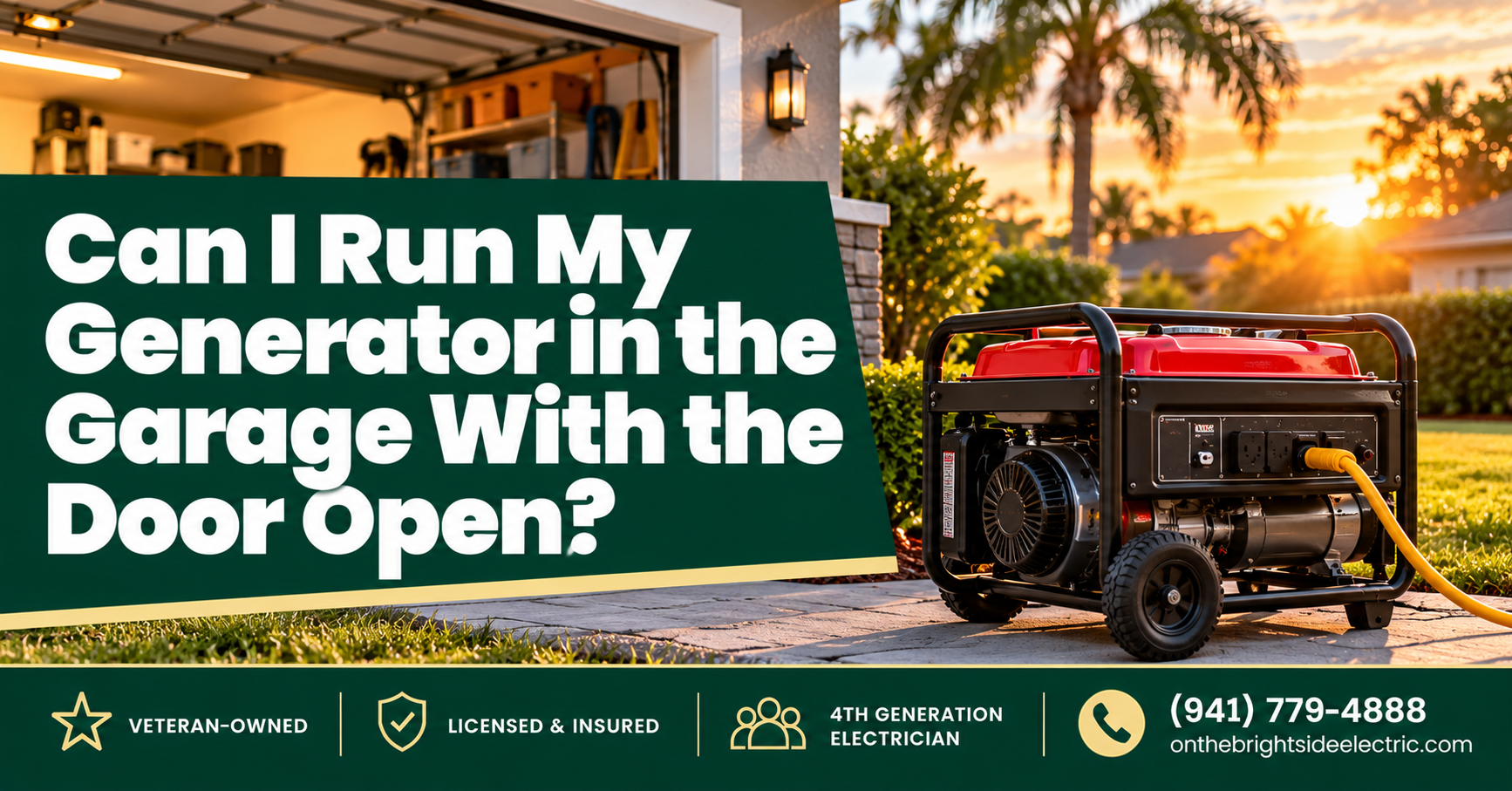
- NEVER run a generator indoors or in an attached garage. Carbon monoxide is deadly and builds up quickly in enclosed spaces.
- Position your generator at least 20 feet from windows and doors. Keep exhaust pointed away from your home.
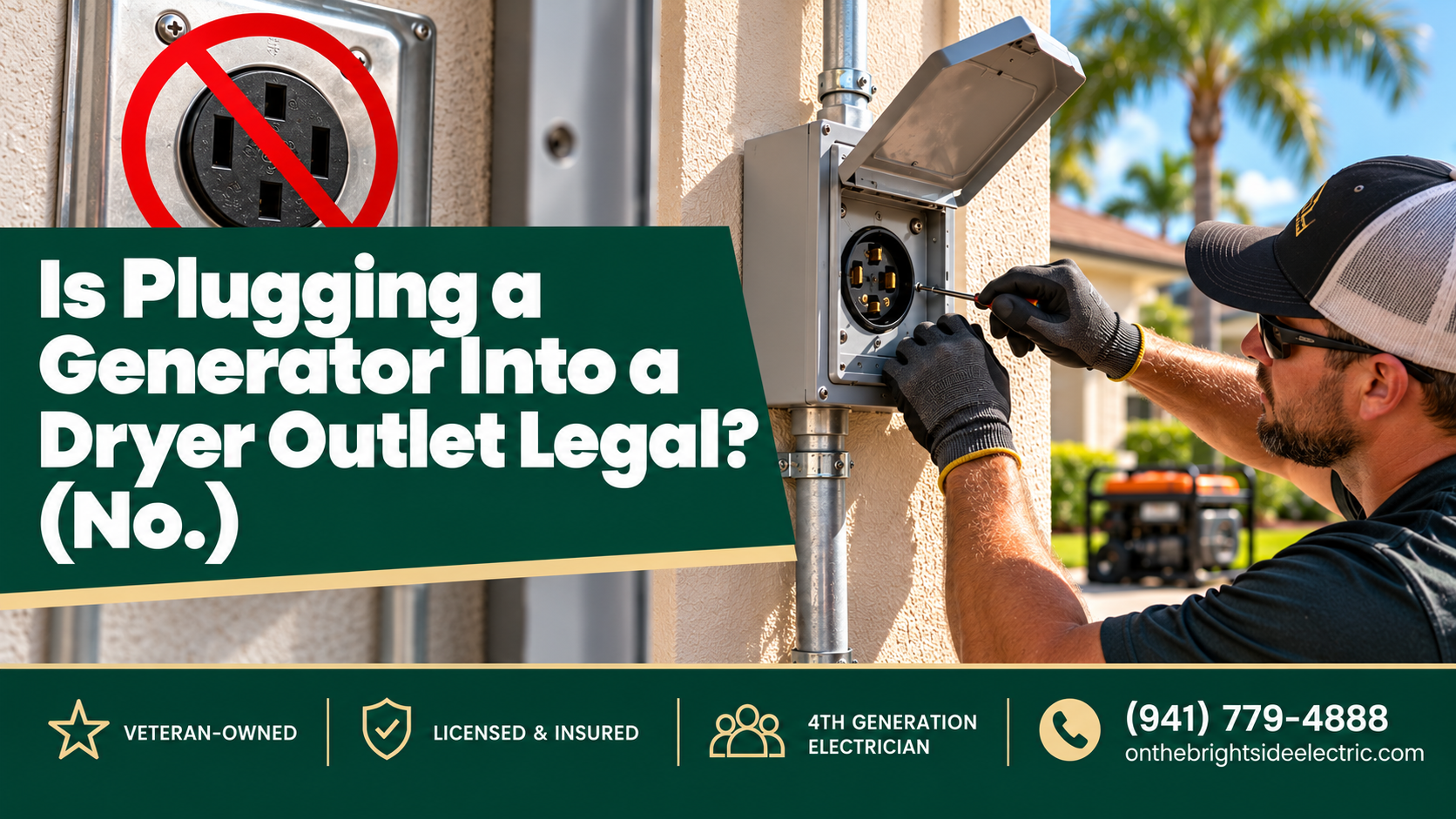
- Use a proper transfer switch or interlock kit. Never connect a generator directly to your panel or through a dryer outlet. Backfeed kills utility workers.
- Check your fuel storage. Use fresh, stabilized fuel. Store it in approved containers away from living spaces.
- Test your generator monthly. Do not wait until a storm is approaching to find out your generator does not start.
After the Storm: Electrical Safety When Power Returns
The danger does not end when the storm passes. Power restoration creates its own hazards.
- Do not turn on all appliances immediately when power is restored. The surge can overload circuits. Turn things on one at a time.
- Check for any flooded panels or junction boxes before restoring power. If your panel was flooded, do not touch it. Call a licensed electrician immediately.
- Watch for burning smells or flickering lights after power is restored. These indicate storm-related damage that needs professional attention.
- Do not touch downed power lines ever. Treat every downed line as live and deadly. Contact your utility company and stay at least 30 feet away.
When to Call a Licensed Electrician Before, During, or After a Storm
Before a storm: Schedule an inspection, install whole-home surge protection, install a generator transfer switch, and assess your panel. These preparations protect your home and give you peace of mind.
During a storm: Do not attempt electrical repairs. If you experience an electrical emergency during a storm, contact emergency services. Wait until the storm passes and conditions are safe.
After a storm: Call a licensed electrician if you notice any flooding near electrical equipment, power issues after restoration, a damaged service entrance, burning smells, or flickering lights. We respond to post-storm calls throughout Sarasota and Manatee County.
Frequently Asked Questions About Hurricane Electrical Preparedness
Is Your Electrical System Ready for Hurricane Season?
Our licensed electricians serve all of Sarasota and Manatee Counties. Schedule your pre-season inspection now before storm schedules fill up. $59.99 dispatch fee. Veteran-owned.
Licensed Electrical Contractor | EC#13014677 | (941) 779-4888 | Sarasota and Manatee County