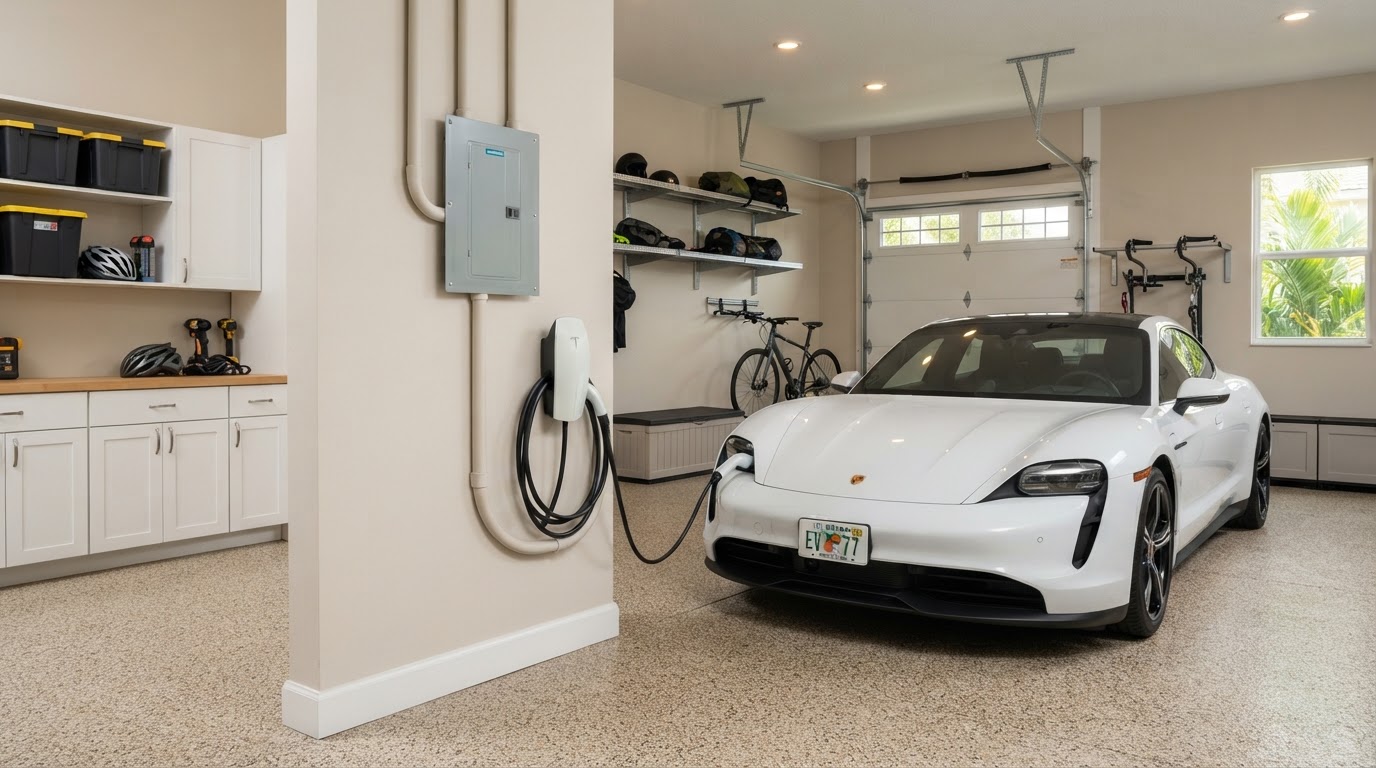
When homeowners shop for a Level 2 EV charger, one of the first installation decisions is whether the charger should be hardwired or plugged into a receptacle.
Both approaches can be appropriate.
The better choice depends on the charger, installation location, electrical system, charging needs and manufacturer requirements.
A hardwired charger is permanently connected to the electrical circuit.
A plug-in charger uses a compatible receptacle and plug arrangement designed for the equipment.
Before buying the charger or deciding between the two, it helps to understand what actually changes.
What Is a Hardwired Level 2 EV Charger?
A hardwired EV charger is permanently connected to its electrical supply rather than being plugged into a receptacle.
The wall-mounted charging equipment stays in place as part of the electrical installation.
Homeowners may choose hardwired charging for several reasons, including:
- permanent installation
- clean appearance
- outdoor installation considerations
- charger manufacturer requirements
- electrical design of the specific project
- reducing the number of connection points involved
Whether hardwiring is required or simply one available option depends on the charger and installation.
What Is a Plug-In Level 2 EV Charger?
A plug-in Level 2 charger connects through a receptacle when the charging equipment is designed and listed for that configuration.
This setup can provide flexibility if you later replace compatible charging equipment.
However, a plug-in installation is still a high-power electrical installation.
It is not the same as plugging an ordinary appliance into an existing household outlet.
The receptacle, circuit, equipment and installation all need to be appropriate for EV charging.
Hardwired vs. Plug-In at a Glance
Hardwired: permanent electrical connection, fixed installation, no receptacle required, clean permanent appearance.
Plug-In: charger connects to a compatible receptacle, may provide more equipment flexibility, and requires an appropriate receptacle and installation.
Neither option is automatically better. The correct choice is project-specific.
Why Some Homeowners Prefer Hardwired Charging
A hardwired charger creates a permanent connection without a plug-and-receptacle interface between the charger and circuit.
For homeowners who intend to keep a wall-mounted charger in the same location for years, that can be an attractive setup.
Hardwiring may also make sense when:
- the charger requires it
- the installation is outdoors
- the desired charging configuration is better suited to a permanent connection
- the homeowner prefers a cleaner fixed installation
The electrician should review the charger installation instructions before the wiring approach is finalized.
Why Some Homeowners Prefer Plug-In Charging
A plug-in charger may appeal to homeowners who value equipment flexibility.
If the receptacle and future equipment remain compatible, replacing the charging unit itself may be simpler.
That does not mean the receptacle should be treated casually.
EV charging can place a substantial sustained load on an electrical circuit, so the entire installation needs to be designed for the application.
Do not choose plug-in charging simply because an existing receptacle happens to be nearby.
The electrician needs to determine whether the existing electrical setup is actually appropriate.
The Charger Rating Is Only Part of the Decision
Homeowners often shop for chargers by looking at the largest charging number advertised.
Your home and vehicle may not benefit from simply choosing the highest-rated charger available.
The electrical plan can depend on:
- vehicle charging capability
- charger specifications
- available electrical capacity
- panel configuration
- service capacity
- installation distance
- installation environment
- manufacturer requirements
The best installation is one that matches the vehicle, charger and home's electrical system.
Does a Level 2 Charger Need Its Own Circuit?
A Level 2 EV charging installation requires electrical capacity dedicated to the charging equipment according to the equipment and applicable requirements.
The exact circuit design should be determined from the charger specifications and electrical system.
That is why the charger model is useful information for the electrician.
Do not rely on generic internet charts as a substitute for the specific equipment instructions and project evaluation.
Can Your Electrical Panel Support the Charger?
Before choosing between hardwired and plug-in, there is a bigger question: Can the home's electrical system support the charging load?
A panel that physically has an open breaker position is not automatically proof that the home has enough electrical capacity.
The electrician may need to consider the home's existing loads and the proposed charger.
This does not mean every EV charger installation requires a panel upgrade. Many do not.
But capacity should be evaluated rather than assumed.
For a deeper look at that question, see our article on whether your electrical panel can support a Level 2 EV charger.
Installation Location Can Affect the Decision
Where the vehicle parks matters.
Think about:
- garage wall location
- outdoor wall location
- carport
- distance to the electrical panel
- charging-cable reach
- where the vehicle's charge port is located
- weather exposure
- possibility of a second EV later
The most convenient charger location may not be directly beside the electrical panel.
A good plan considers how you will actually park and charge every day.
Should You Buy the EV Charger Before Calling the Electrician?
You can research chargers first, but it can be useful to discuss the electrical installation before finalizing the purchase.
That is especially true if:
- your panel is older
- available capacity is uncertain
- the charger will be far from the panel
- you want an outdoor installation
- you are considering a high-output charger
- you expect to add another EV later
If you already purchased the charger, send the electrician the manufacturer and model information.
The specifications can help determine the appropriate installation approach.
What About Future EVs?
If your household may eventually charge two electric vehicles, mention it now.
The future plan may affect charger location, electrical capacity planning, panel considerations, conduit or wiring strategy, and equipment selection.
You do not necessarily need to install two chargers today. But planning ahead may prevent avoidable work later.
Level 2 EV Charger Installation in Sarasota and Manatee County
On The Bright Side Electric installs EV charging equipment throughout Sarasota and Manatee County, including Sarasota, Bradenton, Parrish, Palmetto, Ellenton and Lakewood Ranch.
If you already know which charger you want, send:
- charger make and model
- photo of your electrical panel
- photo of the proposed charging location
- approximate panel-to-charger location
- project details
That information can help determine whether the project is a good fit for OTBSE's free remote estimate process. Learn more about our EV charger installation services and our overview of EV charger installation for Florida homeowners.
Planning a Level 2 EV Charger?
You do not need to guess which installation will work best. Send On The Bright Side Electric your charger information, electrical-panel photos and proposed installation location. We can review the project and help determine the appropriate next step.
Request a Free Remote Estimate →