Home renovation is booming across Sarasota and Manatee Counties. Homeowners are converting lanais into year-round living spaces, expanding kitchens, adding primary suites, and building ADUs on their properties. Some are doing all of it.
Every one of these projects has an electrical component. The homeowners who involve a licensed electrician early — before contractor bids are finalized, before permits are submitted, before the first wall comes down — have smoother projects, fewer surprises, and lower final costs.
Those who wait until mid-project often find themselves paying for rework they could have avoided.
This guide explains what your electrician needs to know before your remodel starts, and why bringing them in early makes every other part of the project go better.
Why Early Electrical Planning Matters in Florida Specifically
Florida's climate, building codes, and insurance requirements create electrical considerations that do not apply the same way in other states.
High electrical loads: Florida homes run air conditioning nearly year-round. Any addition or major remodel that adds square footage, a kitchen, or new HVAC zones increases your home's electrical load — and needs to be assessed against your current panel capacity before work begins.
Hurricane hardening requirements: Florida building codes include specific requirements for electrical work done in conjunction with structural renovations. An electrician familiar with local code can flag these requirements early and prevent permit delays.
Insurance considerations: Adding living space, converting a garage, or making structural changes can affect your homeowner's insurance policy. If the work also includes electrical upgrades, documenting the permitted work properly protects your coverage.
GFCI and AFCI requirements: Florida's electrical code requires GFCI protection in bathrooms, kitchens, laundry areas, garages, and outdoor spaces — and AFCI protection in bedrooms and living areas. Any remodel touching these spaces needs to meet current requirements.
What to Bring to Your Electrical Walkthrough
When you invite a licensed electrician to your home before your remodel begins, here is what to have ready:
Your Project Plans or Sketches
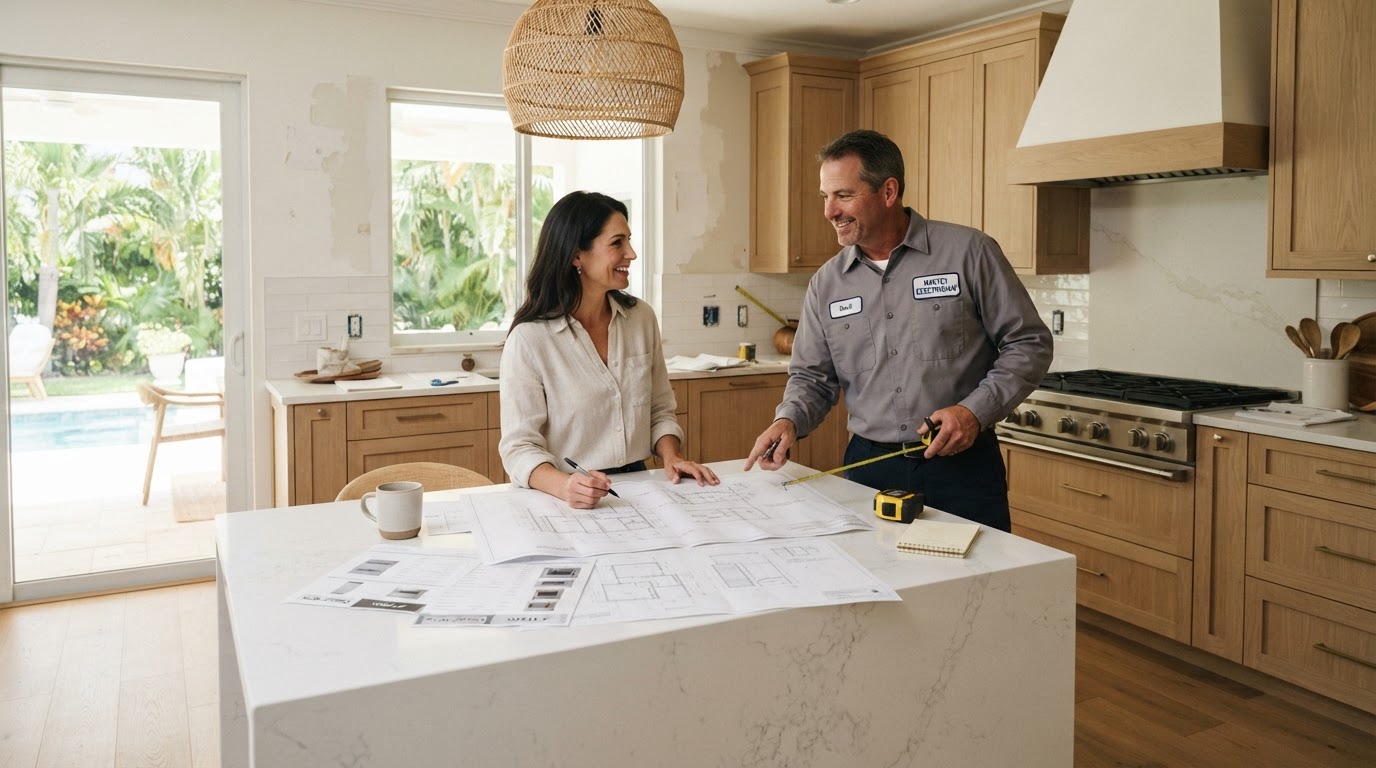
You do not need architect-stamped drawings at this stage. A basic floor plan sketch showing what you are changing — which walls are coming down, where the new kitchen will be, how large the addition is — gives your electrician what they need to assess the electrical scope.
If you are working with a general contractor or designer who has preliminary drawings, bring those.
A Description of New Appliances and Systems
Any new appliance or system that you are planning to add should be on your list:
- Kitchen appliances (range, oven, refrigerator, dishwasher, microwave)
- HVAC equipment (new units, mini-splits, additional zones)
- Washer and dryer (especially if moving to a new location)
- EV charger
- Outdoor kitchen or pool equipment
- Home office or media room equipment
- Generators or battery storage
Each of these has specific electrical requirements. Knowing what you are adding allows your electrician to assess whether your existing panel can support it — or whether an upgrade is part of the project scope.
Information About Your Current Panel
Your electrician will inspect the panel on-site, but having basic information ready is helpful:
- Panel brand (relevant if it is Federal Pacific, Zinsco, or another brand with known concerns)
- Current amperage (100-amp, 200-amp, etc.)
- Whether the panel has been upgraded or worked on previously
If your home is older and you are not sure about these details, that is fine — the walkthrough will clarify them.
Your Timeline and Budget Context
Electrical work often has scheduling dependencies with other trades. Rough-in electrical work (wiring inside the walls) must be completed and inspected before drywall goes up. Knowing your overall project timeline — when permits are expected, when framing is scheduled — helps your electrician plan accordingly.
If budget is a factor in what you upgrade during the remodel versus later, let your electrician know. They can help you prioritize intelligently.
Common Electrical Scope Items in Florida Remodels
Every project is different, but these are the electrical items that most often arise in Sarasota and Manatee County remodels:
Panel upgrade: If your remodel adds significant electrical load — a new HVAC zone, a kitchen expansion, an in-law suite — and your panel is currently at 100 or 150 amps, a panel upgrade to 200-amp service is often part of the project scope.
Dedicated circuits: Kitchens, laundry rooms, and home offices often require dedicated circuits for specific appliances. This is code in many cases — and practical in all cases.
New outlet and switch placement: Remodels are the right time to add outlets where you always needed them and remove switch locations that no longer make sense. Doing this during rough-in is far less expensive than cutting into finished walls later.
GFCI and AFCI compliance: If your remodel touches a kitchen, bathroom, or bedroom, current code requires GFCI and/or AFCI protection. Updating now brings the affected areas into compliance and avoids future issues during sale inspections.
Outdoor electrical: Lanai conversions, pool additions, and outdoor kitchen projects all require weatherproof outlets, proper GFCI protection, and — in some cases — dedicated circuits for outdoor appliances or lighting.
Lighting design: Remodels are the right time to address lighting. Recessed lighting, under-cabinet lighting, ceiling fan pre-wiring, and smart switch installation are all easier during rough-in than after.
The Permit Process in Florida
All significant electrical work in Florida requires a permit. Your licensed electrician handles the permit application and coordinates the inspections required at various stages of the project.
For a remodel, this typically means:
- Rough-in inspection: After wiring is in place inside the walls, before drywall
- Final inspection: After all devices are installed and the work is complete
In Sarasota and Manatee Counties, inspection scheduling varies. Building this into your project timeline from the start — rather than discovering it mid-project — keeps things moving.
Unpermitted electrical work creates problems at resale, can affect your insurance coverage, and may need to be remediated before a buyer's lender will close. Permitted, inspected work is documented and clean.
Ready to Plan Your Remodel Electrical Scope?
If you are in the planning stage of a remodel or home addition in Sarasota or Manatee County, the right first electrical conversation is a walkthrough — at your home, with your plans in hand, before your general contractor finalizes the bid.
Request a Free Remodel Electrical Estimate →Or call us directly at (941) 779-4888.
Daniel Spears — Master Electrician, 4th-generation electrician, veteran-owned business owner — serves homeowners throughout Sarasota and Manatee Counties, including Sarasota, Bradenton, Palmetto, Parrish, Lakewood Ranch, North River Ranch, Ellenton, and surrounding communities.
EC#13014677 | Licensed & Insured | Serving Sarasota & Manatee County