October 24, 2026 | On The Bright Side Electric
Recessed lighting can make a noticeable difference in how your home looks and feels. Whether you are brightening a dark kitchen, updating your living room, or replacing outdated ceiling fixtures, recessed LED lights offer a clean, modern appearance without taking up valuable overhead space.
But before starting a lighting project, most homeowners have the same question: How much does recessed lighting cost to install in a Florida home?
The answer depends on more than the number of lights you want.
In Palmetto, Bradenton, Sarasota, and surrounding Manatee and Sarasota County communities, recessed lighting installation costs can vary significantly based on your home's construction, existing electrical wiring, ceiling accessibility, fixture choices, and the amount of electrical work required.
A straightforward installation in an accessible ceiling may involve relatively little additional wiring. Installing the same number of lights in a finished ceiling with limited attic access could require considerably more labor.
The only reliable way to determine the exact cost is through an in-home estimate that evaluates your actual ceiling, wiring, electrical system, and proposed lighting layout.
Here is what affects the cost and what you should know before requesting an estimate.
| Cost Factor | Why It Matters |
|---|---|
| Number and layout of lights | Determines fixture count, placement, and wiring routes |
| Existing versus new installation | New installations may require more wiring and ceiling work |
| Attic and ceiling access | Limited access can increase installation complexity |
| Wiring and switch locations | New controls and circuits may require additional work |
| Fixture selection | Fixture design and installation requirements vary |
| Dimmers and smart controls | Compatible controls and extra wiring may be needed |
| Panel and circuit capacity | Existing electrical conditions must be evaluated |
| Permits and inspections | Requirements depend on the project and jurisdiction |
1. How Many Recessed Lights Do You Need?
The number of recessed lights is one of the first factors affecting your installation cost.
However, more lights do not automatically mean a better result.
The ideal number depends on several details:
- Room dimensions and ceiling height
- How much natural light enters the room
- Whether you need general, task, or accent lighting
- The brightness and beam spread of your selected fixtures
- Existing lighting and ceiling fans
- Where you want the light concentrated
For example, a kitchen may benefit from recessed lights positioned to illuminate countertops and work areas. A living room may need a more balanced arrangement that provides comfortable general lighting without creating glare.
An experienced electrician can help evaluate the layout before installation begins.
Why layout affects price: Light placement determines how many ceiling openings are needed, where wiring must run, and whether structural obstacles complicate the installation.
A thoughtfully designed layout can help avoid unnecessary fixtures while providing the lighting your space actually needs.
2. Is This a New Installation or an Upgrade to Existing Lighting?
One of the biggest differences in recessed lighting costs is whether the lights are being installed for the first time or replacing existing fixtures.
Replacing existing recessed lights
If your home already has recessed lighting, upgrading compatible fixtures to modern LED technology may be relatively straightforward.
Depending on the existing housings, wiring, and fixtures, an electrician may be able to reuse portions of the existing installation.
However, not every LED replacement fits every existing housing. Older fixtures may require additional evaluation or modifications.
Adding recessed lighting to a finished ceiling
Installing recessed lights where none previously existed generally requires more work.
Your electrician may need to:
- Plan and mark each fixture location
- Cut openings in the ceiling
- Route electrical wiring between lights
- Connect the lights to an appropriate circuit
- Install or modify wall switches
- Test the completed installation
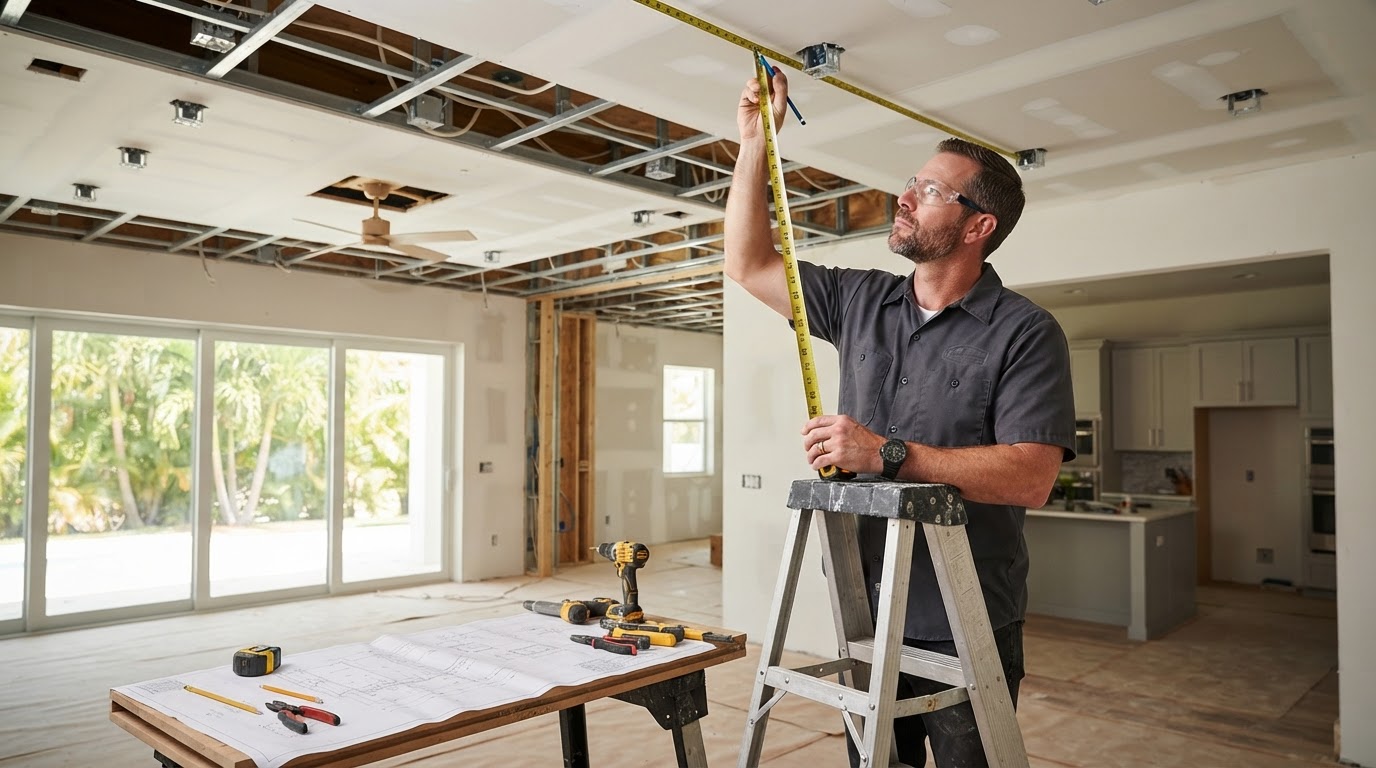
If the ceiling is finished and access is limited, additional openings or drywall repairs may also be necessary.
The important difference: Replacing compatible existing lighting and creating an entirely new lighting system are two different projects, even when the finished appearance is nearly identical.
3. Attic Access, Ceiling Height, and Home Construction
Two homes on the same street in Bradenton or Sarasota may receive very different recessed lighting estimates because of what is above their ceilings.
In many Florida homes, ceiling construction and attic accessibility have a major impact on installation labor.
Homes with accessible attics
If there is adequate attic access above the installation area, an electrician may have more options for routing wiring and reaching fixture locations.
However, attic access does not guarantee an easy installation.
Florida attics can become extremely hot, and insulation, ductwork, roof framing, and limited working space can make the work more difficult.
Homes without attic access
Installing recessed lighting beneath a second floor, concrete structure, or other inaccessible ceiling can be more complicated.
Depending on construction, additional ceiling openings and repairs may be necessary to route wiring safely.
High or vaulted ceilings
High ceilings, sloped ceilings, and vaulted living areas can require specialized equipment, additional labor, or different fixture configurations.
Ceiling materials also matter. Drywall, plaster, wood ceilings, and other finishes may require different installation methods.
Why this affects your estimate: The visible ceiling is only part of the project. Access to the space above it often determines how much labor and preparation are required.
4. Will You Need New Electrical Wiring or Switches?
The condition and location of your existing electrical wiring can significantly affect the project cost.
A homeowner may assume that an electrician can simply connect new recessed lights to the nearest existing fixture.
Sometimes an existing circuit can support the proposed lighting. Other times, additional wiring or electrical modifications are necessary.
Your electrician needs to evaluate:
- Whether a suitable circuit is available
- The existing wiring condition and configuration
- The electrical load and circuit protection
- The distance between fixtures and power sources
- Existing switch locations
- Whether a new switch leg is required
A switch leg is the wiring arrangement that allows a wall switch to control the connected lights.
If you want recessed lighting controlled independently from existing ceiling lights or fans, new switch wiring may be needed.
For example, adding recessed lights to a family room while keeping the ceiling fan on its own control may require a different wiring arrangement than simply replacing a single ceiling fixture.
Safety matters: Never assume that an existing circuit has sufficient capacity or that older wiring can be reused without evaluation. A qualified electrician should determine whether the proposed connections and circuit protection are appropriate.
5. What Type of Recessed Light Fixture Will You Choose?
Not all recessed lighting fixtures are constructed the same way.
The type of fixture you select can affect material costs, installation requirements, and the finished appearance.
Common options include:
Traditional recessed housings
These fixtures use a housing installed above the ceiling with a compatible lamp or LED module and trim.
Existing housing dimensions, insulation conditions, and ceiling clearance can influence installation choices.
Canless LED recessed lights
Canless LED fixtures, sometimes called wafer lights, have a slim profile and typically do not require a traditional recessed can housing.
They can be useful in certain installations where ceiling space is limited.
However, slim construction does not mean they can be placed anywhere. Installation still depends on structural clearance, driver placement, wiring access, and the fixture's listing and instructions.
Adjustable and directional recessed lights
Adjustable fixtures allow homeowners to direct light toward artwork, architectural features, or specific work areas.
Other choices include different trim styles, beam patterns, brightness levels, and light color temperatures.
Warm white lighting often creates a comfortable residential atmosphere, while other color temperatures may be better suited to particular tasks and preferences.
For bathrooms, showers, and other moisture-exposed locations, the fixture must have the appropriate rating for its intended location.
What homeowners should consider: Choose lighting based on where it will be installed and how you use the room, not just the fixture's appearance or purchase price.
6. Do You Want Dimmers or Smart Lighting Controls?
A recessed lighting installation is also an opportunity to improve how you control your home's lighting.
You may want the lights to operate with a standard wall switch, a dimmer, or a compatible smart lighting system.
Standard switches
A basic on-and-off switch may be sufficient for utility spaces, hallways, or rooms where adjustable brightness is not important.
Dimmer switches
Dimmers allow you to adjust light levels for different activities.
They can be especially useful in living rooms, bedrooms, dining areas, and kitchens.
However, not every LED fixture works properly with every dimmer.
An incompatible combination may cause flickering, buzzing, limited dimming performance, or lights that do not shut off or operate as expected.
Smart lighting controls
Smart switches and compatible lighting controls may provide scheduling, remote control, or integration with home automation systems.
These options can add convenience, but they may also require specific wiring configurations, compatible equipment, or additional setup.
If you are interested in dimmers or smart lighting, mention that before your electrician prepares the estimate.
Adding controls during the initial installation may be more practical than making changes after the project is complete.
7. Does Your Electrical Panel Have Enough Capacity?
Most recessed LED lighting projects do not automatically require an electrical panel upgrade.
Modern LED fixtures are generally energy-efficient, and many lighting improvements can be completed using an appropriate existing circuit.
However, your electrician still needs to evaluate the electrical system rather than assume that available capacity exists.
Additional work may be necessary if:
- Existing circuits are overloaded or unsuitable
- The available wiring is damaged or outdated
- A new dedicated or branch circuit is required
- Existing circuit protection needs correction
- The electrical panel has limitations that affect the proposed work
If a new circuit is required, the electrician must determine how wiring will be routed from the panel to the lighting location.
That can increase labor and material requirements.
An important distinction: Adding recessed lights does not mean you automatically need a larger electrical panel. Whether any circuit or panel work is necessary depends on an evaluation of your home's existing electrical system.
8. Will Permits or Inspections Be Required?
Electrical improvements in Florida may require permits and inspections, depending on the scope of work and the property's jurisdiction.
For homeowners in Manatee and Sarasota Counties, requirements can vary based on whether the property is located in an incorporated municipality or an unincorporated area.
Replacing an existing fixture may be treated differently from adding new wiring, switches, or circuits.
Florida's 2026 residential permit changes include limited exemptions for certain qualifying work. However, those provisions do not automatically exempt electrical installations. The applicable building department may still require an electrical permit or inspection.
Before work begins, ask your electrician:
- Does this particular installation require a permit?
- Who is responsible for obtaining it?
- Will an inspection be needed?
- Are permit and inspection costs included in the estimate?
- Will the installation need any additional electrical corrections to meet applicable requirements?
Proper permitting and inspections, when required, help document that electrical work has been completed through the appropriate process.
Skipping required permits to reduce the initial price can create complications later, particularly during renovations, insurance reviews, or a home sale.
Why Can Two Florida Homes Receive Very Different Recessed Lighting Quotes?
Imagine two homeowners in the same Palmetto neighborhood who both want recessed lighting installed in their living rooms.
The first home has an accessible attic, a suitable existing circuit, and a straightforward ceiling layout.
The second home has a vaulted ceiling, limited wiring access, and requires separate lighting controls and additional electrical work.
Although both homeowners want the same general improvement, the installation requirements are substantially different.
That is why online pricing calculators and generic estimates cannot account for every property.
The true cost is based on the work required to complete the installation safely and correctly, not simply the number of fixtures.
Is the Cheapest Recessed Lighting Quote the Best Value?
Not necessarily.
When comparing electrical estimates, it is important to understand exactly what each contractor includes.
One quote may cover fixture installation only, while another accounts for additional wiring, switches, circuit evaluation, required permits, and testing.
Before making a decision, consider these questions:
- Is the contractor properly licensed and insured?
- Are the proposed fixtures and lighting controls identified?
- Does the quote explain what electrical work is included?
- Are ceiling repairs, drywall finishing, and painting included or excluded?
- Are required permits and inspections addressed?
- Will the completed installation be tested?
- What workmanship or product warranty terms apply?
An unusually inexpensive quote may be missing work that becomes necessary once installation begins.
A clear, detailed estimate gives you a better understanding of what you are purchasing and helps reduce unexpected costs.
Electrical safety, workmanship, and a well-planned lighting layout should take priority over simply selecting the lowest initial price.
How to Prepare for an Accurate Recessed Lighting Estimate
You do not need to understand electrical wiring to prepare for an estimate.
A little information about your goals can make the process easier.
Before your appointment, consider gathering the following details:
- Rooms you want to update: Identify each room where you would like recessed lighting installed.
- Your lighting goals: Explain whether you want brighter general lighting, better task lighting, accent lighting, or a more modern appearance.
- Existing fixtures: Note whether there are ceiling lights, fans, or recessed fixtures already installed.
- Preferred controls: Decide whether you are interested in dimmers, separate switches, or smart lighting.
- Ceiling information: Mention vaulted ceilings, second-story rooms, or areas where attic access may be limited.
- Fixture preferences: Share any styles or lighting features you like, even if you have not selected specific products.
- Other planned renovations: Let your electrician know if you are remodeling a kitchen, updating drywall, or making other electrical improvements.
You can also take photographs of the room and existing light fixtures to help explain your goals.
During the in-home evaluation, your electrician can assess conditions that are not visible in photographs, including wiring routes, fixture clearances, and circuit suitability.
Frequently Asked Questions About Recessed Lighting Installation
Is recessed lighting expensive to install?
It depends on your home's existing electrical system, ceiling accessibility, fixture selection, and installation scope. Replacing compatible existing lights may be simpler than installing an entirely new lighting layout. An in-home estimate is the best way to determine your actual cost.
Can recessed lighting be installed without attic access?
Yes, recessed lighting can often be installed in finished ceilings without direct attic access. However, the electrician must evaluate how wiring can be routed and whether additional ceiling openings or repairs will be required.
Do I need an electrical panel upgrade to install recessed lights?
Not necessarily. Many recessed LED lighting projects can use a suitable existing circuit. Your electrician will need to evaluate the circuit, wiring, electrical load, and panel conditions before determining whether additional electrical work is necessary.
Can recessed lights be installed in a bathroom or shower?
Yes, but fixture selection and placement matter. Lights installed in showers or other wet locations must be appropriately rated for the environment and installed according to applicable electrical requirements.
Can I add dimmers to recessed LED lights?
Often, yes. The selected LED fixtures and dimmer controls must be compatible. Your electrician can help determine an appropriate combination and wiring arrangement.
Does recessed lighting installation require drywall repair?
Not always. Some installations can be completed using the planned fixture openings. Others may require additional access holes to route wiring. Ask whether drywall patching, texture matching, and painting are included in your estimate.
Can I get an exact recessed lighting price over the phone?
A phone conversation can help clarify your goals and the potential scope of work, but an exact installation price requires an evaluation of the actual ceiling, wiring, electrical conditions, and layout.
Get a Recessed Lighting Estimate in Manatee or Sarasota County
Recessed lighting can improve the comfort, appearance, and functionality of your home. The key is choosing a lighting layout and installation approach that fit both your space and your electrical system.
Whether you are updating your kitchen, brightening your living room, or planning a larger home renovation, understanding what affects installation costs helps you make a more informed decision.
At On The Bright Side Electric, we help homeowners in Palmetto, Bradenton, Sarasota, and surrounding Manatee and Sarasota County communities plan residential electrical improvements with safety and practicality in mind.
If you are considering recessed lighting, we would be happy to discuss your goals and help you understand what your installation may involve.
Request a free estimate from On The Bright Side Electric.
Call (941) 779-4888 or visit www.onthebrightsideelectric.com to get started.
On The Bright Side Electric | Where You Never Get Left In The Dark.