If your Sarasota or Bradenton home was built between 1965 and 1973, there is a real possibility it contains aluminum branch circuit wiring. Many homeowners are unaware their home has this wiring until an inspector flags it or an insurance company sends a notice.
Aluminum wiring is not automatically a reason to panic. But it is a serious safety concern that requires professional attention. This guide explains what aluminum wiring is, why it is dangerous, how it affects your Florida homeowners insurance, and what remediation options are available.
What Is Aluminum Wiring and Why Was It Used
Between 1965 and 1973, the United States experienced a significant copper shortage that drove copper prices to historic highs. In response, home builders across the country turned to aluminum wiring as a cost-effective alternative for branch circuit wiring, the wiring that runs from your panel to your outlets, switches, and light fixtures.
Many homes built during this era in Sarasota and Bradenton contain aluminum branch circuit wiring. The wiring was installed in millions of homes before the industry recognized the safety problems associated with it.
By the mid-1970s, aluminum branch circuit wiring was phased out of residential construction. But the homes built with it still stand, and the wiring inside them has aged.
Why Aluminum Wiring Is a Fire Risk
Aluminum wiring presents a fundamentally different safety profile than copper. The issues are physical and chemical in nature.
Aluminum expands and contracts more than copper when it heats up and cools down. Every time a circuit carries current, the wire warms slightly. Over years of expansion and contraction, this movement loosens the connection points at outlets, switches, and breaker terminals.
Aluminum also oxidizes more readily than copper. Oxidation creates a layer of resistance on the wire surface. That resistance generates heat at the connection points where the wire meets a terminal or splice.
As connections loosen and oxidation builds, heat accumulates at those points. In severe cases, this heat can ignite surrounding materials.
The National Fire Protection Association found that homes with aluminum wiring are 55 times more likely to have fire hazard conditions at connection points than homes wired with copper. This is not a marginal risk. It is a documented, significant safety concern.
Florida-Specific Concerns for Aluminum Wiring
Florida climate makes aluminum wiring problems worse. The combination of sustained heat and high humidity accelerates the oxidation process and degrades connection points faster than in drier, milder climates.
Florida air conditioning systems cycle on and off throughout the day and night. Each cycle causes a temperature swing in the wiring. For aluminum wiring, this means more expansion and contraction stress on every connection point, every single day, for months at a time.
Older Sarasota and Bradenton homes from the late 1960s and early 1970s are the most at risk. These homes have had aluminum wiring in place for over 50 years. This is not a theoretical risk. It is an active safety concern that warrants professional evaluation.
Warning Signs of Aluminum Wiring Problems
Aluminum wiring problems often develop slowly and silently. The connection points are hidden behind outlet covers and switch plates. But there are warning signs you can watch for:
- Flickering or dimming lights - Loose connections cause voltage drops that are visible as flickering.
- Outlets or switches that feel warm to the touch - Heat at a device indicates resistance at the connection point.
- Burning plastic smell near outlets or switches - A serious sign of overheating that requires immediate attention.
- Circuit breakers that trip repeatedly - May indicate a connection problem on that circuit.
- Discolored or charred outlet covers - Visible evidence of heat damage at the connection.
- Outlets or switches that stop working - A failed connection can interrupt power to the device.
If you notice any of these signs in a home built between 1965 and 1973, do not ignore them. These symptoms warrant a professional inspection by a licensed electrician.
Aluminum Wiring and Florida Homeowners Insurance
Many Florida insurance companies refuse to insure homes with aluminum branch circuit wiring. Others require proof of remediation before issuing or renewing a policy. This has become increasingly common as insurers tighten their underwriting standards for older Florida homes.
If you have received an insurance notice about your wiring, this is serious and time-sensitive. Insurance deadlines are real, and ignoring them can result in non-renewal of your policy.
On The Bright Side Electric works with homeowners navigating insurance remediation requirements. We inspect your wiring, perform code-compliant remediation, and provide the documentation your insurer needs to confirm the work was completed by a licensed electrical contractor.
Safe Remediation Options for Aluminum Wiring
There are several accepted methods for remediating aluminum wiring. The appropriate option depends on your home, your budget, and your insurance requirements.
CO/ALR rated outlets and switches - These devices are specifically rated for use with aluminum wiring. Replacing standard outlets and switches with CO/ALR rated devices is a basic upgrade that improves safety at the device connection. However, it does not address every connection point in the home.
COPALUM crimp connectors - This is a Consumer Product Safety Commission approved remediation method. A special tool crimps a copper stub onto the aluminum wire, creating a permanent connection. This work must be performed by a licensed electrician with the proper COPALUM tool and training.
AlumiConn connectors - AlumiConn is an approved alternative to COPALUM. These connectors join aluminum wire to a copper pigtail, which is then connected to the outlet or switch terminal. This is a widely accepted remediation method that can be performed by a licensed electrician.
Full rewiring to copper - The most permanent solution is replacing the aluminum branch circuit wiring entirely with new copper wiring. This is the most comprehensive option and eliminates the aluminum wiring concern completely. It is also the most invasive and expensive option.
A professional evaluation determines which option is appropriate for your home and your situation. We do not recommend one-size-fits-all solutions.
What Our Aluminum Wiring Inspection Includes
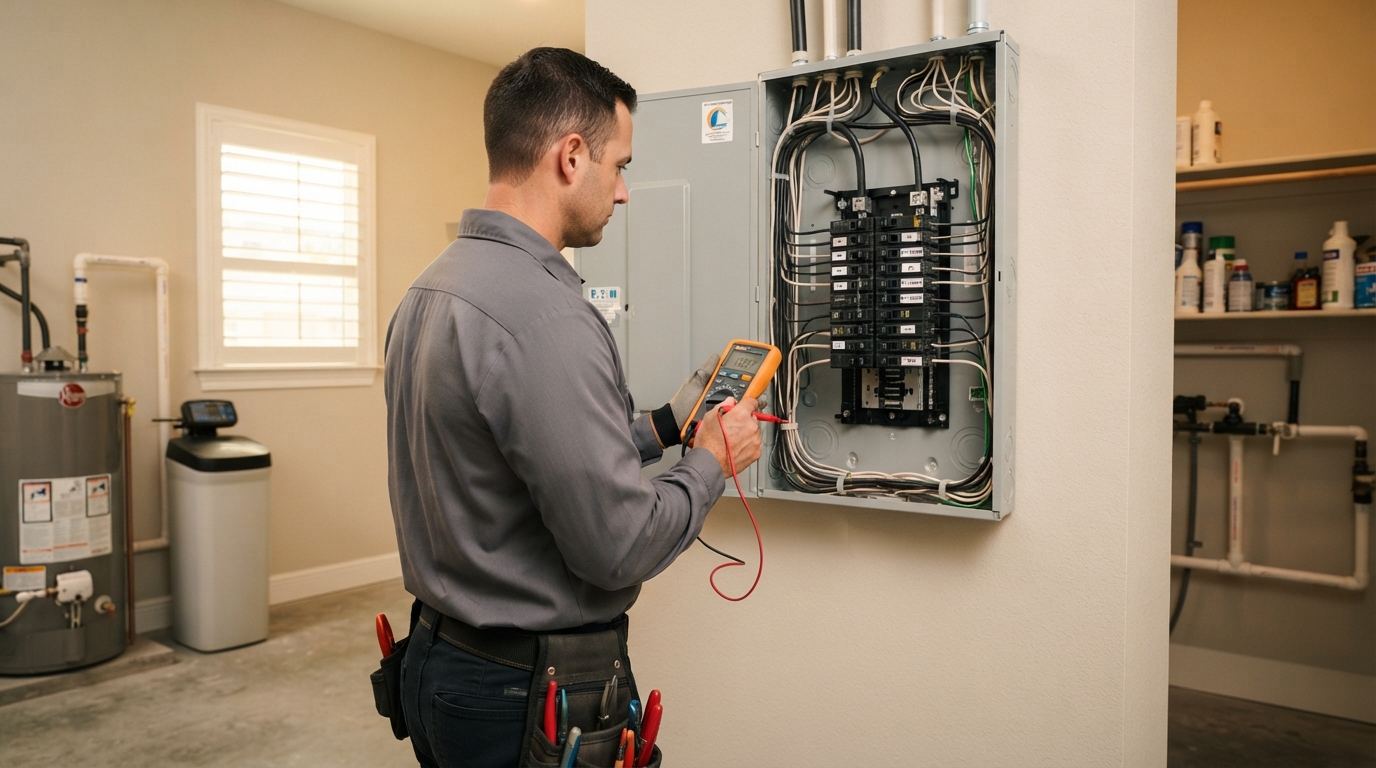
If you suspect your home has aluminum wiring, or if your insurance company has requested documentation, we offer a comprehensive inspection. Here is what we check:
- Identify aluminum branch circuit wiring by inspecting the panel and accessible outlet and switch boxes.
- Evaluate the condition of all accessible connections to identify loose, oxidized, or heat-damaged points.
- Assess the panel and service entrance for aluminum wiring connections and overall condition.
- Recommend the appropriate remediation method based on your home, your wiring condition, and your insurance requirements.
- Provide a written report documenting our findings, suitable for submission to your insurance company.
This inspection gives you a clear understanding of your wiring condition and a straightforward path forward.
Frequently Asked Questions
How do I know if my home has aluminum wiring?
You cannot always tell from the outlet appearance alone. The best way to confirm is to have a licensed electrician inspect your wiring. We can identify aluminum branch circuit wiring by inspecting the panel, opening outlet boxes, and checking the wire insulation markings. If your home was built between 1965 and 1973, we recommend scheduling an inspection.
Is aluminum wiring an automatic disqualification for Florida homeowners insurance?
It depends on the insurer. Some Florida insurance companies refuse to issue or renew policies for homes with aluminum branch circuit wiring. Others require proof of remediation before binding coverage. In many cases, completing a code-compliant remediation resolves the issue and restores insurability.
Can I just replace the outlets myself to fix aluminum wiring?
No. COPALUM and AlumiConn connector remediation requires a licensed electrician with the proper tools and training. Simply swapping standard outlets for CO/ALR rated outlets is a partial measure but does not address the connection points that create the most fire risk. Professional remediation is required for safety and insurance documentation.
How much does aluminum wiring remediation cost in Sarasota and Bradenton?
The cost depends on the scope of work, the number of circuits, and the remediation method selected. We offer a $59.99 dispatch fee that includes a full diagnostic and honest recommendations. After the inspection, we provide a clear written estimate for the recommended remediation work.
We are selling our home. Do we have to disclose aluminum wiring?
Yes. Florida law requires sellers to disclose known material defects, including aluminum wiring. Buyers lenders often require remediation before approving a loan on a home with aluminum branch circuit wiring. Addressing the issue before listing makes the sale smoother and avoids last-minute negotiations.
Received an Insurance Notice About Your Wiring?
Do not wait. Our licensed electricians can inspect your home, perform code-compliant remediation, and provide documentation for your insurer. Serving all of Sarasota and Manatee Counties.
Daniel Spears — Master Electrician, 4th-generation electrician, veteran-owned business owner — serves homeowners throughout Sarasota and Manatee Counties.
Licensed Electrical Contractor | EC#13014677 | (941) 779-4888