The lights just came back on.
The air conditioner starts running again. The refrigerator hums. The Wi-Fi reconnects. After hours—or sometimes days—without power, that moment feels like the end of the problem.
Usually, it is.
A routine utility outage does not automatically mean your home needs an electrical inspection just because the power went off and came back on.
But storms can create problems that are very different from an ordinary outage.
Wind, lightning, flooding, falling trees, damaged service equipment, generator use, and utility restoration can all create conditions that deserve a closer look.
The important question is not:
“Did my power go out?”
It is:
“Did anything happen to my home's electrical system before, during, or after the outage that suggests something is wrong?”
Here is how to tell.
You Probably Don't Need an Electrician Just Because the Power Went Out
Power outages happen for many reasons that have nothing to do with a defect inside your house.
Utility equipment can be damaged. A transformer can fail. Tree limbs can affect a line. Storm restoration work can temporarily interrupt service.
If power returns normally and:
- everything in the home is operating as expected;
- there was no flooding;
- you do not see damage to the electrical service;
- breakers are behaving normally;
- there are no burning smells;
- there is no buzzing or arcing;
- lights are not flickering unusually;
- and appliances are operating normally,
there may be nothing for an electrician to diagnose.
The fact that the power was off is not, by itself, evidence that something inside your home failed.
What matters is what you notice after it comes back.
1. Part of the House Has Power—but Part of It Doesn't
This deserves attention because “the power is back” may not mean your full electrical service has been restored.
For example:
- some lights and receptacles may work;
- the air conditioner may not;
- the range may not operate;
- the water heater may be off;
- one area of the house may behave differently from another.
Florida Power & Light explains that partial-power conditions can result from something as simple as a tripped breaker, but they can also involve a damaged service conductor or connection.
That means the problem could be:
inside the home
or
on the utility side.
Do not start opening electrical equipment trying to determine which one it is.
Check whether FPL is still reporting an outage or restoration issue in your area. If your neighbors have full power and your home does not, it may be time to contact the utility and/or a licensed electrician depending on the symptoms.
Related Resource
Read When Should You Call an Electrician vs. the Utility Company in Florida? for a more complete explanation of who is generally responsible for which part of the electrical system.
2. Breakers Keep Tripping After the Power Returns
A breaker that trips once during a power event may not automatically indicate serious damage.
A breaker that repeatedly trips when you try to restore a circuit is different.
Repeated tripping can indicate that the breaker is doing its job and responding to an electrical condition that should not simply be overridden.
Do not repeatedly reset a breaker that continues to trip without knowing why.
Possible causes can include:
- damaged equipment;
- moisture;
- a fault on the circuit;
- an overloaded circuit;
- damaged wiring;
- a problem with an appliance;
- another electrical condition requiring diagnosis.
This is a good example of the difference between an estimate and a diagnostic.
If you already know exactly what needs to be installed, repaired, or replaced, an estimate may be appropriate.
If the real question is:
“Why does this breaker keep tripping now?”
the problem needs to be identified first.
3. You Smell Burning or See Scorching or Melting
Do not ignore this because the power happens to be working.
A burning odor, melted plastic, scorch marks, heat discoloration, smoke, or visible arcing can indicate an active electrical problem.
Pay attention around:
- the electrical panel;
- outlets;
- switches;
- appliances;
- surge-protection equipment;
- generator connection equipment;
- meter/service equipment;
- locations where water may have entered.
If you see smoke, sparking equipment, downed lines, or another immediate electrical danger, treat it as an emergency and stay away from the hazard.
FPL advises customers to report dangerous conditions such as downed power lines or sparking electrical equipment and to assume downed lines are energized.
Do not approach damaged utility equipment yourself.
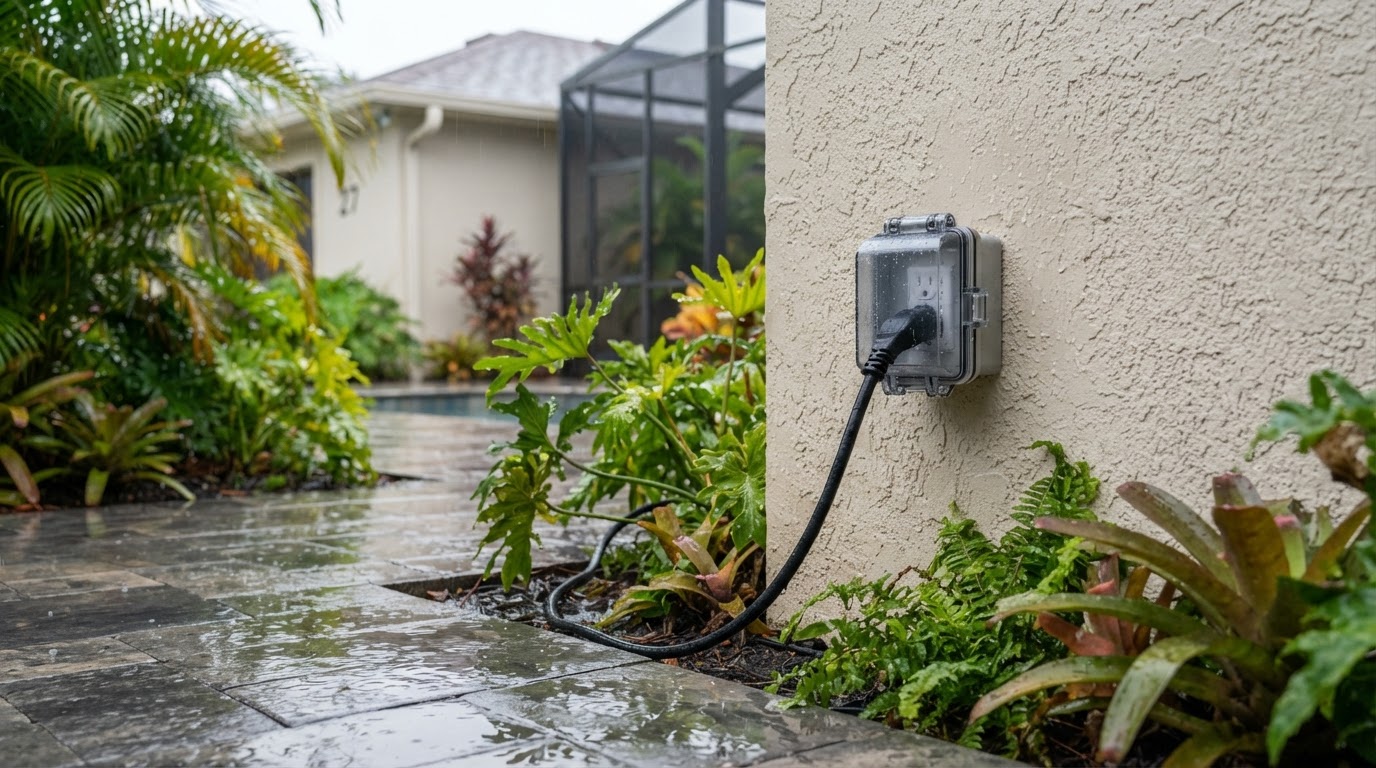
4. Water Reached Electrical Equipment
This is one of the clearest situations where professional evaluation matters.
Floodwater and electrical systems are a dangerous combination.
The Electrical Safety Foundation International recommends having an electrical system inspected if flooding has occurred, and warns against using electrical equipment that has been submerged.
The U.S. Consumer Product Safety Commission likewise advises that appliances, breakers, outlets, and wiring that have gotten wet or have been in standing water should be evaluated before use.
That could include water reaching:
- receptacles;
- switches;
- electrical panels;
- breakers;
- wiring;
- appliances;
- outdoor electrical equipment;
- pool or spa equipment;
- generator equipment.
Do not assume something is safe just because it dried out and appears to work.
Water exposure can damage electrical components in ways that are not visible from the outside.
Important Safety Rule
Do not enter flooded areas to inspect electrical equipment.
Water may be energized even when the hazard is not obvious.
5. The Electrical Panel or Service Equipment Looks Damaged
Storm damage can occur before electricity ever reaches your branch circuits.
Look only from a safe distance for obvious exterior problems such as:
- damaged meter equipment;
- bent or damaged conduit;
- loose service components;
- tree or debris impact;
- equipment pulled away from the house;
- visible scorching;
- obvious physical damage.
Do not remove panel covers, touch exposed components, or attempt repairs.
Some storm damage belongs to the utility. Some belongs to the homeowner. And sometimes a licensed electrician has to repair homeowner-owned equipment before the utility can safely restore service.
FPL has specifically advised after past storms that customers with damage to their electrical equipment may need a licensed electrician before power can be safely restored.
6. Lights Flicker, Dim, or Behave Differently After Restoration
A brief flicker during restoration does not necessarily mean something is wrong.
Ongoing abnormal behavior is different.
Examples include:
- lights repeatedly getting brighter and dimmer;
- lights flickering throughout the house;
- some rooms behaving differently from others;
- large appliances struggling to start;
- unusual electrical behavior that did not occur before the outage.
These symptoms can have several possible causes, including problems inside the home or with the incoming electrical service.
The important part is not to guess.
If the behavior persists after utility service is otherwise restored, have it evaluated.
7. An Appliance or Major System No Longer Works Correctly
Sometimes the first sign of storm-related electrical trouble is not the wiring.
It is an appliance.
After power restoration, you may discover that:
- the air conditioner will not run;
- the refrigerator is behaving differently;
- an oven or range will not operate;
- a water heater has no power;
- electronics will not turn on;
- equipment repeatedly trips its circuit.
That does not automatically mean the home's wiring is damaged.
The appliance itself may have failed. The circuit may have a problem. There may still be a utility issue. Or surge-related damage may have affected sensitive electronics.
A qualified electrician can help determine whether the electrical supply to the equipment is correct before you assume the equipment itself needs replacement.
8. You Used a Portable Generator During the Outage and Something Seems Wrong
Portable generators can be extremely useful after a storm, but generator problems introduce their own set of safety concerns.
Never connect a generator to home wiring through an improvised male-to-male cord or another method that can backfeed utility lines.
A home's generator connection needs approved transfer or interlock equipment appropriate for the installation.
If you notice:
- overheating;
- damaged generator connection equipment;
- breaker problems;
- unusual electrical behavior;
- melted receptacles;
- problems switching back to utility power;
- or anything else that changed during generator use,
stop treating it as a normal outage question.
Have the equipment evaluated.
Related Resource
OTBSE's generator transfer-switch article can help homeowners understand safe backup-power planning, generator connections, and transfer equipment before the next outage.
9. The Storm Involved Lightning Near Your Home
A nearby lightning event does not automatically mean your entire electrical system was damaged.
But lightning and surge events can affect:
- electronics;
- appliances;
- HVAC controls;
- smart-home devices;
- garage-door equipment;
- networking equipment;
- electrical protection devices.
Sometimes the damage is obvious. Sometimes the homeowner simply notices that one or several devices no longer behave normally after the storm.
If you are seeing multiple unexplained electrical or electronic failures after a storm, it is reasonable to have the electrical system evaluated rather than assuming every failed item is unrelated.
This article is not a substitute for OTBSE's dedicated whole-home surge and lightning-protection information. Its purpose is simply to help you recognize when post-storm symptoms warrant investigation.
Electrician or FPL? How Do You Know Who to Call?
This is one of the most common post-outage questions.
The answer depends on where the problem is.
Start With FPL When:
- your neighborhood is still experiencing an outage;
- utility equipment appears damaged;
- a utility line is down;
- your meter/service is affected by utility restoration;
- your neighbors also remain without power;
- FPL's outage system still shows active restoration work.
Contact an Electrician When:
- the utility shows power restored but your home's electrical system is behaving abnormally;
- breakers repeatedly trip;
- there is damage to homeowner-owned electrical equipment;
- you smell burning;
- outlets, switches, or circuits have stopped working;
- water reached electrical components;
- generator connection equipment is damaged;
- the problem needs to be diagnosed inside the property.
Emergency Situation
If there are:
- downed power lines;
- sparking utility equipment;
- fire;
- smoke;
- an immediate shock hazard;
- or another dangerous condition,
stay away and contact the appropriate emergency authority or utility.
Do not approach the equipment trying to determine ownership first.
Safety comes before figuring out who sends the repair crew.
Should You Schedule a Whole-Home Electrical Inspection After Every Storm?
No.
That would be an overly broad recommendation.
A tropical storm passing through Sarasota or Manatee County does not automatically mean every home needs a whole-home electrical inspection afterward.
A professional evaluation becomes much more relevant when there is a reason to believe the electrical system may have been affected.
For example:
- flooding;
- physical damage;
- partial power;
- repeated breaker trips;
- unexplained electrical changes;
- burning smell;
- visible heat damage;
- lightning-related symptoms;
- generator problems;
- damaged service equipment.
The goal is not to sell homeowners an inspection they do not need.
It is to identify the situations where “the power came back on” does not necessarily mean the electrical problem is over.
Diagnostic or Estimate: Which One Do You Need?
After a storm, many homeowners ask for an estimate when what they really have is an unknown problem.
The distinction is simple.
Request an Estimate When:
You already know what work is needed.
Examples:
- replace known damaged equipment;
- install generator connection equipment;
- add surge protection;
- replace a known damaged receptacle or device;
- perform another clearly defined electrical project.
Schedule a Diagnostic When:
You know something is wrong but do not know why.
Examples:
- partial power;
- breaker keeps tripping;
- lights are behaving strangely;
- a circuit stopped working;
- something smells hot;
- electrical behavior changed after restoration.
Learn more about how an electrician diagnoses an electrical problem before you decide.
OTBSE's current on-site diagnostic/dispatch fee is $59.99.
The purpose of the diagnostic is to identify what is actually causing the problem so you can make an informed decision about the repair.
What Can You Safely Check Yourself?
After utility power is restored, homeowners can make basic observations without opening or touching electrical equipment.
You can note:
- whether the entire house has power;
- which rooms or appliances are affected;
- whether breakers appear tripped;
- whether you hear unusual buzzing;
- whether you smell burning;
- whether there is visible exterior service damage;
- whether water reached electrical equipment;
- what appliances were running when the problem occurred.
You can also take photographs from a safe location.
Do not:
- remove electrical-panel covers;
- touch damaged electrical service equipment;
- enter standing water near electrical equipment;
- handle downed wires;
- repeatedly reset a breaker that keeps tripping;
- open outlets or switches;
- attempt storm-damage repairs yourself.
Those observations are often enough to help the electrician determine what should happen next.
Southwest Florida Storms Make Post-Outage Questions Especially Relevant
Atlantic hurricane season runs from June 1 through November 30.
According to the National Hurricane Center's climatology, Atlantic tropical cyclone activity historically peaks around September 10, with most activity occurring from mid-August through mid-October.
For homeowners in Sarasota, Bradenton, Parrish, Palmetto, Ellenton, Lakewood Ranch, Siesta Key, Longboat Key, and surrounding Manatee and Sarasota County communities, that makes September an especially useful time to understand the difference between:
a normal outage
and
an electrical condition that needs attention.
Preparation matters.
But knowing what to do after the lights come back on matters too.
Something Doesn't Seem Right After the Power Came Back On?
You do not need to guess whether the problem is inside your home, related to storm damage, or still part of the utility restoration. If something has changed and you do not know why, OTBSE can diagnose the issue and explain your options clearly.
$59.99 On-Site Electrical Diagnostic
On The Bright Side Electric serves homeowners throughout Manatee and Sarasota Counties.