October 29, 2026 | On The Bright Side Electric | Palmetto, FL
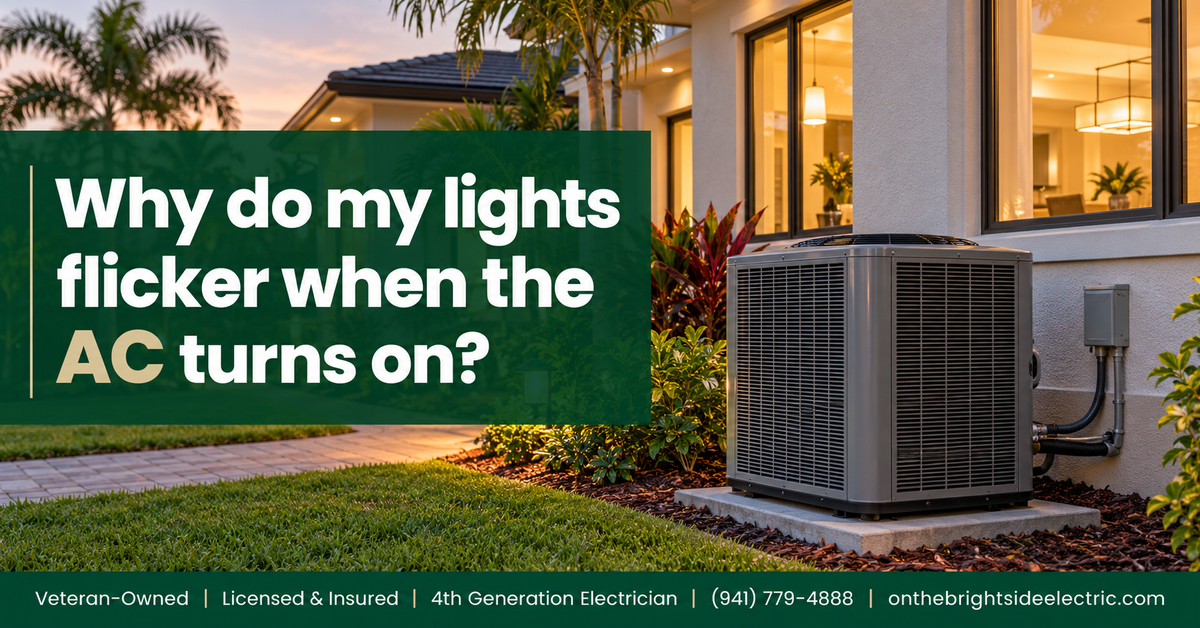
You're relaxing at home on a warm Florida afternoon when the air conditioner kicks on. For a split second, the lights in your living room dim, then everything returns to normal.
Sound familiar?
If you've noticed your lights flickering or briefly dimming whenever your air conditioner starts, you're not alone. It's something homeowners throughout Palmetto, Bradenton, Sarasota, and surrounding communities may experience, especially during Florida's long cooling season.
The good news is that a very brief dip in brightness when your AC starts isn't always a sign of an electrical problem. Air conditioners require a burst of electricity when their compressors start, and that sudden demand can temporarily affect the voltage supplying your home's lights.
However, not all flickering is harmless.
Sometimes, lights that flicker when the AC turns on are warning signs of loose electrical connections, overloaded equipment, deteriorating wiring, or a problem with the air conditioner itself.
Understanding the difference can help you recognize when your home's electrical system needs professional attention.
Why does the AC make my lights dim for a second?
Your air conditioner is one of the larger electrical loads in your home.
When the system is already running, its electrical demand is generally more consistent. But starting the compressor requires a much larger, temporary surge of current.
This is known as compressor startup current, sometimes called inrush current.
Here's what happens:
- Your thermostat signals the air conditioner to start cooling.
- The outdoor unit's compressor motor begins starting.
- The compressor briefly draws more electrical current than it needs during normal operation.
- That sudden demand can cause a temporary voltage drop in your home's electrical system.
- Some lights momentarily dim before returning to their usual brightness.
Think of it like turning on a faucet while someone else is using the shower. Depending on the plumbing system, the additional demand might briefly change the water pressure.
Your home's electrical system can experience a similar temporary change in voltage when a large motor starts.
When the compressor reaches its normal operating speed, its current demand decreases, and the voltage typically stabilizes.
That is why the lights might dim for just a fraction of a second before returning to normal.
Why are some lights more sensitive than others?
Not every light responds to voltage changes the same way.
Certain LED bulbs and electronic dimmers are particularly sensitive to short voltage fluctuations. One fixture might visibly flicker while another barely changes brightness.
The lighting circuit, bulb electronics, dimmer compatibility, and condition of the home's electrical system can all influence what you notice.
A brief flicker doesn't automatically mean the light fixture or bulb is defective.
However, replacing bulbs repeatedly without addressing a recurring electrical problem is unlikely to solve the underlying issue.
Is it normal for lights to flicker when the air conditioner starts?
An occasional, split-second dimming that occurs exactly when the AC compressor starts can be a normal response to a large motor starting.
The important factors are how long the flicker lasts, how frequently it happens, and whether the behavior is changing.
Here's a practical way to compare the symptoms.
| What you notice | What it may mean | Recommended action |
|---|---|---|
| Lights dim very briefly as the AC starts, then return to normal | Temporary compressor startup demand | Monitor for changes |
| Lights flicker repeatedly while the AC is running | Possible electrical or AC equipment problem | Schedule a professional inspection |
| Lights become brighter and dimmer unexpectedly | Possible unstable voltage or connection issue | Contact an electrician promptly |
| A breaker trips when the AC starts | Possible excessive current, equipment fault, or circuit issue | Stop resetting the breaker and arrange service |
| Flickering becomes noticeably worse over time | A potentially developing electrical or AC problem | Have the system evaluated |
| Electrical panel buzzes, smells unusual, or feels hot | Possible overheating or electrical fault | Treat as urgent and seek professional assistance |
Even when a brief dimming appears routine, it does not prove that every electrical connection or component is safe. If you're uncertain about what you're seeing, a licensed electrician can help determine whether the behavior is acceptable for your home's installation.
Five warning signs that AC-related flickering may be a problem
1. The lights flicker constantly or stay dim longer than a moment
A single, brief dip when the compressor starts is different from lights that continue flickering.
If your lights fluctuate for several seconds, repeatedly pulse, or continue changing brightness while the AC runs, something may be interfering with stable electrical power.
Possible explanations include unstable connections, excessive voltage drop, or air conditioning equipment that is struggling to start or operate correctly.
This type of flickering deserves a professional evaluation rather than simply being dismissed as normal AC behavior.
2. The lights brighten as well as dim
Lights becoming unexpectedly brighter can be more concerning than a brief, predictable dimming.
Unusual brightening and dimming, particularly across multiple rooms, can indicate an unstable voltage condition.
One possible cause is a loose or damaged neutral connection.
The neutral conductor plays an important role in maintaining appropriate voltage relationships within parts of your home's electrical system. If a neutral connection becomes compromised, some circuits may experience abnormal voltage conditions.
Those conditions can potentially damage appliances and electronics or create electrical hazards.
If lights throughout your home suddenly become brighter and dimmer, contact a licensed electrician or your electric utility promptly. Avoid using affected equipment until the condition has been evaluated.
3. You hear buzzing or notice warmth around the electrical panel
Your electrical panel distributes electricity throughout your home.
If you notice unusual buzzing, crackling, a burning smell, discoloration, or excessive heat around the panel, don't assume the AC is simply drawing too much power.
These symptoms can indicate loose connections, overheating, or failing electrical components.
Never remove a panel cover or attempt to tighten connections yourself.
If you notice a burning smell, smoke, sparks, or signs of active overheating, stay away from the equipment and seek emergency assistance. Call 911 if there is smoke, fire, or an immediate threat.
An electrical panel should not be ignored simply because the lights return to normal after the air conditioner starts.
4. A breaker trips when the AC starts
Circuit breakers are designed to interrupt electrical power under certain abnormal conditions.
If the breaker serving your air conditioning equipment trips whenever the compressor attempts to start, the system may have an electrical fault or an excessive current demand.
Possible causes include problems inside the AC equipment, damaged wiring, or issues with the circuit or breaker.
A breaker that repeatedly trips is not something to work around.
Do not repeatedly reset it, replace it with a higher-rated breaker, or attempt to bypass the protection.
Leave the affected equipment off and arrange for a qualified professional to identify the cause.
Depending on the problem, that may involve both an electrician and an HVAC technician.
5. The flickering started suddenly or keeps getting worse
Maybe your lights have always dipped slightly when the AC starts.
But what if the dimming becomes much more noticeable?
Or what if your lights never flickered before, and now they do every time the air conditioner starts?
Changes in previously stable electrical behavior are worth investigating.
Electrical connections can deteriorate, air conditioning components can wear out, and wiring problems may develop over time.
The fact that your air conditioner still cools your home doesn't necessarily mean its electrical starting components or supply connections are operating correctly.
What causes excessive light flickering when the AC turns on?
Several different problems can create similar symptoms. That's why diagnosing the actual cause is important before deciding on a repair.
Loose electrical connections at the panel or meter
Loose or deteriorated connections can create resistance and unstable voltage.
When a large electrical load starts, the added demand may make an existing connection problem more noticeable.
Connections at the main electrical panel, service equipment, or meter area may need evaluation.
In Florida, outdoor electrical equipment is also exposed to humidity, rain, and environmental conditions that can contribute to corrosion over time.
These connections should only be inspected or serviced by authorized, qualified professionals. Equipment on the utility side may require your electric utility's involvement.
An overloaded or aging electrical panel
An older electrical panel isn't automatically unsafe simply because of its age.
However, changes in household electrical demand can reveal limitations in an existing installation.
Perhaps the home has added central air conditioning, new kitchen appliances, an EV charger, or other major electrical equipment over the years.
If the electrical system wasn't properly evaluated as those loads were added, it may need closer inspection.
An electrician can assess the panel's condition, circuit arrangement, service capacity, and overall electrical demand.
Importantly, lights flickering when the AC starts do not automatically mean you need a electrical panel upgrade.
The correct solution depends on the reason for the voltage drop.
Undersized or deteriorating wiring
Wiring that is too small for the connected load, unusually long circuit runs, damaged conductors, or poor connections can contribute to excessive voltage drop.
When the air conditioner starts, the additional current demand may make the problem more visible through your lighting.
A professional electrician can determine whether the wiring is suitable for the equipment and whether its condition is contributing to the symptoms.
This is not something a homeowner should investigate by opening electrical boxes or working inside the panel.
Air conditioner compressor or starting component problems
Sometimes, the problem originates inside the air conditioning system rather than the home's electrical panel.
A compressor that struggles to start may draw unusually high current or remain in its startup condition longer than expected.
A failing capacitor, where the equipment uses one, is another possible cause.
Capacitors help certain AC motors start or operate properly. When one begins failing, the equipment may have difficulty starting.
You might notice humming, delayed startup, repeated attempts to start, or poor cooling performance along with the flickering lights.
An HVAC technician is generally the appropriate professional to diagnose compressor, capacitor, and other internal air conditioning equipment problems.
Capacitors can retain dangerous electrical energy even after power has been disconnected, so homeowners should never attempt to inspect or replace them themselves.
What should you do if your lights flicker when the AC starts?
You don't need to open your electrical panel or attempt any repairs to gather useful information.
Start by observing what happens.
- Notice the timing. Does the flicker occur only when the AC starts, or does it continue afterward?
- Pay attention to the duration. Is it one quick dip or several seconds of fluctuating brightness?
- Check which rooms are affected. Does it happen in one room or throughout the house?
- Watch for other symptoms. Listen for unusual sounds and note any breaker trips, burning odors, or changes in AC performance.
- Keep track of changes. If the flickering is becoming more frequent or noticeable, don't ignore it.
You can share these observations with an electrician to help narrow down the possible causes.
If you notice persistent or worsening flickering, avoid repeatedly starting the air conditioner until a professional evaluates the problem. If equipment shows signs of overheating, smoke, or electrical arcing, keep your distance and seek immediate help.
How does an electrician find the cause?
A licensed electrician can evaluate whether the problem originates in your home's electrical distribution system or whether an HVAC technician should investigate the air conditioning equipment.
Depending on the symptoms, an inspection may include checking voltage behavior during AC startup, examining accessible service and panel connections, evaluating circuit and conductor condition, and reviewing the electrical capacity available for the connected loads.
The electrician may also look for indications of corrosion, overheating, or loose connections during a thorough electrical safety inspection.
If the electrical supply and wiring appear sound but the compressor struggles to start, the next step may be an HVAC service appointment.
The goal is to identify the actual problem rather than recommending an unnecessary panel replacement or equipment upgrade.
Resources from educational organizations like the Electrical Safety Foundation International (ESFI) and energy guidelines from ENERGY STAR emphasize the importance of having qualified professionals inspect recurring electrical fluctuations and motor startup concerns.
Why this matters for Manatee and Sarasota County homeowners
In Palmetto, Bradenton, Sarasota, and surrounding communities, air conditioning is essential for much of the year.
Frequent cooling cycles create regular opportunities to notice electrical issues that might be less obvious in cooler climates.
Older homes may have electrical systems that have been modified over the years. Newer homes can also experience problems caused by faulty equipment or connections.
Coastal humidity, moisture intrusion, and corrosion are additional concerns for electrical equipment exposed to Florida's environment.
Whether you live in an established Bradenton neighborhood, a newer Parrish home, or a coastal Sarasota property, persistent flickering deserves attention.
The age of the home alone doesn't determine whether the electrical system is safe.
Frequently asked questions
Is it dangerous if my lights dim for one second when the AC starts?
Not necessarily. A brief dip that happens only at compressor startup and immediately returns to normal can result from temporary startup current. However, if the dimming becomes more pronounced, lasts longer, or occurs with other warning signs, arrange an electrical inspection.
Can a bad AC capacitor cause my lights to flicker?
Yes. A failing capacitor in an AC system that uses one can make the compressor struggle to start, potentially increasing or prolonging electrical demand. An HVAC technician should diagnose and repair capacitor problems.
Do I need a bigger electrical panel if my lights flicker?
Not automatically. Flickering can result from several causes, including loose connections, wiring issues, or the AC equipment itself. An electrician should identify the cause and evaluate your electrical capacity before recommending a panel upgrade.
Why do my lights flicker in every room when the AC comes on?
A brief whole-house dip may reflect a temporary voltage change when the compressor starts. Persistent flickering throughout the house, especially if lights also brighten unexpectedly, may point to a problem involving the main electrical service, connections, or neutral conductor. Contact a professional promptly.
Should I call an electrician or an HVAC technician first?
If the main symptom is flickering lights, especially across multiple rooms, an electrician is a good starting point. If the air conditioner hums without starting, repeatedly attempts to start, or stops cooling properly, an HVAC technician may also be needed. Breaker trips or signs of overheating require prompt professional attention.
Don't ignore electrical warning signs
A quick, occasional dip in your lights when the air conditioner starts may simply reflect the temporary electrical demand of the compressor.
But constant flickering, unusual brightening, repeated breaker trips, buzzing equipment, or changes that are getting worse should never be treated as normal.
The safest approach is to understand what's causing the flickering before it becomes a larger problem.
At On The Bright Side Electric, we help homeowners throughout Palmetto, Bradenton, Sarasota, and surrounding Manatee and Sarasota County communities with residential electrical troubleshooting, panel evaluations, and electrical safety concerns.
If your lights flicker when the AC starts and you're unsure whether it's normal, we're here to help you find answers.
Concerned About Flickering Lights?
Our team helps homeowners throughout Manatee and Sarasota County understand electrical concerns and explore the right next steps.
On The Bright Side Electric | Where You Never Get Left In The Dark.