A tripping circuit breaker is not just an inconvenience. It is your electrical system communicating with you — telling you that something on that circuit exceeded what the wiring is safely designed to handle.
Resetting a breaker once after an obvious cause (too many things running at once, a vacuum cleaner on a busy circuit) is routine. What is not routine — and what should never be ignored — is a breaker that trips repeatedly, trips under normal load, or trips back immediately after you reset it.
This guide covers the five most common causes of a tripping breaker in Florida homes, what each cause means, and what your next step should be for each one.
How a Circuit Breaker Works
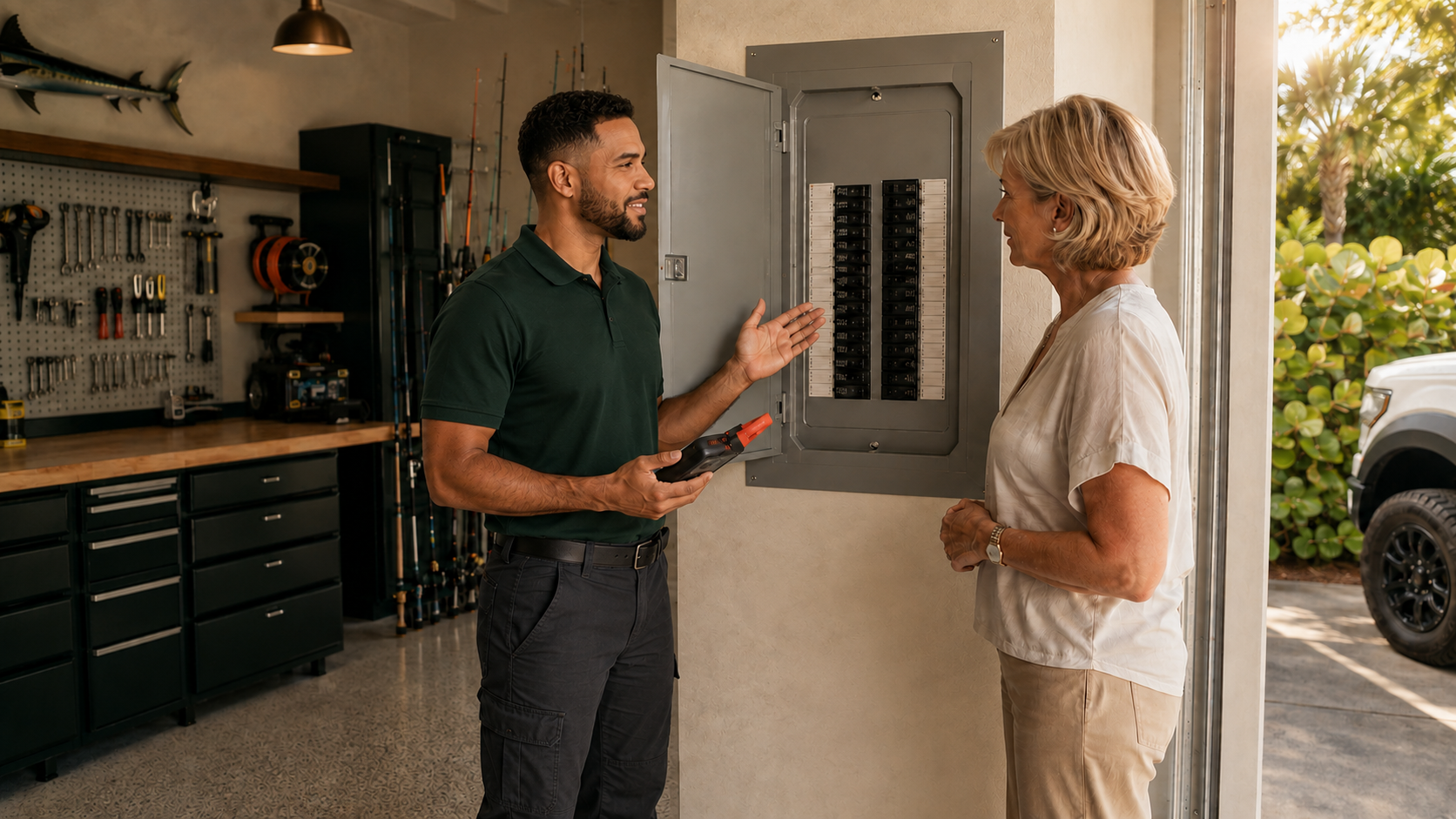
Before diagnosing the cause, it helps to understand the mechanism. A circuit breaker is a protective device. It monitors the amount of electrical current flowing through a circuit and trips — cuts power — when that current exceeds the breaker's rated capacity.
This is intentional. A breaker that trips has done its job: it prevented the wiring from overheating. The question is why it needed to trip — and whether the underlying condition is routine or something that warrants professional attention.
How to Reset a Tripped Breaker Safely
If a breaker has tripped, here is how to reset it correctly:
- Reduce the load first. Unplug or turn off devices on that circuit before resetting.
- Push the breaker firmly to the OFF position. Even if it looks like it is already off, confirm it is fully in the off position before switching it on.
- Push it to the ON position. You should feel a click.
- Watch what happens next. If it holds, the cause was likely a temporary overload. If it trips again immediately or shortly after, stop resetting it — repeated resets without addressing the underlying cause can damage the breaker and the wiring it protects.
Cause 1: Overloaded Circuit
The most common reason a breaker trips — and the easiest to fix.
An overloaded circuit occurs when the total electrical demand of the devices running on that circuit exceeds its rated capacity. A 15-amp circuit can safely carry about 1,440 watts continuously. A 20-amp circuit can carry about 1,920 watts. Exceed those thresholds and the breaker trips.
In Florida homes, overloads happen most often in:
- Kitchens — microwaves, toasters, coffee makers, and air fryers often share circuits not designed for that combined load
- Garages — power tools, refrigerators, and EV chargers competing on limited circuits
- Home offices — computers, monitors, printers, and space heaters running simultaneously
- Living areas — during Florida summers when window AC units, fans, and entertainment systems all run at once
What to do: Identify the high-draw appliances on that circuit and distribute them across different circuits. If the same circuit keeps overloading despite redistribution, a licensed electrician can add a dedicated circuit — the permanent fix for a chronically overloaded area.
Cause 2: Short Circuit
More serious than an overload — always requires professional diagnosis.
A short circuit occurs when a hot (live) wire makes contact with a neutral wire, creating a low-resistance path that allows current to surge far beyond safe levels. The breaker trips immediately and forcefully.
Unlike an overload — which builds gradually — a short circuit happens instantly. You will often notice:
- The breaker trips the moment you restore power
- A brief burning smell near an outlet, switch, or the panel
- Visible burn marks or discoloration on an outlet plate or switch cover
What to do: If you suspect a short circuit — especially if there is any sign of burning — do not reset the breaker. Unplug everything on that circuit and call a licensed electrician. A short circuit in a wall or inside a device can cause overheating and fire if the breaker is repeatedly reset without addressing the cause.
Cause 3: Ground Fault
Common in Florida's humid environment — a legitimate safety concern.
A ground fault occurs when a hot wire makes contact with a ground wire or a grounded conductive surface — such as a wet floor, damp drywall, or metal plumbing. Ground faults are particularly common in Florida because of the state's persistent humidity and the frequency of moisture intrusion in older homes.
Areas where ground faults occur most often:
- Bathrooms and kitchens (near water sources)
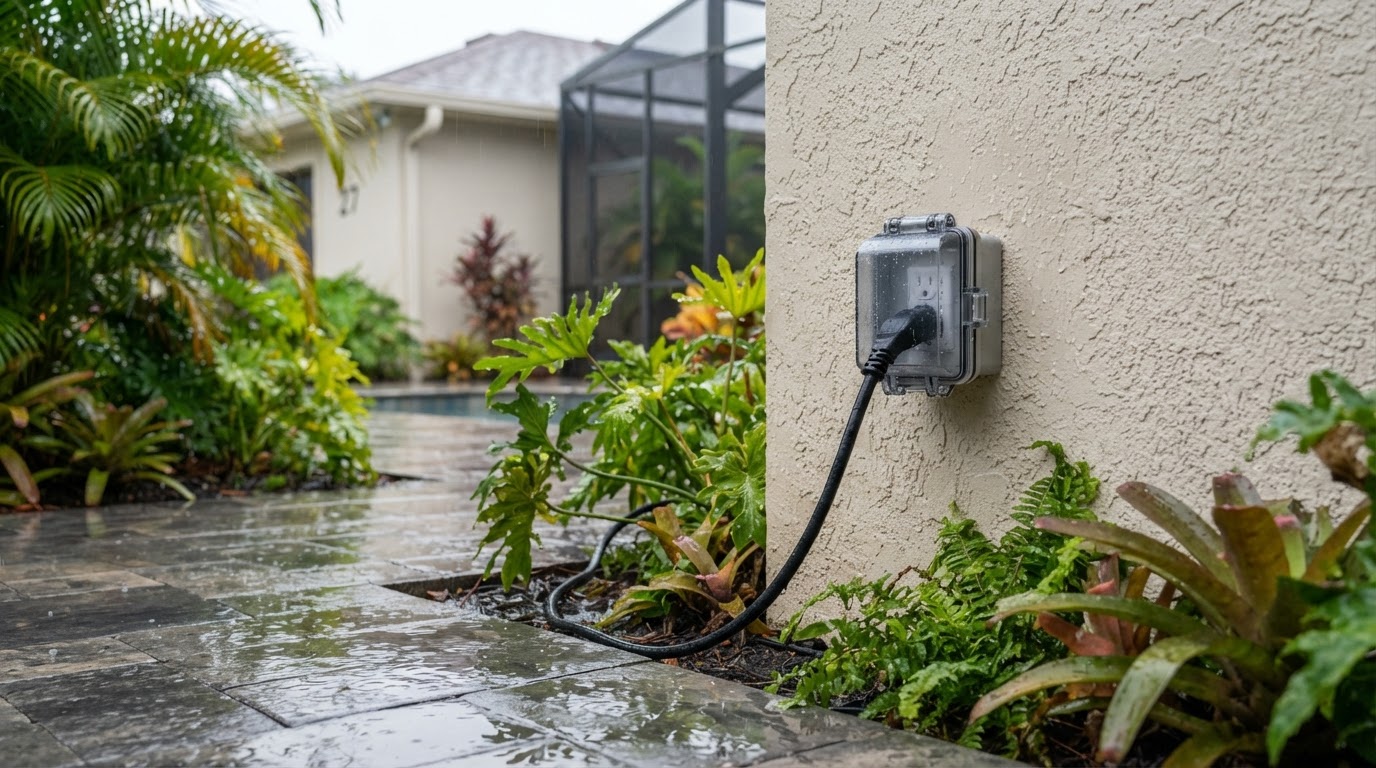
- Outdoor outlets and pool equipment
- Garage circuits
- Any area with moisture exposure
GFCI outlets and breakers are specifically designed to detect ground faults and cut power within milliseconds — far faster than a standard breaker. If a GFCI outlet in your bathroom or kitchen is tripping repeatedly, a ground fault on that circuit is the likely cause.
What to do: A GFCI outlet that trips without an obvious load, or a breaker that trips in a wet area, warrants inspection by a licensed electrician. Ground faults in wet environments are a genuine shock hazard — not a nuisance to be reset and ignored.
Cause 4: Aging or Failing Breaker
Common in older Florida homes — the breaker itself may be the problem.
Breakers are mechanical devices with a finite lifespan. In Florida's heat and humidity, they can wear out faster than in milder climates. An aging breaker may begin to trip at loads well below its rated capacity, or may trip inconsistently.
Florida's specific conditions accelerate breaker wear:
- Sustained heat causes thermal derating — breakers trip at lower loads when ambient temperatures are high
- Humidity and salt air contribute to internal corrosion in older panels
- Age — panels 25 years and older in Sarasota and Manatee County homes are working with components approaching or past their design lifespan
What to do: Breaker replacement is licensed electrical work in Florida and requires a permit. A licensed electrician can test the breaker under load, confirm whether it is the source of the problem, and replace it correctly.
Cause 5: Arc Fault
Less well-known — but one of the leading causes of electrical house fires.
An arc fault occurs when electricity jumps — arcs — between loose or damaged conductors. This can happen inside your walls at a connection point that has worked loose over time, inside an appliance with damaged wiring, or at a deteriorated outlet or switch.
AFCI (Arc Fault Circuit Interrupter) breakers are designed to detect the unique electrical signature of an arc and trip the circuit before it can cause overheating or fire. If your home has AFCI breakers and one is tripping repeatedly, an arc fault somewhere on that circuit is the likely cause.
What to do: Do not continue resetting an AFCI breaker that keeps tripping. Arc faults are a leading cause of residential electrical fires. Contact a licensed electrician for diagnosis.
When to Stop Resetting and Call a Licensed Electrician
Reset once. If it trips again, stop — and call when:
- The breaker trips immediately upon reset
- There is any burning smell, burn marks, or discoloration near outlets or the panel
- The breaker trips in a bathroom, kitchen, outdoor outlet, or near any water source
- You cannot identify an obvious overload as the cause
- The breaker trips more than twice under normal conditions
- The breaker or panel feels warm or hot to the touch
- Lights flicker on that circuit before or after the trip
If you are unsure whether the issue is inside your home or a utility company concern, a licensed electrician can help you determine where the problem originates.
We Can Come to You
If a breaker in your Sarasota or Manatee County home keeps tripping and you are not sure why, we can diagnose it accurately and give you a clear answer. If an on-site visit is needed, our dispatch fee is $59.99 — that includes a full diagnostic and honest recommendations, with no obligation to proceed with any work.
Request a Consultation →Or call us directly at (941) 779-4888.
Daniel Spears — Master Electrician, 4th-generation electrician, veteran-owned business owner — serves homeowners throughout Sarasota and Manatee Counties.
EC#13014677 | Licensed & Insured | Serving Sarasota & Manatee County